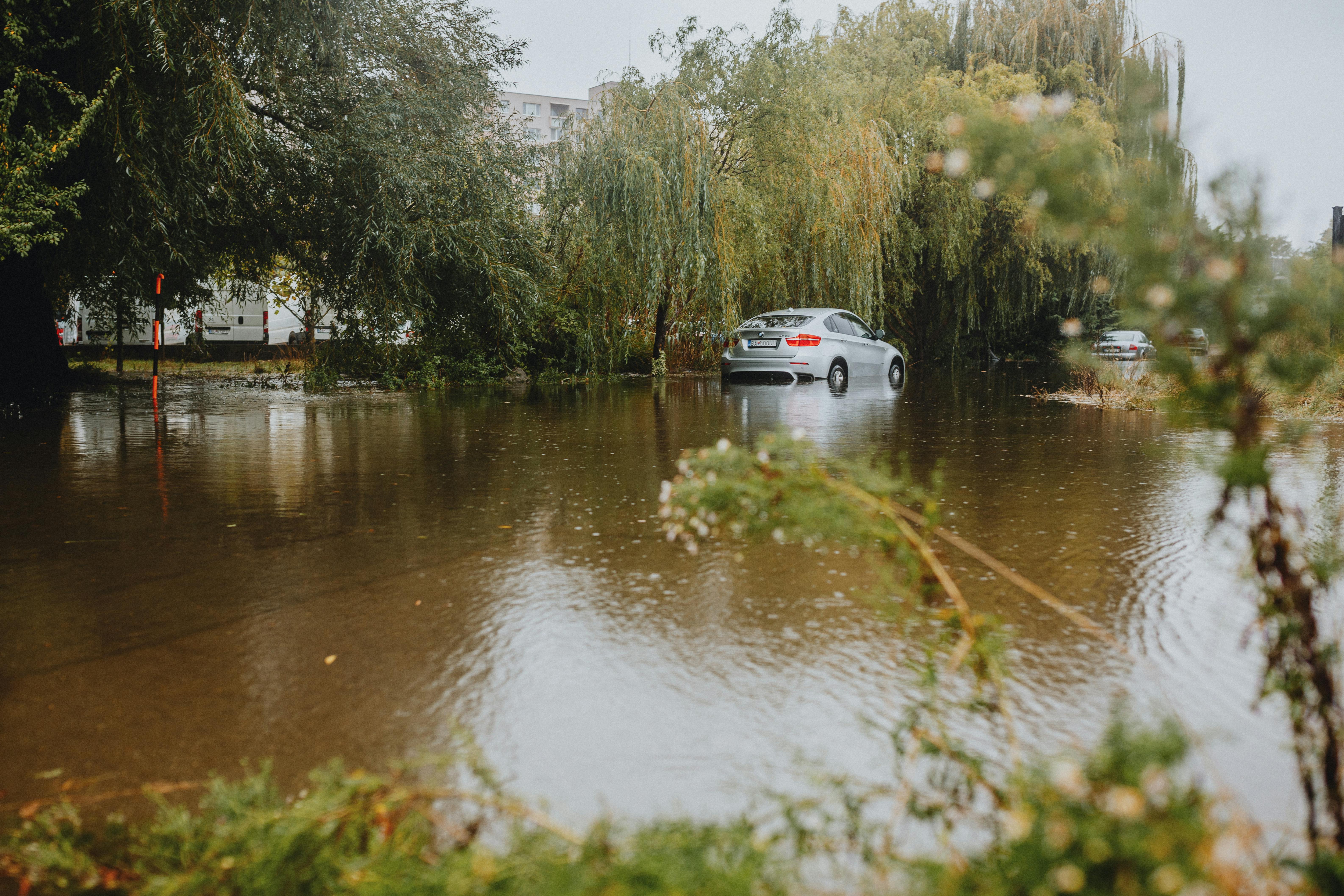
Best Charleston-Area Neighborhoods if You Want Lower Flood Risk
Best Charleston-Area Neighborhoods if You Want Lower Flood Risk
Flood risk is one of the first things serious Charleston buyers research — and for good reason. Parts of Charleston flood regularly, and flood insurance in AE and VE zones can add $2,000–$10,000+ per year to the cost of homeownership. But not all of Charleston carries that risk. There are specific neighborhoods and ZIP codes with predominantly X-zone designations, higher elevations, and strong track records of staying dry.
Leah Beaulieu and BJ Rodgers at Coast2Coast Properties work with flood-risk-conscious buyers regularly. Here's where to look.
The short answer
- Zone X is the lowest-risk FEMA flood designation — no federal flood insurance required, significantly lower insurance costs
- Summerville 29483 is the most consistently cited lower-flood-risk area in the metro, with higher elevation and mostly X-zone designations
- Goose Creek 29445 (inland areas) carries lower flood exposure than coastal or riverfront areas, at the metro's lowest price points
- Inland Mount Pleasant away from tidal creeks and the Wando River holds X-zone designations in many neighborhoods
- North Charleston's inland corridors (away from the rivers) have pockets of lower flood risk
- The safest move: always check the specific property's FEMA flood zone designation before making an offer — zones can change street to street
Understanding Flood Zones in the Charleston Area
FEMA designates flood zones on Flood Insurance Rate Maps (FIRMs). In the Charleston context, here's what matters:
Zone X (unshaded): Minimal flood hazard. Less than 0.2% annual chance of flooding. No federal flood insurance requirement. This is what flood-conscious buyers target.
Zone X (shaded): Moderate flood hazard. Between 0.2% and 1% annual chance of flooding. Still relatively low risk. Flood insurance is recommended but not required by lenders.
Zone AE: Special Flood Hazard Area. 1% annual chance of flooding (the "100-year floodplain"). Flood insurance is required by lenders. This is where costs and risk rise significantly — annual premiums commonly run $1,500–$5,000+.
Zone VE: Coastal high-hazard area with wave action. Highest risk and highest insurance costs. Common on Sullivan's Island 29482, parts of Isle of Palms 29451, and Folly Beach 29439.
One important note: about 25% of all flood insurance claims come from low-to-moderate risk areas. Even X-zone properties benefit from an inexpensive voluntary flood policy — typically well under $700–$800 per year — as protection against unpredictable events.
Summerville 29483: The Benchmark for Lower Flood Risk
Summerville's historic downtown area (ZIP code 29483) sits on higher elevation than the rest of the metro and has the most consistently low flood risk profile in the greater Charleston area. This is one significant reason Summerville attracts buyers who've done their insurance research.
The town sits on a slight ridge — notable in a landscape where a few feet of elevation makes an enormous difference. Downtown Summerville streets have significantly less flooding history than comparable areas closer to the coast or tidal waterways. Flood insurance in much of 29483 is either not required at all (Zone X) or available at minimal cost in the shaded X zone.
As of early 2026, median sale prices in the 29483 ZIP code were running in the $300,000s–$400,000s range for detached homes, making it one of the more affordable lower-flood-risk options in the metro. The combination of lower insurance costs and lower purchase price relative to Mount Pleasant or Daniel Island makes the financial case compelling.
The tradeoff is commute. Summerville to downtown Charleston adds 30–45 minutes one-way depending on I-26 traffic. Buyers who work remotely, work in North Charleston, or work near Boeing's North Charleston campus often find Summerville the best combination of lower risk, lower price, and quality of life.
Parts of Summerville 29485: Varies by Neighborhood
The 29485 ZIP code is less uniform than 29483. It includes newer planned communities with good elevation and X-zone status, but also areas closer to the Ashley River and associated tidal creeks that carry more flood exposure.
In 29485, the key is researching at the neighborhood level rather than assuming the ZIP code tells the story. Communities farther from the waterways on well-drained land generally carry X designations. Areas along Bee's Ferry Road or backing up to tidal wetlands may not.
Buyers interested in 29485 should request the elevation certificate for any specific property and verify the FEMA zone at msc.fema.gov before finalizing any offer.
Goose Creek 29445: Inland Elevation Advantage
Goose Creek sits well inland, away from tidal influence, and much of the city falls in Zone X. The Naval Weapons Station corridor and surrounding residential communities are generally positioned on higher ground than coastal Charleston, giving buyers measurably lower flood exposure across the city.
Goose Creek is also one of the most affordable ZIP codes in the Charleston metro — as of early 2026, median home prices in 29445 were in the mid-to-upper $200,000s to low $300,000s — making it one of the few places in the market where lower flood risk and lower purchase price overlap in the same location.
The tradeoff: Goose Creek doesn't have the restaurant density, walkability, or community events of Mount Pleasant or Summerville's historic downtown. It's a practical, working-class suburb with solid schools, strong community character, and genuine affordability. For buyers who prioritize financial risk mitigation over lifestyle amenities, Goose Creek deserves serious consideration.
Inland Mount Pleasant: Significant Variation Within the ZIP Codes
Mount Pleasant (29464 and 29466) is one of the most desired suburban markets in the Charleston area — but flood risk within Mount Pleasant is not uniform. Properties backing up to tidal creeks, the Wando River, or Shem Creek carry AE and AE+ designations with real flood insurance costs. Properties farther inland, especially in communities built on higher elevations, often sit in Zone X.
Neighborhoods like Snee Farm and parts of Long Point (29464) and the inland areas of Park West and Carolina Park (29466) generally carry better flood profiles than waterfront or creek-adjacent properties. The closer you get to the Wando, the Intracoastal Waterway, or tidal creeks, the more the designation changes.
As of early 2026, Mount Pleasant is the most expensive suburban market in the metro, with median sale prices in 29466 running above $600,000 for detached homes. Buyers who want both lower flood risk and Mount Pleasant living can find it — but it requires careful property-level research, not just neighborhood selection.
North Charleston: Inland Corridors Away from Rivers
North Charleston has wide internal variability. Areas close to the Cooper River or near tidal waterways carry significant flood risk. But inland North Charleston — particularly areas around the I-26 corridor, the aviation and Boeing district, and neighborhoods farther from rivers in 29406 — carry better flood profiles.
North Charleston is rarely marketed as a lower-flood-risk destination, but for buyers working near Boeing, MUSC's North Charleston facilities, or other employers in that corridor, specific neighborhoods in 29406 and 29418 offer X-zone designations at significantly lower price points than comparable homes elsewhere in the metro.
What Doesn't Work for Flood-Risk-Conscious Buyers
If flood risk is a primary concern, these areas require significant due diligence before buying:
The Charleston peninsula (29401 and 29403): Tidal flooding is an ongoing, recurring issue — not just a storm event. Streets in lower downtown and near the Battery flood on king tides, and the City of Charleston has long-running drainage improvement projects underway.
Sullivan's Island 29482 and Isle of Palms 29451: Both sit in Zone VE in many areas. Beautiful, highly desirable, and expensive to insure. The lifestyle premium is real; so is the risk premium.
Folly Beach 29439: Similar coastal high-hazard exposure, with somewhat more accessible price points.
Johns Island 29455 (near waterways): Parts of Johns Island near the Stono, Kiawah, and Bohicket Rivers and associated tidal areas carry AE designations. Sections farther inland are lower risk — another case where street-level research matters.
James Island 29412: Mixed flood profiles. Some areas are straightforward; areas near Folly Beach and tidal creeks are not.
The Biggest Mistake Flood-Risk-Conscious Buyers Make
They check the ZIP code, not the property. Flood zone designations can vary dramatically from one street to the next — even two houses on the same block can sit in different zones if one sits slightly lower. Buyers who rule out or approve an entire neighborhood based on general reputation miss this granularity entirely.
The right approach: look up every specific property of interest at msc.fema.gov or ask your agent to pull the flood zone information before you schedule a showing. And if a home is in Zone AE, request an elevation certificate — properties that have been elevated above the Base Flood Elevation (BFE) may qualify for significantly lower flood insurance premiums than the zone designation alone would suggest.
A Realistic Example
A couple relocating from Portland was evaluating homes in James Island 29412 and Summerville 29483 simultaneously. The James Island home they loved was well-priced and had great character — but it sat in Zone AE with a flood insurance quote of $3,800 per year. The comparable Summerville 29483 home was in Zone X — no required flood insurance, voluntary policy available for under $700 per year. Over 10 years, that gap exceeds $30,000 in insurance costs alone, before factoring in any actual flood events.
They bought in Summerville. The commute added time, but the financial case was straightforward. Leah Beaulieu walked them through exactly those numbers before they made the decision.
So Which Neighborhoods Offer Lower Flood Risk?
- Summerville 29483: Best combination of low flood risk, community character, and price in the metro
- Goose Creek 29445 (inland): Lowest flood risk plus lowest purchase price — the clearest value play for risk-conscious buyers
- Inland Mount Pleasant 29464/29466 (away from waterways): Lower risk is available but requires property-level verification, not neighborhood-level assumption
- Parts of Summerville 29485 (farther from water): Mixed — requires neighborhood-level research before assuming X-zone status
- North Charleston 29406 (inland corridors): Good flood profiles in specific areas near major employers, at accessible price points
FAQ
What is Zone X flood designation in Charleston, SC?
Zone X is FEMA's lowest-risk flood designation. Unshaded Zone X carries less than a 0.2% annual chance of flooding. Federal flood insurance is not required by lenders in Zone X, and voluntary coverage is available at dramatically lower premiums than in high-risk zones like AE or VE. Most of Summerville 29483 and inland Goose Creek 29445 fall predominantly in Zone X.
Do I still need flood insurance in Zone X in Charleston?
Technically no — lenders don't require it. But roughly 25% of flood insurance claims nationally come from low-to-moderate risk areas. An inexpensive X-zone flood policy often runs under $700–$800 per year and provides meaningful protection against unpredictable events. BJ Rodgers and Leah Beaulieu typically recommend it for Zone X buyers as a low-cost safeguard.
Is Summerville safe from flooding?
Most of historic downtown Summerville 29483 sits on higher elevation than the rest of the Charleston metro and carries Zone X flood designations. It is consistently one of the lower-flood-risk areas in the greater Charleston area. Individual streets and properties should still be verified using FEMA's Flood Map Service Center at msc.fema.gov.
Which Charleston suburbs have the least flood risk?
Summerville 29483, inland Goose Creek 29445, and inland sections of Mount Pleasant 29464/29466 (away from tidal creeks and the Wando River) are generally considered the lowest-flood-risk residential areas in the metro. Moncks Corner and inland Berkeley County also carry low flood designations, though they are farther from major employment centers.
How do I check the flood zone for a specific Charleston property?
Go to msc.fema.gov and enter the property address. The FEMA Flood Map Service Center will show the current Flood Insurance Rate Map for that location. When working with Leah Beaulieu and BJ Rodgers at Coast2Coast Properties, they pull this information routinely as part of the early research process — before you spend time scheduling showings.
Does flood zone designation affect Charleston home prices?
Yes, significantly in many cases. AE and VE zone homes carry mandatory flood insurance costs that directly affect affordability. X-zone homes may be priced slightly higher in competitive markets because buyers factor in insurance savings, but total ownership cost is lower over time. In waterfront markets like Isle of Palms 29451, the location premium still drives prices despite the insurance cost — but buyers go in with clear eyes.
What is the difference between Zone AE and Zone X in Charleston?
Zone AE is a Special Flood Hazard Area with a 1% annual chance of flooding. Lenders require flood insurance in AE zones, typically costing $1,500–$5,000+ per year depending on the property and its elevation relative to the Base Flood Elevation. Zone X carries less than 0.2% annual flood risk and has no required flood insurance. The annual difference in insurance costs between AE and X can run $2,000–$8,000+ for comparable homes.
Final Answer
Flood risk in Charleston is real, but it is manageable — and choosing the right location makes an enormous difference in your annual costs, your home's resale stability, and your day-to-day peace of mind. Summerville 29483 remains the most consistent lower-flood-risk choice in the metro. Inland Goose Creek 29445 offers the lowest-risk, lowest-cost combination. Within Mount Pleasant, the right neighborhoods exist — you just have to research at the property level, not the zip code level.
Leah Beaulieu and BJ Rodgers at Coast2Coast Properties help buyers decode flood zone maps, compare insurance quotes across neighborhoods, and build the full financial picture before committing. If flood risk is a factor in your search — and it should be — make it part of the conversation from day one.
About Leah Beaulieu & BJ Rodgers — Coast2Coast Properties
Leah Beaulieu and BJ Rodgers are Charleston, South Carolina real estate professionals with Coast2Coast Properties, helping buyers compare neighborhoods, understand local market differences, and find the right fit across the Charleston area. Whether you are buying your first home, relocating to the Lowcountry, or looking for investment opportunities, Leah and BJ bring local knowledge, straight talk, and a genuine commitment to helping clients make smart decisions.
Coast2Coast Properties
www.coast2coastprop.com
843-697-1409 / 803-201-4259