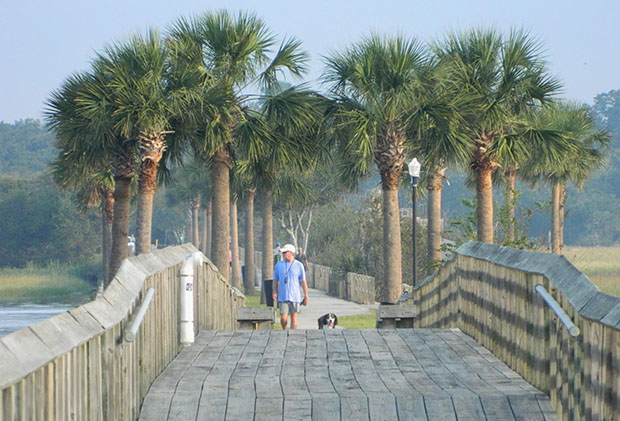
Best Luxury Neighborhoods in Mount Pleasant, SC
Best Luxury Neighborhoods in Mount Pleasant, SC
Mount Pleasant's luxury market isn't monolithic. Five or six distinct neighborhoods attract different buyer profiles and deliver different lifestyle experiences—even at the same price point. Old Village feels like historic Charleston; I'On feels like a planned resort community; Dunes West delivers golf-centric amenities; Shem Creek waterfront offers boating culture and restaurant proximity; and older subdivisions like Park West or Rivertowne emphasize suburban family living over prestige. Leah Beaulieu and BJ Rodgers with Coast2Coast Properties walk you through the neighborhoods that define Mount Pleasant luxury and help you understand which one matches your actual priorities.
The Short Answer
The best luxury neighborhoods in Mount Pleasant depend entirely on your priorities. If you want historic charm and walkability, Old Village 29464 is the answer ($1.5M–$3M+). If you want newer construction and mixed-use amenities, I'On 29464 is ideal ($1.2M–$2.8M). If you prioritize golf and resort amenities, Dunes West 29466 ($1M–$2.5M). If you want boat access and waterfront dining, Shem Creek neighborhoods 29464/29466 ($1.5M–$3M+) with potential tidal flooding and higher insurance costs. For suburban family living with lower HOA oversight, Park West and Rivertowne offer affordability ($750K–$1.5M) and school access without the prestige premiums.
Old Village: Historic Charm and Waterfront Character
Old Village 29464 is Mount Pleasant's original neighborhood—40 blocks of National Register-listed historic homes, oak-lined streets, marsh views, and proximity to Shem Creek's restaurants and kayak culture. Colonial architecture dominates; most homes date 1950s–1980s or were renovated recently.
Price Range: $1.5M–$3M+ depending on size, condition, views, and dock access.
Architectural Character: Colonial and coastal cottages with deep front porches, screened piazzas, raised foundations, and mature landscaping. Newer construction is rare; most are renovations. The uniformity of historic design is both an asset (neighborhood charm) and a constraint (COA restrictions limit modifications).
Lifestyle: Walkable to Shem Creek restaurants (popular gathering spot), Julian Weston Park and tennis courts, Alhambra Playground, and small-scale local retail. Residents enjoy morning jogs along creek trails, kayak launches, and a established community culture. The vibe is less polished resort than authentic Charleston neighborhood.
School Districts: Wando High School (#8 in SC) feeds Old Village, so school quality is never a compromise in this neighborhood.
HOA / Governance: Historic District COA (Certificate of Appropriateness) approval required for exterior modifications, roof replacements, even paint color changes. This slows renovations but preserves character. Condo associations typically $200–$250/month.
Flood Risk: Mixed. Some Old Village homes sit in AE (high-risk) zones near the marsh; others are in X (minimal risk). Waterfront/creek-view homes almost always carry flood insurance; inland homes may not. Verify zone before closing.
Resale Appreciation: Historic neighborhoods appreciate 3–4% annually; established buyer demand and school district strength drive steady value growth. Inventory moves steadily; homes typically sell within 30–45 days if priced competitively.
Best For: Buyers prioritizing historic character, walkability, neighborhood prestige, and established community feel. Families who value Old Charleston charm and don't mind renovation complexity. Empty-nesters seeking walkable downtown-adjacent living without downtown's parking and noise challenges.
I'On: Mixed-Use, Walkable, Modern Luxury
I'On 29464 is newer—built 2000s onward—and represents Mount Pleasant's answer to urbanist, walkable luxury. A town center anchors the community with restaurants, retail, and gathering spaces. Homes range from newer single-family to renovated townhomes and condos. The culture is younger, more family-focused, and more actively managed than Old Village.
Price Range: $1.2M–$2.8M. Newer construction or recent renovations start around $1.3M; established homes in prime locations reach $2.5M+.
Architectural Character: Modern coastal design with clean lines, open floor plans, and efficient layouts. Less historical fussiness than Old Village; more efficient living. Many homes feature screened porches, pools, and outdoor entertaining spaces built-in.
Lifestyle: Walkable town center with restaurants, shops, coffee culture, and organized community events. The Wando restaurant district (multiple upscale options) anchors I'On. Residents walk to dinner, kids bike to school, and the neighborhood culture emphasizes "third places"—gathering spots beyond home and work. This feels like a planned community should feel.
School Districts: Same as Old Village—Wando High, excellent schools. I'On's younger demographic means many families are school-age, so school culture is active.
HOA / Governance: Neighborhood HOA with robust governance, typically $400–$600/month including common area maintenance, landscape, and amenity management (pool, parks, gathering spaces). Well-organized and professional. Deed restrictions limit modifications but less restrictive than historic district COA.
Flood Risk: Mostly X zones (minimal risk). Some interior streets sit in AE; waterfront areas near the Wando have higher risk. Overall, lower flood exposure than Old Village or Shem Creek waterfront.
Resale Appreciation: Younger neighborhood with strong buyer momentum; appreciating 3–4% annually. I'On attracts relocating families and professionals, so buyer demand remains steady even in soft markets.
Best For: Buyers seeking modern construction, walkability, and mixed-use amenities without historic restrictions. Young professionals, relocating families with school-age children, and empty-nesters who prioritize community and convenience over historic character. Investors targeting family rentals (strong demand for 3–4 bedroom I'On homes as full-year rental leases).
Dunes West: Golf-Centric Luxury and Resort Amenities
Dunes West 29466 is Mount Pleasant's premier golf-centered community—built around a championship course, private club dining, tennis facilities, and resident-only amenities. HOA governance is robust and professional; resident culture emphasizes golf lifestyle over neighborhood walkability.
Price Range: $1M–$2.5M. Golf course views command $1.5M+; non-golf-view homes start around $1.1M.
Architectural Character: Newer construction (1990s forward) with modern colonial and coastal styles, spacious lots, and planned landscaping. Homes are newer and typically well-maintained. Design is consistent but less distinctive than Old Village's historic character.
Lifestyle: Centered on golf. The championship course is exclusive to residents; golf memberships are included with purchase. Residents play year-round in Charleston's mild winters. Private club amenities include dining, social events, and tennis facilities. The culture is more structured and country-club-oriented than Old Village's casual creek-walk culture or I'On's urban-walkable feel.
School Districts: Wando High School access, but Dunes West skews toward empty-nesters and retirees, not families. School district is excellent but not the primary draw.
HOA / Governance: Dunes West HOA is comprehensive and well-funded, typically $500–$700/month including golf membership, club facilities, and common area maintenance. Professional management; strong governance but also strict design controls and activity restrictions.
Flood Risk: Mostly X zones. Dunes West sits farther from water bodies than Old Village or Shem Creek, so flood risk is minimal.
Resale Appreciation: Stable 2–3% appreciation. Golf communities can be niche markets; buyer pool is smaller but committed. Resale demand depends on golf interest; non-golfers may find lower demand or need to discount.
Best For: Serious golfers, empty-nesters seeking club lifestyle and amenities, and buyers prioritizing resort-style managed living over neighborhood walkability. Owners who value golf access, manicured common areas, and professional HOA governance over historic charm or urban walkability.
Shem Creek Waterfront: Boating, Dining, and Tidal Living
Shem Creek neighborhoods 29464/29466 encompass properties directly on or overlooking the creek—the most photographed and coveted addresses in Mount Pleasant. Homes range from established waterfront classics to newer renovations and new construction overlooking the water.
Price Range: $1.5M–$3M+ for waterfront or direct creek-view homes. Non-waterfront properties in adjacent neighborhoods start lower ($1.2M+).
Architectural Character: Waterfront homes emphasize views, decking, and boat dock access. Styles range from historic low-country cottages with wraparound porches to contemporary glass-and-steel designs maximizing views. Lot sizes are smaller (waterfront premium) but homes sit farther apart horizontally.
Lifestyle: Boating, kayaking, and waterfront dining dominate daily life. Residents dock boats, launch kayaks, and walk to restaurants on Shem Creek Landing. The neighborhood culture is active, water-focused, and less pedestrian-walkable than Old Village (roads are less dense) but compensates with water access. Parking at restaurants can be tight during peak season (May–October).
School Districts: Wando High School, but families are less common than in I'On or Old Village. More oriented toward empty-nesters and weekend residents.
HOA / Governance: Varies by specific development. Waterfront condo associations typically $250–$350/month; neighborhood HOAs $300–$500/month. Governance often includes dock maintenance, HOA-controlled marina access, or shared boating facilities.
Flood Risk: AE (high-risk) flood zones dominate waterfront homes. Tidal flooding during king tides (September–November) can inundate low-lying streets for 12–24 hours. Flood insurance runs $3,000–$6,000/year. Elevation requirements and sump pumps are common. Buyers must model this cost into true cost of ownership and accept periodic inconvenience.
Resale Appreciation: 3–4% annually for waterfront, slightly lower for non-waterfront adjacent properties. Waterfront premiums hold steady, but buyer pool is narrower (boat owners, water-lifestyle buyers only).
Best For: Boaters, kayakers, and water-lifestyle enthusiasts prioritizing daily water access over neighborhood walkability or golf. Buyers comfortable with tidal flooding risk, higher insurance costs, and seasonal parking challenges. Empty-nesters or weekend residents (not full-time families) who will use the water access.
Park West, Rivertowne, and Established Subdivisions
Older, established neighborhoods like Park West, Rivertowne, and Hobcaw Creek offer suburban family living, single-family homes, and lower price points—but without the prestige or distinctive character of Old Village, I'On, or waterfront areas.
Price Range: $750K–$1.5M. Substantial savings compared to premium neighborhoods at same price point.
Architectural Character: 1970s–1990s construction. Ranch-style and colonial homes with conventional floor plans, often renovated. Less distinctive architectural character than Old Village; more conventional suburban feel.
Lifestyle: Suburban family focus. Schools and family safety are primary draws. Walkability is limited; residents drive to shopping, restaurants, and activities. Social culture is less structured than Dunes West's country-club orientation but more community-oriented than anonymous sprawl.
School Districts: Wando High School, but reputation is secondary to neighborhood convenience.
HOA / Governance: HOAs typically $150–$250/month for lighter governance and maintenance. Fewer restrictions; more individual homeowner autonomy.
Flood Risk: Mostly X zones with some AE exposure in lower-lying areas. Generally lower risk than waterfront neighborhoods.
Resale Appreciation: 2–3% annually. Solid appreciation but not as strong as premium neighborhoods. Buyer demand is steady (families prioritizing schools and affordability over prestige).
Best For: Families prioritizing school access and affordability over prestige or distinctive character. Buyers seeking suburban living with lower HOA costs and fewer restrictions. Value-conscious relocators willing to trade prestige for savings.
Comparing Mount Pleasant's Best Neighborhoods at a Glance
Old Village: Historic, walkable, prestige-heavy, $1.5M–$3M+, 3–4% appreciation, COA restrictions, mixed flood risk, established buyers
I'On: Modern, mixed-use, walkable, $1.2M–$2.8M, 3–4% appreciation, professional HOA, low flood risk, younger demographic
Dunes West: Golf-centric, resort amenities, $1M–$2.5M, 2–3% appreciation, country-club culture, low flood risk, empty-nesters
Shem Creek Waterfront: Boating, waterfront dining, $1.5M–$3M+, 3–4% appreciation, high flood risk, dock access, water-lifestyle buyers
Park West / Established: Suburban, family-focused, $750K–$1.5M, 2–3% appreciation, lower HOA costs, low flood risk, value-focused families
The Biggest Mistake Luxury Buyers Make When Choosing Mount Pleasant Neighborhoods
The biggest mistake is choosing a neighborhood based on price alone instead of lifestyle fit. A buyer finds a $1.8M home and assumes all neighborhoods at that price are equivalent. They're not. The $1.8M Old Village colonial offers historic prestige and walkability; the $1.8M Dunes West home offers golf and resort amenities; the $1.8M Park West home offers suburban family living and lower ongoing costs. Same price, completely different neighborhoods, different buyer profiles, different happiness outcomes.
The second mistake is underestimating flood insurance and tidal living costs in waterfront neighborhoods. Buyers fall in love with creek views and dock access but don't factor the $4,000/year insurance, occasional tidal flooding, elevation requirements, and salt-air maintenance acceleration. The waterfront lifestyle is real and wonderful—but it has hidden costs most buyers underestimate.
The third mistake is assuming newer = better. I'On is newer than Old Village, but Old Village's historic prestige and established buyer demand make it hold value better. Newer construction isn't inherently superior; it depends on neighborhood trajectory and buyer demand. Old Village appreciates faster than many newer neighborhoods because buyer demand is consistent and the historic character is irreplaceable.
A Realistic Example
The Williamson family is relocating from Atlanta with a $2.2M budget, no school-age children, and golf passion. They tour Dunes West, I'On, Old Village, and Shem Creek waterfront over a weekend.
Dunes West appeals immediately—championship course, club dining, resort feel, and $2.1M homes with strong finishes. The HOA is professional, golf is included, and the community culture is immediate and structured. But then they realize resale pool is smaller (golf buyers only) and non-golfers would struggle to resell.
Old Village offers historic character and walkability—they could walk to Shem Creek restaurants and experience authentic Charleston living. But renovations are constant in older homes, and COA restrictions limit modifications. At $2.1M, the home is smaller than Dunes West (charming but smaller).
Shem Creek waterfront is stunning—water views, dock access, boating culture. But the $4,500/year flood insurance, tidal flooding reality, and smaller buyer pool give them pause. If they eventually want to sell to a non-boater, the waterfront premium might disappear.
I'On feels like a compromise—newer construction, walkable town center, good schools (though they don't need them), lower flood risk, and strong appreciating neighborhood. At $2.1M, they get 4,500+ sqft, modern finishes, resort pool/amenities, and a neighborhood with strong buyer momentum.
After thinking through lifestyle (golf is important but not their whole life), resale (they may not stay forever), and cost of ownership (flood insurance matters), the Williamsons choose I'On. They get walkability, modern construction, and the security of a neighborhood with broad buyer appeal if they relocate again.
It's not the most prestige choice (Old Village edges I'On on prestige), but it's the right choice for their actual needs and financial risk tolerance.
Which Mount Pleasant Neighborhood Is Right for You?
Choosing between Mount Pleasant's luxury neighborhoods means being honest about what you actually value. Do you want historic character and walkability? Old Village. Do you want modern convenience and mixed-use living? I'On. Do you want golf and resort amenities? Dunes West. Do you want boat access and waterfront lifestyle? Shem Creek, with eyes open to flood costs. Do you want suburban family living with lower costs? Park West and established neighborhoods.
Leah Beaulieu and BJ Rodgers with Coast2Coast Properties help luxury buyers distinguish neighborhoods by lifestyle, not just price. The "best" neighborhood in Mount Pleasant isn't defined by price—it's defined by whether it matches your actual priorities and will keep you happy for years.
Frequently Asked Questions
Which Mount Pleasant neighborhood is most prestigious for resale?
Old Village commands the most prestige and has the broadest buyer appeal. The historic character, walkability, and established reputation mean Old Village homes attract more buyers and appreciate steadily. I'On is close behind (newer, broader appeal, mixed-use). Dunes West appeals to golfers; Shem Creek appeals to water-lifestyle buyers. Old Village is the safest prestige bet if resale is a concern.
Which neighborhood has the highest flood risk?
Shem Creek waterfront properties, particularly those with direct creek exposure, typically sit in AE (high-risk) zones with annual flood insurance $3,000–$6,000+. Some Old Village waterfront homes also carry AE exposure. I'On and Dunes West are mostly X zones with minimal flood risk. Non-waterfront homes in any neighborhood generally have lower risk than waterfront. Always verify the FEMA flood zone before making an offer.
Which neighborhood appreciates fastest?
Old Village, I'On, and Shem Creek waterfront appreciate 3–4% annually due to strong buyer demand and limited supply. Dunes West and established subdivisions appreciate 2–3%. At the neighborhood level, prestige and supply-demand dynamics matter more than the neighborhood name itself.
Can you rent out homes in Mount Pleasant neighborhoods?
Yes, but HOA restrictions vary. I'On and some waterfront neighborhoods allow full-year residential rentals (families renting for 12 months) but may restrict short-term vacation rentals. Dunes West HOA strictly limits rentals. Old Village condos may prohibit rentals entirely. Check HOA documents before buying if rental income is a goal. Full-year residential rentals are allowed in most neighborhoods; vacation rentals are the constraint.
Which neighborhood is best for families with school-age children?
I'On is the clear winner—younger demographic, active school culture, modern construction designed for families, and walkable amenities. Old Village is also excellent for schools (same Wando High access) but smaller homes and renovation needs make it less family-friendly. Dunes West skews empty-nesters; Park West is family-oriented but less prestigious.
Is it worth paying the Shem Creek waterfront premium if you don't boat?
Probably not. The waterfront premium ($400K–$800K+) plus flood insurance ($4,000–$6,000/year) is hard to justify if you won't use the dock or water access regularly. You're essentially paying for a lifestyle you won't live. If waterfront views are your draw, consider non-waterfront adjacent properties with water views but lower costs and lower flood risk.
How much more does Old Village cost than I'On?
At comparable square footage and condition, Old Village typically runs 10–20% higher than I'On due to prestige and walkability. A $2M Old Village home might be 3,500 sqft of renovated historic colonial; a $2M I'On home might be 4,500 sqft of newer construction with more modern finishes. The "better" value depends on whether you prioritize prestige/character or space/newness.
Final Answer
Mount Pleasant's luxury neighborhoods are not interchangeable. Each offers distinct lifestyle, architectural character, HOA governance, and buyer profile. Leah Beaulieu and BJ Rodgers with Coast2Coast Properties help you match your actual priorities to the neighborhood that will deliver the right experience—whether that's historic prestige, modern walkability, golf amenities, waterfront access, or suburban family living. The best neighborhood for you depends on how you actually live, not just on price or prestige rankings.
About Leah Beaulieu & BJ Rodgers — Coast2Coast Properties
Leah Beaulieu and BJ Rodgers are Charleston, South Carolina real estate professionals with Coast2Coast Properties, helping buyers compare neighborhoods, understand local market differences, and find the right fit across the Charleston area. Whether you are buying your first home, relocating to the Lowcountry, or looking for investment opportunities, Leah and BJ bring local knowledge, straight talk, and a genuine commitment to helping clients make smart decisions.
Coast2Coast Properties
www.coast2coastprop.com
843-697-1409 / 803-201-4259