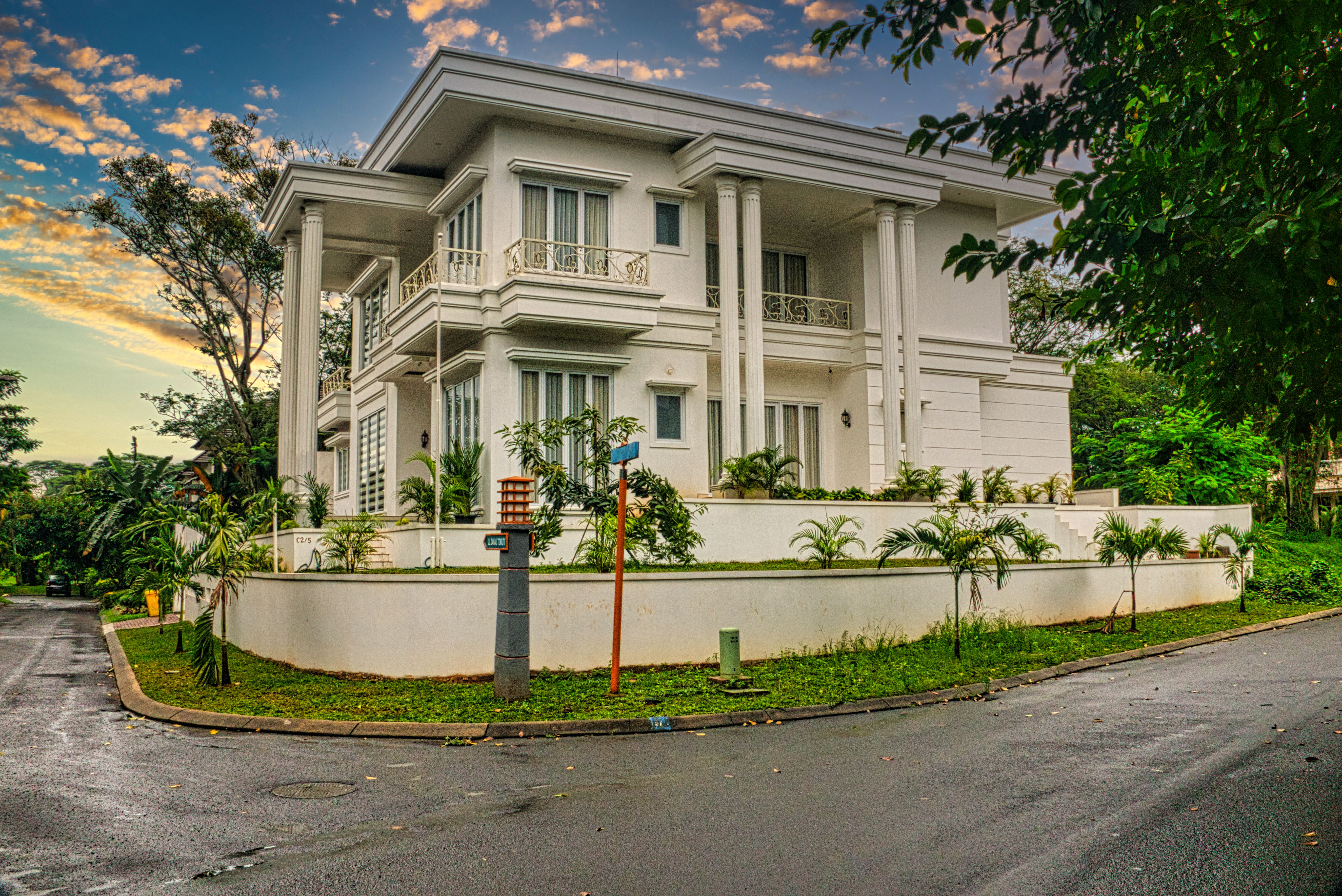
Buying a Charleston Beach House: Insurance, Flooding and Hurricane Costs to Consider
Buying a Charleston Beach House: Insurance, Flooding and Hurricane Costs to Consider
Author: Leah Beaulieu & BJ Rodgers, Coast2Coast Properties
Date: September 2026
Location: Charleston & Coastal South Carolina (Isle of Palms, Sullivan's Island, Folly Beach, 29451, 29482)
The Charleston Beach House Dream Looks Different When You Add Up the Real Costs
A Charleston beach house is the dream—waking up to ocean views, morning walks on the sand, that salty-air lifestyle. It's why people pay $4M to $8M for oceanfront properties in places like Isle of Palms and Sullivan's Island. But the dream comes with a reality check: beach house ownership costs a lot more than the mortgage.
Insurance, flooding, evacuation, storm prep, deductibles, and maintenance accelerate in ways that inland homes never experience. This isn't meant to kill your dream. It's meant to make sure you know what you're buying into before you sign.
The First Shock: Flood Insurance on Barrier Island Beach Homes
When you buy a beach house in Charleston, you're buying in FEMA's highest-risk flood zones. The National Flood Insurance Program (NFIP) bases premiums on storm surge models, historical data, and geography. Barrier islands don't score well on any of those metrics.
For a single-family beach home in an AE flood zone with $250,000 in building coverage and a standard $5,000 deductible, NFIP premiums average $3,351 per year in 2026. Some homes run higher. Waterfront properties can hit $6,000 to $8,000 annually.
To put that in perspective: that's $280 to $670 every single month, just for flood insurance. For a $4M oceanfront home, that's over $1,000 a month.
Add homeowners insurance (another $3,000 to $5,000 annually for beach properties due to wind risk), plus windstorm coverage (another $2,000 to $4,000), and your total insurance bill for a mid-range beach home can exceed $10,000 per year. For ultra-premium oceanfront estates, $15,000 to $20,000 annually is not uncommon.
Where the Real Costs Hide: It's Not Just Insurance
Insurance gets the headlines, but it's not the only thing that makes beach home ownership expensive.
Evacuation costs: When a mandatory evacuation is issued for the barrier islands—which happens maybe once every three to five years—you need a place to stay. Hotels along the I-95 corridor fill up fast at $150 to $300 per night. A week-long evacuation costs $1,000 to $2,000 for a family. Some families rent condos for the entire summer hurricane season just to avoid the hassle.
Storm prep and maintenance: Barrier island homes take a beating from salt spray, sand, and weather. Annual maintenance runs higher than inland properties. Roof inspections every two years. Repainting every five to seven years (not ten). HVAC maintenance. Seal coating. Landscape hardening. All accelerated by coastal environment.
Deductibles: Most comprehensive flood insurance policies carry $1,000 to $5,000 deductibles per claim. If your beach house floods, you're paying thousands out of pocket before insurance kicks in. In 2026, a $5,000 deductible is standard on newer policies.
Capital improvements: Seawalls need maintenance and replacement. Pilings settle. Decks deteriorate faster. Storm windows and impact glass degrade and need replacement. On the mainland, these are 10 to 15 year maintenance items. On the barrier islands, they're 7 to 10 year items.
HOA fees: If your beach home is in an oceanfront community with managed amenities, HOA fees for barrier island properties run $5,000 to $15,000 annually depending on the community and property size.
A Realistic Total-Cost Breakdown for a $4M Oceanfront Beach Home
Let's calculate the real annual carrying cost for a $4M oceanfront home on Isle of Palms:
- Mortgage payment (20% down, 7% rate): $21,600/month = $259,200/year
- Property taxes: $8,000/year
- Homeowners insurance: $4,500/year
- Flood insurance: $5,500/year
- Windstorm insurance: $3,200/year
- HOA fees: $8,000/year
- Annual maintenance (roof, painting, HVAC, seawall, landscape): $12,000/year
Total annual carrying cost: $300,400
That's $25,000 per month just to carry the property, not including utilities, staff (if you hire housekeepers or groundskeepers), or capital improvements.
For comparison, an identical-quality $4M home in downtown Charleston or a prestigious inland neighborhood might run:
- Mortgage payment: $259,200/year (same)
- Property taxes: $6,000/year
- Homeowners insurance: $3,000/year
- Flood insurance: $2,100/year (Zone X)
- HOA fees: $3,000/year (if applicable)
- Annual maintenance: $8,000/year
Total annual carrying cost: $281,300
The difference? Nearly $19,000 per year, or $570,000 over 30 years. That's a fully loaded second property, a vacation home elsewhere, or serious retirement savings you're giving up just to own oceanfront.
Buying an Older Beach Home Adds More Risk
Older oceanfront and near-oceanfront homes—especially pre-1990s construction—were built before today's flood-resistant building codes. They may not have:
- Elevated mechanical systems (HVAC, electrical, water heaters above the base flood elevation)
- Impact-resistant windows and doors
- Proper grading to prevent pooling and drainage issues
- Pilings appropriate for current storm surge models
When FEMA updated its flood maps in 2022 through 2026, many older homes saw significant insurance premium increases. A $3M oceanfront home built in 1985 might have suddenly shifted to a higher-risk flood zone, causing insurance costs to jump $2,000 to $4,000 annually overnight.
If you're buying an older beach home, budget for retrofitting. Elevating systems, installing impact windows, and waterproofing improvements can run $50,000 to $150,000, but they'll lower your flood insurance premiums and make the home safer.
The Biggest Mistake Beach Home Buyers Make
They fall in love with the property and ignore the insurance quotes. They'll spend weeks comparing floor plans and finishes and never ask for a binding flood insurance estimate before making an offer.
Then, during the due-diligence phase or—worse—after closing, they discover their annual insurance costs are $8,000 instead of the $4,000 they assumed. By then, they're committed.
The second mistake: assuming all barrier island properties are equally expensive to insure. They're not. An older home in an AE zone on Sullivan's Island (one road in and out, more exposed) might cost significantly more to insure than a newer home on Isle of Palms with better elevation and newer construction standards.
Which Barrier Islands Are Most Expensive to Insure?
Sullivan's Island (29482): Smallest, most exclusive, and most exposed. Sits on the north side of the harbor mouth with direct ocean exposure. Insurance premiums run highest here, often $6,000 to $10,000 annually for AE-zone homes.
Isle of Palms (29451): Larger than Sullivan's Island but still barrier island exposed. More homes were built post-1990 with better codes. Insurance runs slightly less than Sullivan's Island, averaging $5,000 to $8,000 for AE properties.
Folly Beach (29439): Busier, more commercial, but barrier island exposure remains. Insurance premiums for residential oceanfront homes run similarly to Isle of Palms, $5,000 to $7,000 annually.
Seabrook Island (29455): Gated community with more elevation than some barrier islands. Slightly lower insurance premiums than non-gated barrier islands, but still significant at $4,500 to $6,500 for AE properties.
Hilton Head Area: More developed, mixed residential and resort. Insurance varies widely by specific neighborhood but generally $3,000 to $5,500 for oceanfront properties in high-risk zones.
Oceanfront vs. Near-Oceanfront: Does It Change the Costs?
A little bit. True oceanfront properties sit in the highest-risk AE zones and face direct wind and storm surge exposure. Near-oceanfront properties (one to three houses back from the water) might sit in slightly lower-risk zones and see marginally lower insurance premiums—maybe 15 to 25% less.
But "near-oceanfront" doesn't solve the core problem. You're still on a barrier island facing evacuation, high insurance, maintenance acceleration, and all the other costs. The only real way to significantly reduce costs is to move off the barrier islands entirely and buy on the mainland.
A Realistic Example: The Morrison Family's Beach House Decision
Let's say the Morrison family found a $3.2M oceanfront home on Isle of Palms. It was built in 2001, has impact windows, elevated mechanical systems, and sits in an AE flood zone.
Before making an offer, they get a binding flood insurance quote: $4,800/year. They also price homeowners insurance ($3,200/year) and windstorm coverage ($2,000/year). Total insurance: $10,000/year.
They plug this into their financial model. Over a 30-year mortgage, that's $300,000 in insurance costs alone, not counting maintenance acceleration, HOA, or evacuation disruptions.
The Morrisons then look at comparable $3.2M homes in downtown Charleston (High Battery or South of Broad). Same finishes, same views of the water (though not oceanfront), similar age and construction quality. Insurance costs drop to $4,500/year total.
After running the full cost analysis, the Morrisons offer on the downtown Charleston home instead. They get 95% of the lifestyle—views, walkable neighborhood, prestige address—for 40% less in annual carrying costs.
Was the oceanfront isle of Palms better? Maybe aesthetically. Financially? The downtown property made more sense.
What Beach Home Buyers Often Underestimate
-
The psychological cost of evacuation: Packing up every few years, sitting in traffic for hours, worrying about your home while you're away. It wears on people.
-
The maintenance acceleration: Your beach house needs more attention, more often, than you expected.
-
The resale friction: Rising insurance costs and updated flood zones make it harder to sell beach properties in an uncertain climate future. Buyers are increasingly skeptical of barrier island exposure.
-
The isolation during storm season: You might not be able to visit your beach house during June through November if you're risk-averse. That cuts your enjoyment window in half.
-
The capital improvements: That beautiful old oceanfront home? It might need $200,000 in improvements within five years just to stay competitive and meet current codes.
Should You Buy a Charleston Beach House at All?
If you can afford the carrying costs, understand the risks, and truly love the oceanfront lifestyle, then yes. Some buyers do the math and decide it's worth it. The Charleston barrier islands are beautiful. The community is real. The lifestyle is genuinely appealing.
But you should buy with full information. The oceanfront dream costs a lot more than the sale price. Make sure you're paying for the lifestyle you actually want, not the one you imagine.
Ready to Explore Coastal Charleston Options with Full Cost Transparency?
Whether you're set on oceanfront, open to near-oceanfront alternatives, or curious about whether a mainland property makes more financial sense, Leah and BJ can help you calculate the true cost of ownership, compare insurance quotes, and decide which Charleston location aligns with your budget and lifestyle.
Contact Leah Beaulieu and BJ Rodgers at Coast2Coast Properties to explore Charleston beach house options with complete clarity on hurricanes, flooding, insurance costs, maintenance, and long-term investment outlook.
About Leah Beaulieu & BJ Rodgers — Coast2Coast Properties
Leah Beaulieu and BJ Rodgers are Charleston, South Carolina real estate professionals with Coast2Coast Properties, helping buyers compare neighborhoods, understand local market differences, and find the right fit across the Charleston area. Whether you are buying your first home, relocating to the Lowcountry, or looking for investment opportunities, Leah and BJ bring local knowledge, straight talk, and a genuine commitment to helping clients make smart decisions.
Coast2Coast Properties
www.coast2coastprop.com
843-697-1409 / 803-201-4259