Buying Your Future Retirement Home in Charleston Before You Retire
Buying Your Future Retirement Home in Charleston Before You Retire
If you're five to ten years away from retirement and thinking about moving to Charleston, buying now might be smarter than waiting. Leah Beaulieu and BJ Rodgers with Coast2Coast Properties help buyers make this decision all the time, and the strategy works when you choose the right neighborhood and property type. The key is thinking not just about today, but about what will actually matter in your 70s and 80s.
The short answer
- Buying early gives you time to settle in, pay down the mortgage, and lock in today's prices before you actually retire
- Downtown Charleston (29401/29403) and walkable Mount Pleasant neighborhoods (29464) are built for aging in place — short walks to restaurants, healthcare, and services
- Property type matters more than size — a smaller, low-maintenance home or condo ages better than a large house with acres of lawn and a roof full of gutters
- Healthcare proximity and walkability should drive your neighborhood choice, not just the view or the golf course
- Retirees often regret choosing homes they can't maintain or neighborhoods where they feel isolated — avoid both
Why buying early matters for retirement
Buying five to ten years before you retire does three things for your finances and peace of mind. First, it gives you time to pay down the principal — if you buy a $600,000 home at age 55, you can have a $400,000-$500,000 balance by the time you hit 65, dramatically reducing your monthly housing cost in retirement. Second, you lock in today's prices. The Charleston market has averaged $669,000 as of August 2026, and experts don't expect prices to drop. Third, and this matters more than people expect, you get five to ten years to actually know the neighborhood before you've bet your entire retirement on it. You'll learn where the good restaurants are, where traffic actually clogs during rush hour, and whether the neighborhood climate — literally and socially — appeals to you long-term.
Leah Beaulieu and BJ Rodgers often advise their retirement-focused clients to buy early for these exact reasons. "You don't want to be moving three times in your first ten years of retirement," Leah explains. "Buy once, know the place, then settle in."
Neighborhoods that age well in Charleston
Not every Charleston neighborhood works equally well for full-time retirees. The ones that do share three things: walkability, healthcare proximity, and active adult communities or established neighborhoods with enough peers.
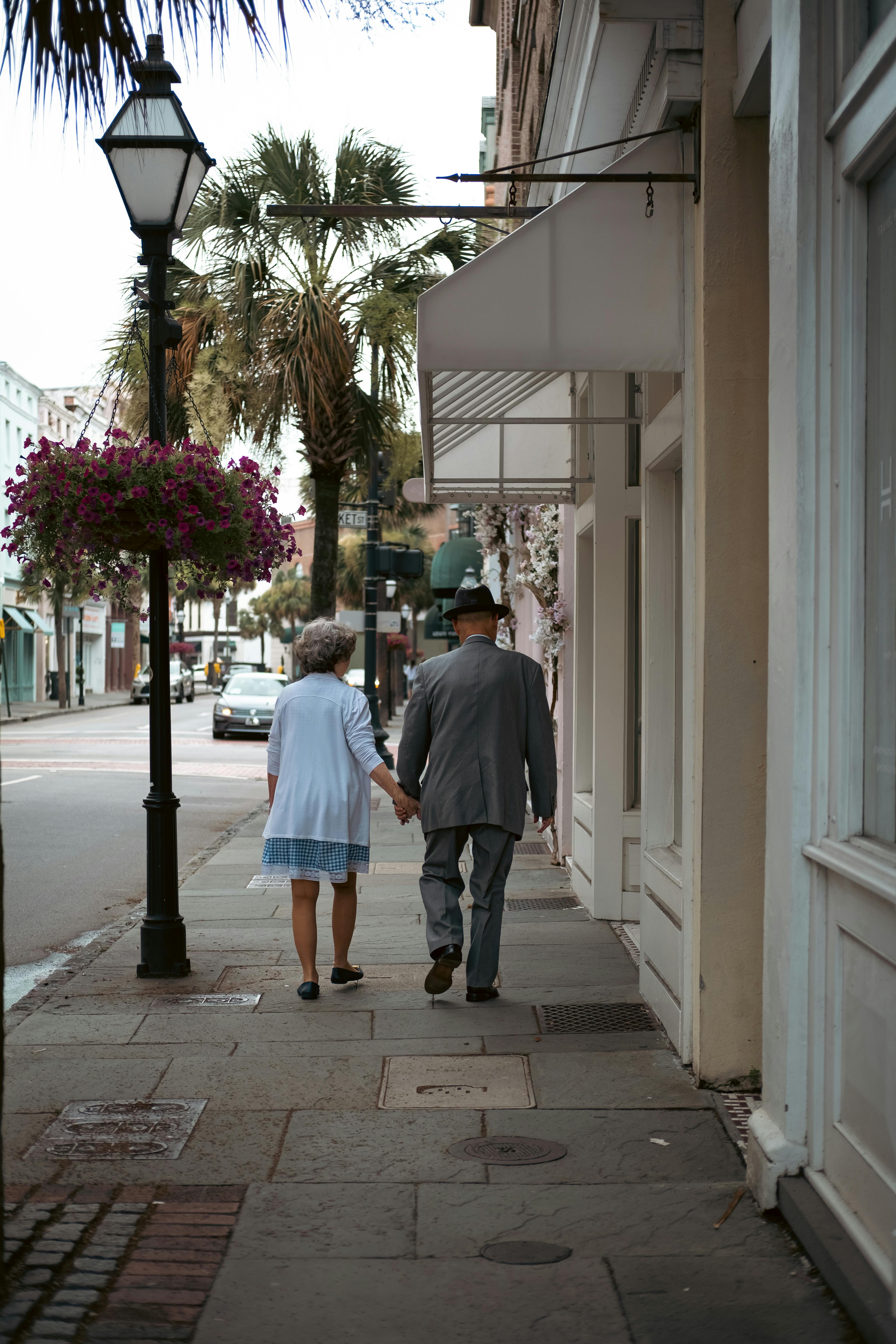
Downtown Charleston (29401/29403) is the top choice for walkable retirement living. South of Broad and Harleston Village have flat terrain, sidewalks wide enough for walkers or canes, and restaurants, galleries, and bookstores within a five-minute walk. MUSC Health (a nationally ranked academic hospital) and Roper St. Francis are both within a 5-10 minute drive. Many downtown retirees walk to dinner, to the market, and to social events. The average home price downtown sits around $700,000-$1,000,000+, so this works best if you've built significant equity or have a substantial budget.
Mount Pleasant (29464/29466) is the retiree alternative to downtown. It's less walkable than the peninsula, but Belle Hall and Old Village Mount Pleasant neighborhoods offer shorter drives to healthcare (MUSC and East Cooper Regional are both close), and strong retail and dining options. The average Mount Pleasant home price is $880,000 as of August 2026, up 8.5% from last year. You'll get more square footage and outdoor space than downtown, but you'll drive more. Many retirees prefer this tradeoff.
Daniel Island (29492) attracts active retirees who want community amenities. The Founders Club offers pools, tennis, dining, and events. The average Daniel Island home is $1.87 million, so this works only for buyers with substantial equity. Daniel Island is less walkable than downtown but more communal than Mount Pleasant.
BJ Rodgers, working with retirees for years, notes: "The neighborhoods that work best are the ones where you can walk to dinner and where the community is already built for people who don't want to maintain a four-bedroom house anymore."
Property types that age well
Buying the right property type matters more than the square footage. A large single-family home on two acres with a 40-year-old roof and 200 feet of gutters is a liability in retirement, not an asset. Smaller, low-maintenance homes, townhomes, and condos with HOA-managed exterior work age far better.
Single-family homes under 2,500 square feet with minimal exterior work (no septic system, minimal landscaping, newer roof) work for retirees who want independence but don't want endless maintenance. Think of a three-bedroom, two-bath in an established neighborhood where neighbors are similar in age.
Townhomes are ideal for retirees. You get three stories and more space than a condo, but the HOA handles the roof, exterior, and landscaping. Townhomes in Charleston start around $400,000-$500,000, and many are designed specifically for empty nesters or retirees.
Condos offer the lowest maintenance and best for buyers who want to travel or who aren't interested in property upkeep. Good downtown condos range from $350,000-$800,000+ depending on location. The trade-off is that condo associations control everything, and you'll share walls.
Avoid buying a large, high-maintenance home just because you can afford it. Many retirees in Charleston buy four-bedroom colonials on James Island (29412) or Johns Island (29455) thinking they'll eventually use the space — then spend ten years wishing they'd bought something simpler. Leah's advice is simple: "Buy the house you'll want to live in at 80, not the house that impresses people now."
The biggest mistake early retirement buyers make
The biggest mistake is buying a neighborhood or property type you think you should want instead of what you'll actually enjoy. This shows up as: "We bought in Summerville (29486) because the prices were better and the new construction was cheaper, but we miss being closer to the city." Or: "We bought a four-bedroom house because we wanted guest rooms, but our kids never stay with us and I hate mowing the lawn."
The other mistake is underestimating how much healthcare proximity matters. When you're 45, a 20-minute drive to the doctor is fine. When you're 75 and having more frequent appointments, you'll wish you were ten minutes away. Buyers often choose neighborhoods for the view or the golf course and only later realize they're far from specialists or routine care.
Finally, retirees regret choosing expensive neighborhoods where everyone is wealthy but nobody socializes. Charleston's best retirement neighborhoods are the ones with natural gathering places — downtown restaurants, Mount Pleasant's shopping centers, Daniel Island's Founders Club. Isolation kills happiness in retirement more than any other factor.
A realistic example
Meet Susan and Michael, both successful professionals in their early 50s. They began visiting Charleston in 2022, fell in love with the food and the pace, and decided to relocate in retirement (about five years away). Rather than wait, they bought a 2,200-square-foot townhome in Harleston Village (downtown Charleston 29403) in 2023 for $575,000. It had three bedrooms (guest suite for visiting family), was built in 1980 and fully renovated, had an HOA that handled the roof and exterior, and sat two blocks from King Street restaurants and a five-minute walk from Roper St. Francis.
Here's what buying early gave them: They spent 2023-2026 getting to know the neighborhood, learning which restaurants they actually like (turns out they eat out three times a week), making friends at the wine bar and the farmers market, joining a church, and confirming that the downtown lifestyle was really for them. By 2026, they'd paid $150,000 toward principal, their mortgage balance was down to $425,000, and they'd updated their will and healthcare documents knowing exactly where they'd be living. In 2028, when they retired, there was no moving truck, no stress about fitting in, no regret about the neighborhood. They were home already.
Because they bought a townhome with an HOA, they spend an hour a month on lawn care (the neighborhood) instead of eight hours. Michael's knees aren't what they used to be, and neither regrets that decision.
So what about buying early in Charleston?
The real answer is that buying five to ten years before you retire is one of the smartest moves you can make — IF you buy the right property in the right place. Here's what matters:
- Start with neighborhoods built for aging in place: downtown Charleston (29401/29403) for walkability, Mount Pleasant (29464/29466) for the balance of community and access, or Daniel Island (29492) if you want active adult amenities
- Choose a property type you can manage — townhome or condo beats a large single-family home every time
- Prioritize healthcare proximity and walkability over views or golf courses
- Buy early enough to settle in, make friends, and confirm your choice before retirement actually starts
- Budget for the neighborhood you want to grow old in, not the one that impresses people today
FAQ: Buying Your Retirement Home Early
Q: How early is too early to buy my retirement home?
A: The sweet spot is five to ten years before you plan to retire. Early enough to pay down principal, settle into the community, and confirm it's right for you. If you buy 15+ years early, life circumstances change and neighborhoods evolve. Too close to retirement (one to two years) and you lose the benefit of settling in.
Q: Will my retirement home appreciate in Charleston?
A: Yes. Charleston's market has appreciated steadily — the average home price of $669,000 as of August 2026 reflects consistent growth. Downtown and walkable neighborhoods historically appreciate 3-4% annually, though past performance doesn't guarantee future returns. Location and property type matter more than the overall market.
Q: Should I buy downtown or in a suburb like Mount Pleasant?
A: It depends on your lifestyle. Downtown (29401/29403) wins if you want walkable restaurants, culture, and a social scene. Mount Pleasant (29464/29466) wins if you want space, a car-based lifestyle, and newer construction. Both work for retirement — the choice is purely personal. Leah and BJ help clients visit both and honestly assess which they'd actually prefer.
Q: What if my kids want to visit — should I buy a four-bedroom house?
A: No. Buy what you'll use daily, not what you might use annually. If you want guest space, a one-bedroom condo with a sleeper sofa, or a townhome with a guest bedroom, works better than maintaining four empty bedrooms. Many hotels offer better guest experiences than a spare room anyway.
Q: How much should I budget for a retirement home in Charleston?
A: It depends on your neighborhood choice. Downtown Charleston homes range $600,000-$1,000,000+. Mount Pleasant averages $880,000. Daniel Island averages $1.87 million. Townhomes start around $400,000-$500,000 in good neighborhoods. Focus on your comfort budget rather than stretching to impress — you'll live with this decision for 20+ years.
Q: Will I regret moving to Charleston in retirement?
A: Not if you choose a neighborhood you've experienced and a property you can manage. The regrets come from moving without visiting first, choosing isolation over community, or buying more house than you want to maintain. Buy smart, and Charleston is full of happy retirees.
Final answer
Buying your future retirement home five to ten years before you actually retire is one of the smartest financial and lifestyle moves you can make — if you choose the right place. Charleston offers world-class neighborhoods for retirees: downtown for walkability, Mount Pleasant for suburban comfort, Daniel Island for active community. The key is choosing a property type you'll genuinely want to maintain and a neighborhood you're certain about before retirement actually arrives.
Leah Beaulieu and BJ Rodgers have helped countless successful professionals buy their retirement homes early, and the ones who thrive are the ones who bought a manageable property in a neighborhood they could actually see themselves in. If you're thinking about Charleston retirement, start now. You'll thank yourself.
About Leah Beaulieu & BJ Rodgers — Coast2Coast Properties
Leah Beaulieu and BJ Rodgers are Charleston, South Carolina real estate professionals with Coast2Coast Properties, helping buyers compare neighborhoods, understand local market differences, and find the right fit across the Charleston area. Whether you are buying your first home, relocating to the Lowcountry, or looking for investment opportunities, Leah and BJ bring local knowledge, straight talk, and a genuine commitment to helping clients make smart decisions.
Coast2Coast Properties
www.coast2coastprop.com
843-697-1409 / 803-201-4259