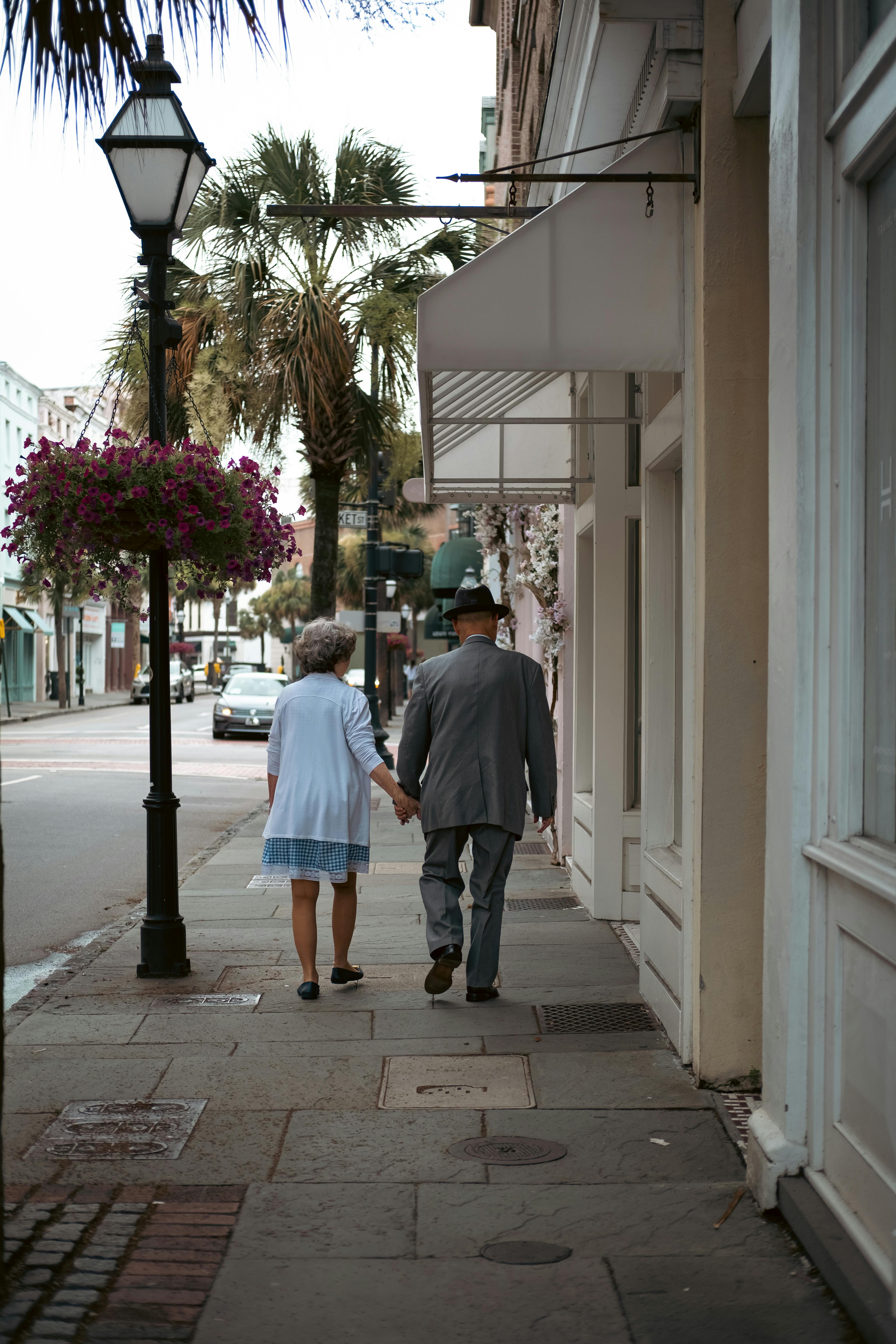
Buying a Luxury Home in Downtown Charleston
Buying a Luxury Home in Downtown Charleston
Downtown Charleston 29401 and 29403 represent the apex of the Charleston real estate market — where historic architecture meets premium pricing, walkability comes with flood risk, and prestige carries real tradeoffs. If you're considering a luxury home in the heart of Charleston, Leah Beaulieu and BJ Rodgers with Coast2Coast Properties want you to understand what you're actually buying, not just the listing photos.
The Short Answer
- Downtown Charleston luxury homes range from $500,000 to over $5 million, with South of Broad commanding the highest prices
- The 29401 ZIP code (South of Broad area) averages $2.225 million; 29403 (Harleston Village and surrounding areas) averages $1.025 million
- Single-family historic "single houses" are Charleston-iconic but narrow, expensive, and require specific understanding before buying
- Most luxury downtown homes are condos or renovated historic properties, not new construction
- Flood zones on the peninsula vary dramatically — some streets flood regularly, others rarely
- Historic district restrictions (COA approval required for exterior changes) add cost and complexity to renovations
- Walkability and vibrant street life are genuine daily rewards that justify the premium for many buyers
- Parking, narrow streets, and hurricane season are real lifestyle tradeoffs
What Makes Downtown Charleston Different From Suburban Luxury
Downtown Charleston luxury is its own category, completely separate from the suburban luxury markets in Mount Pleasant 29464, Daniel Island 29492, or Kiawah Island 29455. When you buy downtown, you're not buying a golf course community or a gated resort — you're buying a walkable historic neighborhood with architectural significance, dense restaurants and galleries, and a thriving street culture.
The trade-off is real: you pay more per square foot than suburban alternatives, accept smaller lots and narrower lots, navigate parking challenges, deal with tighter HOA restrictions if you're in a condo, and accept higher flood exposure in many areas. But what you gain is something suburban luxury simply can't offer: a lifestyle where you walk to dinner, know your neighbors across generations, and live in neighborhoods that have defined Charleston's identity for 300 years.
Downtown median home prices sit at $1.3 million as of August 2026, according to recent market data. But "downtown" is a huge category. South of Broad commands the premium, while neighborhoods like Cannonborough-Elliotborough or Ansonborough offer luxury at a more moderate price point.
South of Broad: The Most Prestigious Address in Charleston
South of Broad 29401 is the crown jewel of downtown Charleston real estate. The median price for homes in this neighborhood exceeds $2.2 million, with many properties reaching $3 million, $4 million, or beyond. The most exceptional South of Broad homes on the Battery or with significant square footage can exceed $5 million.
What commands these prices? Location. South of Broad includes some of Charleston's most iconic addresses — homes on The Battery facing the harbor, tree-lined streets with homes set back from wide sidewalks, architectural significance from the 1700s onward, and the perceived prestige that comes with this neighborhood's history.
The downside: South of Broad is also one of the most flood-prone neighborhoods in Charleston. Tidal flooding on Broad Street, Tradd Street, and parts of South Battery is a regular occurrence during king tides and heavy rain events, especially from May through October. Homes here command higher flood insurance premiums, require elevation of mechanical systems, and often need impact windows and storm preparation beyond what inland neighborhoods demand.
For buyers who can afford it and accept the flood exposure, South of Broad offers unmatched prestige and walkable elegance that money simply can't buy elsewhere in the Charleston area.
Harleston Village and 29403: Luxury Without South of Broad Prestige Premium
Harleston Village 29403 is often overlooked by luxury buyers fixated on South of Broad, but it's where you find established historic neighborhoods, active street culture, and strong community identity at more achievable prices. The median price in 29403 is around $1.025 million, nearly half that of 29401, but the lifestyle quality can be surprisingly comparable.
Harleston Village includes neighborhoods like the French Quarter (around Folly and Calhoun), King Street areas, Ansonborough, and historic Elliotborough. These neighborhoods feature tree-lined streets, boutique shops and galleries, excellent restaurants, and a genuine neighborhood feel that attracts both families and empty-nesters. Many buyers find they prefer the personality and walkability of Harleston Village to the South of Broad hype.
Properties here range from $800,000 to $3 million depending on exact location, size, and condition. You're less likely to encounter the severe flood exposure of South of Broad, though some Harleston Village properties still sit in AE flood zones. The HOA restrictions are typically less rigid than condo buildings, and you often get more character per dollar than comparable South of Broad homes.
Historic Single Houses: Charleston's Most Iconic Architecture
If you've walked Charleston's historic streets, you've seen single houses — narrow properties facing the street with side piazzas (porches) and sometimes carriage houses in back. They're quintessentially Charleston, and they're also one of the most misunderstood property types for out-of-state luxury buyers.
A single house might be only 25 feet wide but 60–80 feet deep, with 3–4 stories of rooms stacked vertically. They typically offer less square footage than a suburban home of equivalent price, but they offer character, location prestige, and often a private courtyard that's invisible from the street — a huge asset in a dense urban neighborhood.
The catch: single houses require specific understanding. Interior spaces can feel tight. Stairs are steep and narrow. Parking is street-only in most cases. Renovations must navigate the historic district COA (Certificate of Appropriateness) process, which means you need approval for any visible exterior changes — and approval can take weeks or months, adding cost and uncertainty to projects.
Leah Beaulieu and BJ Rodgers have guided many out-of-state luxury buyers through single-house purchases, and the ones who thrive are those who genuinely love the historic architecture and walkability, not those buying for the investment or trying to fit a suburban lifestyle into a historic home. Expect to pay $1.5 million to $4 million+ for a renovated single house in good condition on a desirable street.
Historic District Restrictions and COA: What Every Downtown Buyer Should Know
Before you buy any historic property downtown, understand that you'll need a Certificate of Appropriateness (COA) for virtually any visible exterior change — new windows, roof repairs, fence replacements, exterior paint colors, even replacement shutters.
The historic district design guidelines are not trivial. Your new windows must match the original style. Your roof material may be restricted. Your exterior paint colors are limited to period-appropriate palettes. A garage door replacement could require a 4–6 week review and approval process.
For minor projects, the COA process is straightforward and inexpensive. For significant renovations, you need a historic contractor who understands COA requirements, which often costs 10–20% more than non-historic work. Buyers who underestimate COA complexity often face sticker shock and timeline delays mid-renovation.
The tradeoff is real but worth considering: COA restrictions preserve the neighborhood character that makes downtown Charleston valuable and desirable. If you're the type who wants to paint your Victorian home hot pink or replace all the historic windows with modern ones, downtown isn't for you. If you love historic architecture and are willing to work within those constraints, downtown offers a unique opportunity to own and steward these irreplaceable buildings.
Downtown Flood Risk: Not All Streets Are Created Equal
Downtown Charleston's flood exposure varies dramatically from block to block. Some properties rarely see water; others flood during heavy rain events even outside formal hurricane season.
The most flood-prone downtown streets are on the Charleston Peninsula's lowest elevations: parts of South Battery, Broad Street, Tradd Street, and some blocks south of Broad. These areas experience regular tidal ("sunny day") flooding, especially May through October and during king tide cycles. Homes here may see water 5–15 times per year during the high-tide season.
Other downtown blocks sit on higher ground and rarely flood. The difference in flood insurance cost between two properties just three blocks apart can be $100–400 per month — a difference that compounds to $1,200–$4,800 per year, or $30,000–$120,000 over a 30-year mortgage.
Before you buy downtown, get a flood zone determination for the specific property address. Understand whether it's in FEMA AE (regular flood risk), AO (shallow flooding), or X (minimal risk). Check historic flood records — many properties have insurance or damage histories that reveal the true frequency of water issues. Walk the property after a heavy rain or during a king tide cycle if possible.
Downtown Condos vs. Single-Family Homes: The Lifestyle Question
Many downtown luxury buyers find condos more practical than single houses because they eliminate exterior maintenance, often include parking in the building, and avoid COA approval delays for exterior work. Downtown condos average around $1.16 million, according to recent market data, and they appeal especially to empty-nesters, single professionals, and buyers who prioritize maintenance-free living.
The downside of downtown condos is HOA governance, shared common spaces, and less privacy than single-family homes. Some condo buildings have excellent management and reasonable reserve funds; others don't. You're dependent on the board's decisions about capital improvements, assessments, and building maintenance.
Single-family homes offer more privacy, more control (within COA restrictions), and often appreciate faster than condos. But they require more active maintenance, exterior upkeep, and willingness to navigate the COA process for improvements.
Leah Beaulieu and BJ Rodgers help clients understand which property type actually fits their lifestyle, not just their budget. A $2 million condo with excellent management can be a better investment than a $2 million single house with a deferred maintenance headache.
The Biggest Mistake Downtown Luxury Buyers Make
The biggest mistake we see downtown luxury buyers make is buying for the photo, not the lifestyle.
They fall in love with the image of living in a historic Charleston home with a brick courtyard and gas lamps, then they close and realize the reality: they can't park in front of their house; they can't make exterior changes without COA approval; the street floods regularly; tourists walk past their windows; and there's no room for a home gym or a dedicated office like they had in the suburbs.
The buyers who thrive downtown are those who genuinely love the walkability, the street culture, the ability to walk to dinner and galleries, and the feeling of being part of a living historic neighborhood. If you're buying downtown primarily for investment or because you think you should want a historic home, you're likely to be disappointed.
Another mistake: underestimating HOA costs in condo buildings. Some downtown condo buildings have HOA fees of $400–800 per month, plus special assessments for roof work, boiler replacement, or other major systems. Factor the full monthly carrying cost (mortgage, taxes, insurance, flood insurance, AND HOA) into your budget before committing.
A Realistic Example
Meet Sarah and Michael, relocating to Charleston from Atlanta. They had a budget of $2 million and fell in love with a South of Broad single house listed at $2.1 million — three stories, 2,800 square feet, historic architecture, The Battery view from the rooftop.
They didn't dig deep on flood risk and assumed "it's in a great neighborhood, so it must be fine." They didn't account for COA complexity when they wanted to update the electrical system and HVAC. They didn't budget for flood insurance, which turned out to be $350 per month because of the AE flood zone. They didn't expect that parking on the street would mean a 3-block walk to their house in bad weather.
By month six, they'd spent $40,000 on unexpected repairs, $25,000 on a COA-compliant electrical upgrade, and discovered the neighborhood's noise and tourist foot traffic wasn't their lifestyle after all.
They loved the building itself but hated the neighborhood reality. They sold 18 months later at a $150,000 loss.
The buyers who succeeded in similar situations? The ones who spent two weeks living in a rental in the neighborhood first, walked every street at different times of day, visited during rain and high tide, and confirmed their lifestyle assumptions before making the purchase. They went in with realistic expectations and budgeted for flood insurance, parking solutions, and HOA complexity.
So What Should Downtown Luxury Buyers Actually Expect?
If you're serious about downtown, here's what to expect: You'll pay $1.3 million to $5+ million for the privilege of living in Charleston's most historically significant neighborhoods. You'll get unmatched walkability, restaurant and gallery access, and a genuine sense of place that suburban neighborhoods can't match. You'll accept smaller square footage per dollar, less private outdoor space, street parking, regular flood risk (in many areas), and HOA or COA complexity.
Downtown is worth it for the right buyer — someone who values character, history, walkability, and neighborhood culture over suburban sprawl, space, and convenience. It's not worth it for buyers using it as a pure financial investment or trying to replicate a suburban lifestyle in a historic neighborhood.
Talk to Leah Beaulieu and BJ Rodgers before you commit. They've guided countless luxury buyers through downtown purchases and can help you understand whether the neighborhood and the property type actually fit your lifestyle, not just your budget.
Frequently Asked Questions
What's the difference between South of Broad and Harleston Village when buying luxury downtown?
South of Broad 29401 is more prestigious and more expensive, averaging $2.2 million versus $1.025 million for 29403 (Harleston Village). South of Broad has higher flood exposure in many areas, older architecture on average, and commands a prestige premium. Harleston Village offers more value, stronger neighborhood personality, and often lower flood risk.
Do I have to get COA approval for interior renovations in the historic district?
No, interior work doesn't require COA approval. Only visible exterior changes need approval — new windows, roof material, exterior paint colors, doors, fences, and similar visible elements. Interior renovations are your decision alone.
How much more expensive is flood insurance for downtown homes?
Flood insurance varies wildly. Homes in AE zones can pay $200–500+ per month; homes in X zones might pay $30–100. Get a flood zone determination and insurance quote before buying. A flood-prone property can cost $1,200–$4,800 more per year to insure than a nearby higher-ground property.
Should I buy a downtown condo or a single-family home?
That depends on your lifestyle. Condos are low-maintenance and include parking; single homes offer more control and often appreciate faster but require active maintenance. Leah and BJ can help you understand which fits your actual lifestyle, not just the romantic image.
What's the realistic timeline for buying a historic property downtown?
Expect 6–8 weeks if everything moves smoothly, but add time for property inspections (critically important in older homes), COA review if you're planning renovation, appraisal challenges (some appraisers struggle with historic unique properties), and title searches. Don't rush. Historic properties deserve thorough diligence.
Is downtown Charleston a good investment, or is it overpriced?
Downtown appreciates, but not as fast as some suburban alternatives. You're paying a premium for location and prestige, not necessarily for the best real estate return. Buy downtown if you love the lifestyle and the neighborhood. Don't buy it hoping to flip or counting on rapid appreciation.
How do I know if a downtown property has flooded before?
Check the FEMA flood insurance history, ask the seller for disclosure of past flooding, look at insurance claims if available, and walk the property after heavy rain to see how water drains. Flood history is critical information.
What's the real cost of living downtown — not just the mortgage?
Factor mortgage, property taxes, homeowner's insurance, flood insurance (if needed), HOA/condo fees if applicable, parking solutions (if needed), and higher utilities in older homes with less insulation. A $2 million downtown home might run $12,000–15,000 per month in total carrying costs.
Final Answer
Buying a luxury home in downtown Charleston is one of the most meaningful real estate decisions you can make, but not because of the financial return. You're buying a piece of Charleston's history, a walkable community, and a lifestyle rooted in centuries of Lowcountry culture. The financial costs are real — South of Broad starts at $2+ million, COA restrictions add complexity, flood zones create insurance challenges, and parking is perpetually frustrating.
But for buyers who genuinely love historic architecture, walkability, and neighborhood culture over suburban convenience, downtown Charleston offers something that no other Charleston-area market can match. Talk to Leah Beaulieu and BJ Rodgers before making the leap. They've guided luxury buyers through every downtown neighborhood from South of Broad to Harleston Village and can help you make the decision that fits your actual lifestyle, not just the romantic image of a historic Charleston home.
About Leah Beaulieu & BJ Rodgers — Coast2Coast Properties
Leah Beaulieu and BJ Rodgers are Charleston, South Carolina real estate professionals with Coast2Coast Properties, helping buyers compare neighborhoods, understand local market differences, and find the right fit across the Charleston area. Whether you are buying your first home, relocating to the Lowcountry, or looking for investment opportunities, Leah and BJ bring local knowledge, straight talk, and a genuine commitment to helping clients make smart decisions.
Coast2Coast Properties
www.coast2coastprop.com
843-697-1409 / 803-201-4259