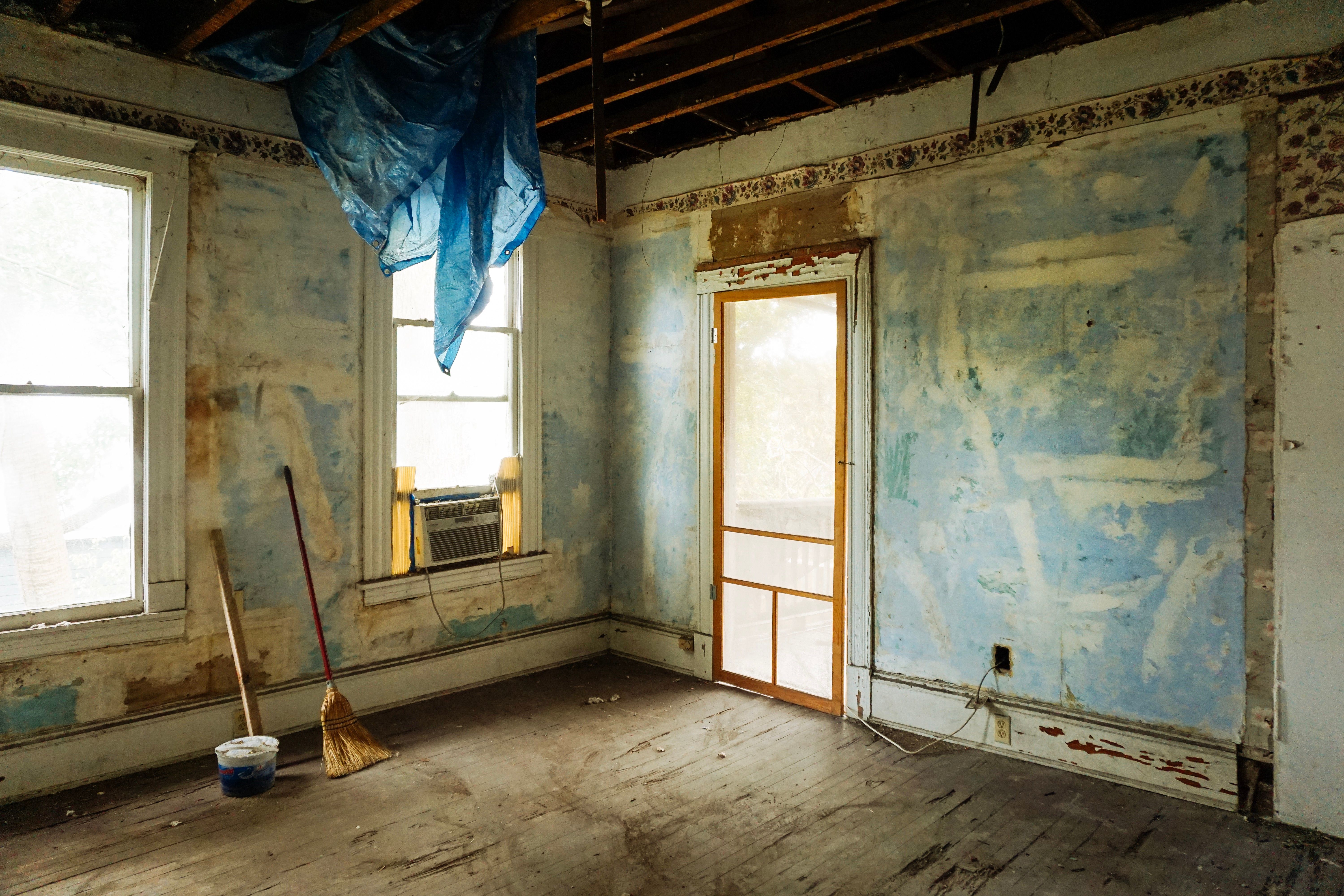
Buying a Renovated Historic Home vs. Renovating One Yourself
Buying a Renovated Historic Home vs. Renovating One Yourself
Charleston's luxury real estate market divides into two distinct buyer profiles: those who buy turnkey renovated historic homes ready to occupy, and those who buy unrenovated historic properties, roll up their sleeves, and manage a multi-year renovation. Leah Beaulieu and BJ Rodgers with Coast2Coast Properties see this decision play out constantly—and it's almost never about which is "better," it's about which fits your tolerance for timeline uncertainty, stress, and financial risk. The math is more nuanced than comparing purchase price + renovation costs. It's about what you're actually paying for—certainty or equity upside—and whether you have the appetite for the decision you're making.
The Short Answer
- Renovated historic homes in South of Broad/downtown Charleston 29401/29403 carry a 25–50% premium over unrenovated comparables
- Buying renovated eliminates renovation risk but you're paying someone else's labor premium; buying unrenovated costs less but adds 6–10 months of timeline, 7–10% contingency, and COA approval stress
- Unrenovated homes offer equity upside—you get the appreciation from your renovation labor; renovated homes offer certainty and immediate occupancy
- Historic renovation costs: $200–$500+/sq ft depending on scope, 60% labor/40% materials, change orders typically 10–15% of costs
- COA (Certificate of Appropriateness) approval adds 4–8 weeks to timelines; complicated projects can stretch 8+ months for approvals alone
- The best choice depends on your patience, stress tolerance, and capital deployment strategy—not on the absolute cost
What You're Actually Buying: Certainty vs. Equity Upside
This is the real question, and it cuts through all the number-crunching. When you buy a renovated historic home at $2.2 million, you're paying for certainty. The contractor's uncertainty—timeline overruns, discovery of hidden structural issues, COA delays, change orders ballooning costs—is baked into your purchase price. You walk in, it works, you occupy immediately. The trade-off: you're paying a contractor's markup on every labor hour invested.
When you buy an unrenovated historic home at $1.5–$1.7 million, you're buying equity upside—if you can stomach the renovation process. Your $500,000–$600,000 renovation budget might stretch to $700,000–$900,000 after change orders and contingencies. But the work you oversee—the labor hours, the material selections, the craftsmanship decisions—builds equity in your property in ways that buying turnkey cannot. You own the renovation decision-making, not the contractor's profit on it.
The question isn't "Which is cheaper?" It's "Can I afford the stress, timeline, and capital requirements of managing a historic renovation?" If yes, unrenovated is better economics. If no—if you need to move in Q3 or you don't have $900,000 liquid to handle construction overruns—renovated is the answer, full stop.
Renovated Historic Homes: What You're Paying For
Renovated historic homes in downtown Charleston 29401/29403 typically run $1.7 million to $2.5 million+, depending on location, square footage, and the quality of the renovation. South of Broad renovated homes command top premiums. Harleston Village renovated homes run $1.2 million median, with ranges from $900,000 to $1.8 million depending on size and condition.
What's included in that premium? The contractor absorbed every risk: the structural surprise that required $80,000 in foundation work (it's built into your price, not a surprise to you), the COA rejection that required redesigning windows (the contractor ate those costs, you don't), the 8-month permitting delay while they waited for approvals (they waited, you didn't). You're paying for that risk absorption.
The contractor also made labor decisions that reflect their experience and profit margin. A 60-year-old single house renovation might have required $400,000 in labor (60% of the $650,000 total cost). That contractor worked with skilled tradespeople, sourced materials efficiently, and managed the COA process. All of that expertise is embedded in your purchase price.
For buyers relocating on a deadline, managing complex renovations from out-of-state, or with capital tied up in other investments, renovated homes are worth the premium. You're not buying the same property cheaper; you're buying certainty and occupancy.
Unrenovated Historic Homes: The Math and the Stress
An unrenovated South of Broad single house might list at $1.6 million—same square footage, same lot, same neighborhood as a renovated comparable at $2.2 million. That $600,000 difference looks like opportunity. It IS opportunity, if you can execute.
Here's the realistic budget: that same house needs $500,000 in baseline renovation (kitchen, bathrooms, HVAC, electrical updates, roof, structural assessment). Your realistic all-in cost with contingency and change orders? $650,000–$750,000. New total: $2.25 million–$2.35 million. You're now at parity with the renovated home—except you've spent 8 months managing contractors, fielded two COA rejections, and discovered termite damage that required structural reinforcement.
But here's the equity angle: if you execute well and the market appreciates 3–5% annually, the renovated home and your renovated unrenovated home will hold value similarly. The difference is psychological—you built the equity through your labor and decision-making, not through someone else's contractor's profit. That matters to some buyers; it doesn't matter to others.
The math changes if you're buying in a sub-prime neighborhood (Ansonborough, lower King Street) where unrenovated homes run $900,000–$1.1 million and renovated comparables run $1.3–$1.5 million. That $300,000 gap is more attractive, and appreciation potential is higher. But South of Broad? The gap is smaller and appreciation is slower (you're already at peak-price neighborhoods).
The Real Costs of Unrenovated: It's Not Just Renovation Dollars
Renovated historic homes are expensive partly because contractors build real labor and contingency into their bids. When you renovate yourself, you'll hit the same costs, but you'll experience them as surprises.
A $500,000 renovation budget typically breaks down: 60% labor ($300,000), 40% materials ($200,000). But that assumes no surprises. In historic homes, surprises are the rule. Structural issues discovered after walls are opened, plaster encasing hidden damage, 100-year-old electrical systems that don't comply with modern code—all of these are $30,000–$80,000 surprises that blow through contingency.
Realistic contingency for a historic project: 7–10% of total project cost. On a $500,000 renovation, that's $35,000–$50,000 set aside for unknowns. Change orders on historic projects average 10–15% of construction costs—another $50,000–$75,000 on top.
Your all-in cost: $500,000 renovation + $50,000 contingency + $50,000–$75,000 in change orders = $600,000–$625,000 total. That's a 25% cost increase from your initial budget.
Also factor timeline: a whole-home historic renovation takes 6–10 months minimum. If you're living in the house during renovation, add stress, dust, noise, and limited access to your own home. If you're renting during renovation, add monthly rent to your costs. COA approval delays can stretch timelines 2–4 months longer than standard projects—you might be looking at 8–14 months before move-in.
The COA Approval Process: Hidden Timeline Risk
The Charleston Historic District Commission (CHDC) review adds real time to every renovation. Every exterior change—windows, roof material, shutters, paint color, additions—requires COA approval. The process typically takes 4–8 weeks, but that's best-case. If your design is flagged as non-compliant (modern windows on a historic facade), you'll redesign and resubmit. That's another 4–8 weeks. If the commission denies your design outright, you're starting over.
One unrenovated South of Broad buyer planned a screened porch addition. She applied for COA approval 8 months before her target move-in. The commission required design changes. Six months in, she was still awaiting second review. The porch she thought would add $40,000 to her renovation timeline ended up delaying her move-in by 8 months.
This isn't rare—it's the default experience for complex historic renovations. Simple cosmetic work (interior paint, kitchen cabinets) rarely hits COA barriers. Major structural work, facade changes, or additions regularly do.
The Biggest Mistake Buyers Make: Underestimating Renovation Reality
Buyers see an unrenovated historic home, subtract the $200/sq ft quoted cost, add it to the purchase price, and convince themselves they're getting a deal. They miss three truths: (1) that $200/sq ft quote will expand by 25–40% due to change orders and contingency, (2) they'll lose 8–14 months of lifestyle to a construction zone, and (3) historic renovations require specialists who cost more than standard contractors—they're worth it, but the cost is higher.
The other mistake: buyers estimate renovation cost by looking at the home's current state and guessing. "It needs a kitchen, a couple bathrooms, some electrical"—that's $300,000. Reality: once walls open, surprise structural issues emerge ($50,000–$100,000), plumbing needs replacement ($40,000–$60,000), HVAC systems don't fit anywhere simple (another $20,000 in custom work), COA requires expensive windows ($30,000+). Suddenly your $300,000 budget is $500,000+, and you're over a year into renovation, not the six months you planned.
Experienced buyers hire a contractor to conduct a pre-purchase renovation assessment—not the seller's inspector, but a contractor who will spend $2,000–$3,000 and give an honest scoping. That upfront cost saves $100,000+ in budget surprises downstream.
A Realistic Example
Jennifer, age 52, sold a suburban home and found a stunning 1880s unrenovated single house in South of Broad for $1.7 million. Listed price jumped out at her: "The same renovated homes are $2.3 million. I can save $600,000!" She budgeted $400,000 for renovation—new kitchen, two updated baths, HVAC, electrical, paint, hardwoods. All-in: $2.1 million. "Cheaper than the renovated comparables, and I'm building equity."
Reality hit fast. Her contractor (good firm, recommended by friends) conducted a pre-purchase assessment and flagged structural issues in the foundation—water infiltration in the basement space, some sill beams showing rot. Repair estimate: $65,000. Once work began, the HVAC didn't fit through the existing wall cavity—custom ductwork required ($18,000 additional). COA rejected her initial window design (too modern); she redesigned with period-accurate specs (+$22,000). Plaster walls concealed 1920s wiring that had to be fully replaced per code (+$40,000). Contingency evaporated.
By month eight, she'd spent $580,000 on renovation, the house wouldn't be ready for another two months, and her contractor was delivering change-order invoices. Final tab: $720,000. Total paid: $2.42 million. She was now at premium for a renovated South of Broad home, and she'd spent two years in contractor chaos to get there.
Jennifer learned the lesson the hard way: unrenovated historic homes are cheaper on the listing price, not on the actual cost you'll carry. The $600,000 "savings" became a $200,000 loss once renovation reality hit. She should have bought the renovated home, occupied it immediately, and used her capital for something else.
So What—Renovated vs. Unrenovated Historic Homes?
Here's what matters:
- Renovated homes cost 25–50% premium over unrenovated comparables, but you're paying for certainty, immediate occupancy, and risk absorption. Best for: buyers on a timeline, out-of-state relocators, buyers without appetite for construction chaos
- Unrenovated homes are cheaper on purchase price but plan for 6–10 month renovation timelines, $600,000+all-in costs including contingency, and 7–10% contingency buffer. Best for: local buyers with renovation experience, those with capital and patience, buyers willing to endure construction stress
- COA approval is the wild card—plan for 4–8 weeks, but complex projects can stretch 8+ months. This risk is invisible on unrenovated homes, baked into renovated homes
- Contractor quality matters enormously—hire specialists familiar with historic work (they cost more, they're worth it). Bad contractors on historic homes are exponentially more expensive than good ones
- Equity upside is real but comes with stress—managing a renovation builds wealth through your labor, but it's not passive wealth; it's earned through months of decisions, disputes, and oversight
FAQ: Renovated vs. Unrenovated Historic Homes
How much premium do renovated historic homes command?
Renovated historic homes in South of Broad typically run 25–50% higher than unrenovated comparables. A $1.6M unrenovated property might sit next to a $2.2M–$2.4M renovated property (same size, same street). In Harleston Village, the gap is smaller—renovated homes run $1.3M–$1.5M while unrenovated run $900K–$1.1M. The premium varies by neighborhood and market momentum.
How long does a historic home renovation really take?
Plan for 6–10 months for a complete whole-home renovation. Add 4–8 weeks for COA (Certificate of Appropriateness) approval for any exterior changes. If the COA rejects your design and requires redesign, add another 4–8 weeks. Complex projects regularly stretch to 8–14 months total due to approvals, permitting, and discovery of hidden issues. Don't trust timelines that say "5 months"—historic homes don't work that fast.
What's the real cost of a historic home renovation?
Budget $200–$500+/sq ft depending on scope and finishes. That's $300K–$700K+ for a 1,500–1,600 sq ft home. Add 7–10% contingency (plan for surprises). Budget for change orders averaging 10–15% of construction costs. Total realistic budget for a 1,500 sq ft unrenovated historic home: $500,000–$750,000 all-in with contingency. Renovated homes have already absorbed this; unrenovated homes require you to absorb it.
Does buying unrenovated save money compared to buying renovated?
Usually no. The purchase-price gap ($300K–$600K savings) gets consumed by renovation costs ($500K–$700K), contingency ($50K–$75K), and change orders ($50K–$100K). You end up at the same total cost as buying renovated, but you've invested 8–14 months of stress and project management. The "savings" is a mirage—you're paying differently, not paying less.
Should I buy unrenovated if I'm not planning to renovate?
No. Unrenovated historic homes are lived-in challenges if you're not planning major updates—they have 100-year-old HVAC systems that are inefficient, aging plumbing, electrical systems that don't support modern loads. You'll pay for comfort and functionality through higher utility bills, unreliable systems, and eventual emergency repairs. If you're not renovating, buy renovated.
What's COA and how long does approval take?
COA (Certificate of Appropriateness) is permission from the Charleston Historic District Commission to make exterior changes. Paint color, windows, shutters, roof repairs, additions—all need COA approval. Standard timeline: 4–8 weeks. If the commission rejects your design, redesign and resubmit: another 4–8 weeks. Complex projects have regularly taken 8+ months for approvals. This is a major hidden risk in unrenovated properties.
Can I get a contractor's estimate before buying?
Yes—hire a contractor to conduct a pre-purchase renovation assessment for $2,000–$3,000. They'll scope structural issues, code compliance problems, and hidden costs that a standard inspection misses. This upfront cost saves massive budget overruns downstream. It's the smartest $3,000 you'll spend on an unrenovated historic home.
Final Answer
Buying a renovated historic home or buying unrenovated and renovating are fundamentally different financial and lifestyle decisions. Renovated homes offer certainty and immediate occupancy at a premium price—the contractor absorbed renovation risk, and you're paying for that absorption. Unrenovated homes offer purchase-price advantage and equity upside through your own renovation labor, but they require 6–10+ months of timeline, $600,000–$750,000 in all-in costs including contingency, and significant stress tolerance for COA approvals and construction chaos. Leah Beaulieu and BJ Rodgers with Coast2Coast Properties help buyers clarify which path fits their capital, timeline, and stress tolerance—not which is "cheaper," but which fits how they actually live and work.
About Leah Beaulieu & BJ Rodgers — Coast2Coast Properties
Leah Beaulieu and BJ Rodgers are Charleston, South Carolina real estate professionals with Coast2Coast Properties, helping buyers compare neighborhoods, understand local market differences, and find the right fit across the Charleston area. Whether you are buying your first home, relocating to the Lowcountry, or looking for investment opportunities, Leah and BJ bring local knowledge, straight talk, and a genuine commitment to helping clients make smart decisions.
Coast2Coast Properties
www.coast2coastprop.com
843-697-1409 / 803-201-4259