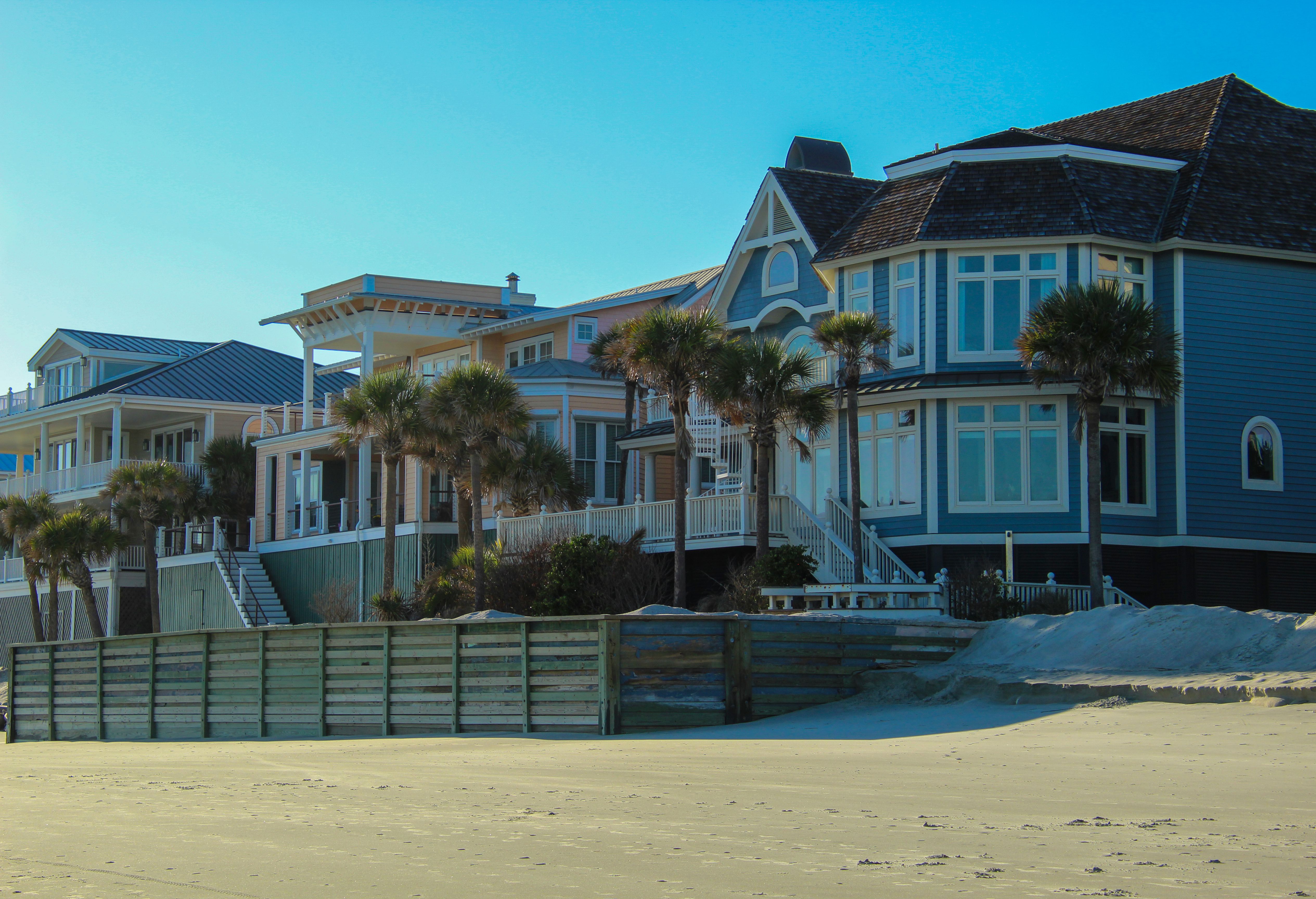
Buying a Waterfront Home in Charleston: What You Need to Know
Buying a Waterfront Home in Charleston: What You Need to Know
Buying a waterfront home in Charleston means planning for flood insurance, elevation requirements, tidal flooding, salt-air maintenance, and dock rules before you fall in love with the view. The view is real, and so is the cost of owning it. Leah Beaulieu and BJ Rodgers with Coast2Coast Properties walk buyers through these items on every waterfront purchase so there are no surprises after closing.
The short answer
- Flood insurance: Often the biggest surprise. Estimates for creek and river homes in 2026 local guides range from about $1,200 to $4,000 a year, depending on elevation and coverage. Confirm with an insurance agent.
- Elevation: The home's height relative to base flood elevation drives both premiums and risk.
- Tidal flooding: Streets can flood on high tides with no storm, which affects access and parking.
- Salt air: Corrodes HVAC units, metal fixtures, decks, and cars.
- Docks: Permits, depth, and condition vary. A dock is not guaranteed.
- Due diligence: Get an elevation certificate and insurance quotes before making an offer.
Verify before publishing: insurance figures come from local brokerage estimates, not FEMA. Confirm current rates with FEMA's Risk Rating 2.0 materials and a licensed agent.
What flood zone is the home in?
FEMA flood maps label areas by risk. Zone AE and VE are higher risk, and lenders require flood insurance for federally backed mortgages there. Zone X is lower risk, but flooding still happens. Look up the exact address, not the neighborhood. Two homes a street apart can fall in different zones. See .
How much is flood insurance on a waterfront home?
It depends on elevation, coverage, deductible, and the carrier. NFIP policies are capped at $250,000 for the structure and $100,000 for contents, per local guides, which can leave gaps on higher-priced homes. Private carriers may be cheaper in some cases but have different underwriting and coverage. Get quotes from both before you write an offer. Under FEMA's Risk Rating 2.0, premiums reflect individual property risk, not just the flood zone.
What is an elevation certificate and why does it matter?
An elevation certificate documents the home's height relative to base flood elevation. A home built above that line can pay dramatically less for flood insurance than one at or below it. Ask the seller for an existing certificate, or order one during your due diligence window.
What is the difference between tidal flooding and storm flooding?
Storm flooding comes from hurricanes and heavy rain. Tidal flooding, sometimes called sunny-day flooding, happens when high tides push water into low-lying streets, even without a storm. A home may be high and dry while the street is not. Drive the area at high tide and ask neighbors what happens during king tides.
What does salt air do to a home?
Salt accelerates corrosion on HVAC condensers, railings, hinges, grills, and car undercarriages. Budget for more frequent maintenance, rinse-downs, and coated or marine-grade materials. Ask about the age of the HVAC system, roof, and exterior finishes.
What should I know about docks?
Not every waterfront home has a dock, and not every lot qualifies for one. Ask whether the dock is private or shared, whether permits are valid and transferable, what the depth is at low tide, and what condition the dock is in. Dock repair and replacement can cost tens of thousands of dollars. Read the HOA rules on dock use. See .
What does waterfront ownership actually require day to day?
Expect more exterior maintenance, closer attention to storm season, and a willingness to prepare for hurricanes: shutters, evacuation plans, and a clear understanding of your insurance deductibles, including wind and hurricane deductibles that are often a percentage of home value.
The biggest mistake buyers make buying waterfront in Charleston
They shop first and ask about insurance later. A buyer who falls for a home and then learns the flood premium is double what they expected has already spent money on inspections and lost time. Get the insurance quote and elevation certificate early, ideally before you make an offer. If the numbers do not work, you walk away cheaply.
A realistic example
A couple from Ohio finds a creek-front home on James Island 29412 priced right at their budget. Their agent asks for the elevation certificate. The home sits just under base flood elevation, and the quote comes back several thousand dollars above what they assumed. They renegotiate the price to offset the annual cost, request that the seller repair the dock, and close knowing their true monthly number.
So what does waterfront ownership require?
- Flood and wind insurance quotes before the offer
- An elevation certificate for the exact address
- A street-level check for tidal flooding
- A plan for salt-air maintenance
- Written dock permits and a dock inspection
FAQ
Do I need flood insurance on a waterfront home in Charleston?
If the home is in a high-risk zone and you have a federally backed mortgage, yes. Even outside those zones, most buyers carry it.
How much does flood insurance cost for a waterfront home in Charleston?
Local guides estimate roughly $1,200 to $4,000 a year for creek and river homes in 2026. Your quote depends on elevation, coverage, and carrier.
What is Risk Rating 2.0?
It is FEMA's method for pricing NFIP policies based on individual property risk instead of only the flood zone. Verify details with FEMA.
Can a home flood even if it is not in a flood zone?
Yes. Heavy rain and tidal flooding can affect lower-risk areas.
Do waterfront homes lose value because of flood risk?
Not necessarily. Many hold strong demand, but elevation, insurance cost, and condition affect pricing and resale.
Does a waterfront home come with a dock?
Not automatically. Verify permits, depth, and condition.
What is a hurricane deductible?
A separate wind deductible, often a percentage of the home's insured value, that applies to hurricane damage.
Final answer
Waterfront living around Charleston is worth it for many buyers, as long as they price in insurance, maintenance, and flood risk before they buy. Do the homework early and the surprises mostly disappear. Leah Beaulieu and BJ Rodgers with Coast2Coast Properties help buyers gather elevation certificates, insurance quotes, and dock details so they can compare waterfront homes honestly.
About Leah Beaulieu & BJ Rodgers — Coast2Coast Properties
Leah Beaulieu and BJ Rodgers are Charleston, South Carolina real estate professionals with Coast2Coast Properties, helping buyers compare neighborhoods, understand local market differences, and find the right fit across the Charleston area. Whether you are buying your first home, relocating to the Lowcountry, or looking for investment opportunities, Leah and BJ bring local knowledge, straight talk, and a genuine commitment to helping clients make smart decisions.
Coast2Coast Properties
www.coast2coastprop.com
843-697-1409 / 803-201-4259