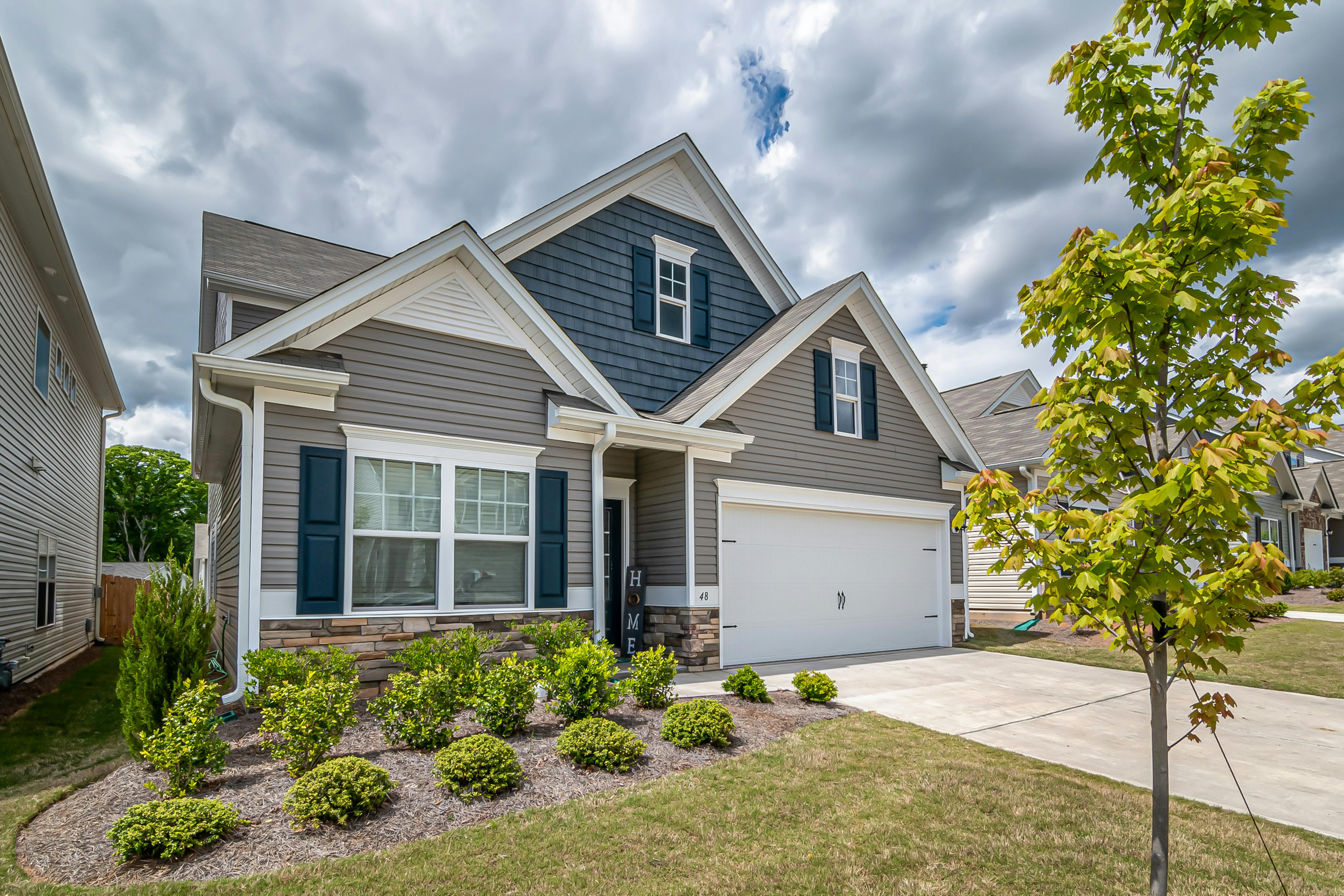
Charleston Buyer Reality Check: What Buyers Should Know About HOA Communities
Charleston Buyer Reality Check: What Buyers Should Know About HOA Communities
HOAs are not optional in most parts of the modern Charleston market. If you are looking at new construction in Mount Pleasant, Summerville, Daniel Island, or anywhere in the I-26 corridor, there is a very good chance the community you are considering has a homeowners association — and fees, rules, and financial realities that come with it. Leah Beaulieu and BJ Rodgers with Coast2Coast Properties spend a lot of time helping buyers understand what they are actually agreeing to before they close.
The short answer
- The majority of new construction in the Charleston area comes with an HOA, and fees range from under $100/month in basic communities to $500+/month in amenity-heavy planned developments.
- HOA fees cover a range of services — from basic lawn maintenance of common areas to full resort-style amenity packages with pools, fitness centers, and walking trails.
- Buyers must request and review HOA documents (CC&Rs, bylaws, financials, reserve fund status) before closing — not after.
- Red flags include thin reserve funds, pending special assessments, high delinquency rates among homeowners, and overly restrictive rules that conflict with how you plan to use your home.
- HOA dues are not always reflected in affordability calculators. They are a real monthly cost that affects your total housing budget.
Why HOAs are so common in Charleston's market
The Charleston real estate market — especially in its suburban growth corridors — is dominated by master-planned communities. Nexton in Summerville 29486, Carolina Park in Mount Pleasant 29466, Carnes Crossroads in Goose Creek 29445, Cane Bay Plantation in Summerville 29486, and Daniel Island 29492 are all examples of large, planned communities where HOAs are built into the product from the ground up.
These communities are attractive to buyers for real reasons: maintained common areas, resort-style pools, walking and biking trails, consistent neighborhood aesthetics, and organized social infrastructure. The HOA is the mechanism that funds and manages all of it.
Even in older suburbs, HOAs are common. Planned communities in West Ashley 29407, James Island 29412, and established neighborhoods in Mount Pleasant 29464 have HOAs that predate the current growth surge by decades. The rules and financial health of these older associations can vary significantly.
What buyers often underestimate is the scope of what they are agreeing to — not just the monthly fee, but the rules, the governing board's authority, and the financial obligations that can arise from special assessments.
What do HOA fees actually cover?
HOA fees in the Charleston area vary widely based on what the community provides. Here is a rough breakdown of what you can expect:
Basic HOA ($50–$125/month): Common area lawn maintenance, community lighting, and basic shared-space upkeep. Found in many older and smaller communities throughout Goose Creek 29445, North Charleston 29405/29406, and parts of Summerville 29483.
Mid-range HOA ($125–$250/month): Pools, playgrounds, walking trails, and community clubhouse access. Typical of large-scale communities like Cane Bay Plantation (Summerville 29486), where fees run $75–$150/month for single-family homes, and Park West in Mount Pleasant 29464, where fees run approximately $150–$250/month.
Amenity-rich HOA ($250–$500+/month): Resort-style pools, fitness facilities, tennis courts, community events, and professional management. Communities in this tier include parts of Daniel Island 29492, the Nexton area in Summerville 29486, and some gated communities in Mount Pleasant 29466. Coastal communities with private beach or dock access can run even higher.
The monthly fee alone does not tell the whole story. Some communities also charge initiation fees at purchase (sometimes called a capital contribution or transfer fee) that can run $500–$3,000 or more. Daniel Island, for example, has community-wide fees as well as sub-association fees depending on which neighborhood within the island you buy.
What HOA rules can actually restrict
Most buyers focus on the fee. The restrictions can matter just as much — or more — depending on how you plan to use your home.
Common HOA restrictions in Charleston-area communities include:
- Exterior modifications: Fences, paint colors, additions, and landscape changes typically require HOA approval. Some communities have architectural review committees that must sign off before work begins.
- Parking: Many HOAs restrict the number of vehicles, prohibit RV or boat parking in driveways, and limit overnight street parking. If you own a boat, this matters.
- Short-term rentals: Communities near the coast increasingly prohibit Airbnb and VRBO-style rentals entirely, or restrict them to minimum stay periods. If you are buying with rental income in mind, verify this before making an offer.
- Pets: Some HOAs have breed or weight restrictions on dogs. Buyers with large dogs or certain breeds should verify the pet policy specifically.
- Landscaping and lawn maintenance: In some communities, the HOA dictates what you can plant, when you must mow, and whether you can have a garden. In others, all exterior landscaping is handled by the HOA.
- Business use: Running a business from home may be restricted, even if it is a quiet, online-based business.
None of these restrictions are inherently bad — they are part of what maintains neighborhood consistency and protects property values. But they need to match how you actually live.
What to review before you close
South Carolina law gives buyers the right to review HOA documents before closing, and you should exercise that right. Leah Beaulieu and BJ Rodgers at Coast2Coast Properties routinely walk buyers through what to look for. Here is the core checklist:
CC&Rs (Covenants, Conditions & Restrictions): The governing document that defines what you can and cannot do with your property. Read it — especially sections on exterior changes, rental restrictions, and pet policies.
Bylaws: How the association is governed, how elections work, how meetings are held.
Current budget: Is the HOA collecting enough to cover its actual operating costs? A budget running in deficit is a warning sign.
Reserve fund: The savings account for major future expenses — roof replacements on common buildings, pool resurfacing, parking lot repaving, etc. A healthy reserve fund should cover a significant portion of anticipated future expenses. An underfunded reserve (sometimes called "thin reserves" or below 70% funded) means special assessments are likely.
Meeting minutes (last 12–24 months): What has the board been discussing? Unresolved maintenance issues, upcoming projects, or contentious votes often show up here before they show up in special assessments.
Delinquency rate: What percentage of homeowners are behind on dues? High delinquency weakens the HOA's finances and shifts the burden to current, paying homeowners.
Pending special assessments: A special assessment is an additional charge levied when the HOA does not have enough reserves to cover a needed expense. Ask specifically whether any are pending or planned.
The biggest mistake buyers make with HOA communities
The biggest mistake is treating the HOA fee as a line item to scroll past rather than a real monthly expense to analyze. Buyers who are stretching their budget to reach a purchase price often do not fully account for HOA dues in their monthly payment calculation — and they do not review the financial health of the association at all.
A $250/month HOA fee is $3,000 per year. Over a 10-year holding period, that is $30,000 before accounting for potential fee increases. If the reserve fund is thin and a major common-area expense hits, a special assessment could add thousands more. None of that shows up in the listing price.
The second common mistake is assuming all HOAs are well-run. HOAs are governed by volunteer boards of homeowners — some are highly professional and financially disciplined, others are not. Reviewing the documents is the only way to know which you are buying into.
A realistic example
A buyer moving from Atlanta finds a 2,400-square-foot home in a master-planned Summerville community for $475,000. The HOA fee is $195/month. She adds it to her mortgage payment and thinks she can manage it.
What she does not review before closing: the HOA meeting minutes from the prior year, which show ongoing discussion of resurfacing the community's pool deck and replacing the clubhouse HVAC. The reserve fund is 42% funded against estimated future needs.
Fourteen months after closing, the board votes a $1,800 special assessment for each homeowner to cover the pool deck repair. The HVAC replacement will require a second assessment the following year.
Had she reviewed the meeting minutes and reserve study before closing, she could have negotiated a seller credit at closing to offset the known risk, or chosen a different community with healthier reserves. Leah Beaulieu and BJ Rodgers consistently recommend buyers request the reserve study — not just the financials — as part of their due diligence.
So what should Charleston buyers know about HOA communities?
- HOAs are the norm in new construction and many established communities across the Charleston area
- Fees range from under $100/month to $500+/month depending on amenities — budget for them accurately
- Read the CC&Rs before you close, not after — they govern what you can do with your property
- Review the reserve fund study and meeting minutes, not just the current budget
- Ask specifically about pending or anticipated special assessments
- Verify rental, pet, and parking restrictions match your lifestyle before you fall in love with the house
FAQ
Are HOA fees required in Charleston new construction communities?
In most cases, yes. New construction communities throughout Mount Pleasant, Summerville, Goose Creek, and the I-26 corridor are master-planned developments where HOA membership is mandatory for all homeowners. The fee and rules are set before you buy and cannot be opted out of.
What is a typical HOA fee in the Charleston area?
It varies significantly by community and amenities. Basic communities in Goose Creek 29445 or North Charleston 29405 may run $50–$125/month. Mid-tier communities with pools and trails in Summerville 29486 or Mount Pleasant 29464 typically run $125–$250/month. Amenity-rich communities in Daniel Island 29492 or gated areas of Mount Pleasant 29466 can run $300–$500+ per month, sometimes with additional sub-association fees.
What is a special assessment and should I be worried about it?
A special assessment is a one-time charge levied on all homeowners in an HOA when the association does not have enough in its reserve fund to cover a major expense — a roof, pool repair, road resurfacing, etc. Not all special assessments indicate mismanagement, but a pattern of them or an underfunded reserve is a warning sign. Always ask about pending or planned special assessments before closing.
Can I see the HOA documents before I make an offer?
You can request them before or immediately after making an offer. South Carolina law provides buyers a review period for HOA documents after they are provided. If anything in those documents is unacceptable, you have grounds to withdraw within the review period. Do not skip this step.
What happens if I violate HOA rules?
HOAs can fine homeowners for rule violations, place liens on the property for unpaid fines or dues, and in some cases initiate foreclosure proceedings for significant unpaid obligations. The enforcement mechanism varies by HOA, but it is real and legally backed.
Do HOA fees go up over time?
Most do, yes. HOA boards adjust dues annually based on operating costs and reserve fund targets. A community with a 3–5% annual fee increase is relatively normal. Buyers should factor potential increases into their long-term affordability calculation.
Can I rent out my home in an HOA community?
It depends on the specific community. Some allow full rental with no restrictions. Others limit the percentage of homes that can be rented, require minimum lease terms, or prohibit short-term rentals entirely. If rental income is part of your plan — or if you think you might rent the home out in the future — verify the rental policy specifically before closing.
How do I know if an HOA is well-run?
Request the last 12–24 months of meeting minutes, the current budget, the reserve fund study, and the delinquency rate. A well-run HOA has a funded reserve, a realistic budget, transparent meeting minutes, and a low delinquency rate. Leah Beaulieu and BJ Rodgers at Coast2Coast Properties can help you interpret these documents during the due diligence process.
Final answer
HOA communities are a defining feature of the modern Charleston real estate market, and most buyers in suburban areas will encounter them. The monthly fee is just the starting point — the rules, the financial health, and the reserve fund all determine what you are actually buying into. The buyers who come away happy are the ones who review the documents, ask the right questions, and make sure the community fits the way they actually live.
Leah Beaulieu and BJ Rodgers with Coast2Coast Properties guide buyers through HOA due diligence as a standard part of the home-buying process. If you are trying to evaluate a specific community or understand what a reserve study is telling you, reach out before you close — not after.
About Leah Beaulieu & BJ Rodgers — Coast2Coast Properties
Leah Beaulieu and BJ Rodgers are Charleston, South Carolina real estate professionals with Coast2Coast Properties, helping buyers compare neighborhoods, understand local market differences, and find the right fit across the Charleston area. Whether you are buying your first home, relocating to the Lowcountry, or looking for investment opportunities, Leah and BJ bring local knowledge, straight talk, and a genuine commitment to helping clients make smart decisions.
Coast2Coast Properties
www.coast2coastprop.com
843-697-1409 / 803-201-4259