Charleston Luxury Real Estate: What Makes a Home Truly High-End?
Charleston Luxury Real Estate: What Makes a Home Truly High-End?
In Charleston, a $1.5 million home and a $3 million home might sit in the same neighborhood. So what's actually different? Leah Beaulieu and BJ Rodgers with Coast2Coast Properties have guided hundreds of buyers through the luxury market, and the answer isn't always intuitive. True luxury in Charleston isn't just about the price tag — it's about what you're actually buying with it.
The Short Answer
Luxury homes in Charleston command premium prices for seven specific reasons:
- Location prestige: Neighborhood cachet (South of Broad, Old Village, Sullivan's Island) can add 30-50% to home value compared to the same house in a less iconic area
- Architectural character: Original details, hand-crafted features, and period authenticity matter far more than square footage
- Outdoor living: Screened porches, pool areas, private docks, and waterfront access are the real premium drivers
- Water views or access: Even non-waterfront water views can justify $200K-$500K price premiums
- Lot size and privacy: In a dense market, larger lots and less street-facing exposure command significant markups
- Finishes and systems: Smart home tech, high-end HVAC, multiple zones, and luxury kitchen/bath finishes differentiate homes at the top end
- Turnkey condition: In luxury, buyers pay to avoid surprises — fully updated, move-in-ready homes sell for 10-20% more than homes requiring updates
What $1 Million Actually Gets You in Charleston
A $1 million home in Charleston in 2026 typically means either a beautiful older downtown home with character and walkability, a newer 3,000+ sq ft home in a premier suburb like Mount Pleasant or Daniel Island, or a modest waterfront or water-view property on the peninsula or James Island. At this price point, you're buying solid bones and a respected address — but not necessarily all the premium bells and whistles. According to Redfin data from early 2026, Mount Pleasant median prices were running $831,000–$855,000, with luxury pockets like Old Village and I'On reaching $2.5 million and above.
What $2 Million Gets You: The Real Luxury Threshold
The jump from $1.5 million to $2.5 million is where Charleston luxury homes start to feel genuinely elevated. At this level, you're likely seeing homes with:
- Architectural significance: Period restoration work on a historic property, or custom-built homes with premium finishes and smart design
- Premium location: South of Broad (Downtown Charleston 29401), the best addresses in Mount Pleasant's 29464/29466, or a prestigious gated community like Dunes West or Kiawah Island (29455)
- Waterfront or exceptional water views: Either private dock access, ICW views, or oceanfront positioning
- Finished outdoor space: Pool, spa, professional landscaping, entertaining areas
- Recent full renovation: Updated electrical, plumbing, HVAC, and high-end kitchen/bath
Daniel Island homes (29492) average around $1.87 million as of mid-2026, representing solid luxury positioning with community amenities, newer construction in many cases, and strong appreciation. Downtown Charleston's median for luxury properties hit $1.3 million in early 2026, reflecting the strong demand for walkable, historic luxury living.
Location Prestige: Why Neighborhood Matters More Than Square Footage
This is where Leah Beaulieu and BJ Rodgers see the biggest disconnect between buyer expectations and market reality. A 4,000-square-foot colonial in a master-planned community on the outskirts of North Charleston (29405) might list for $1.1 million. The exact same square footage in Old Village Mount Pleasant (29466) or South of Broad Downtown Charleston (29401) sells for $2.5–$3.5 million.
The difference isn't the house. It's where the house sits.
In Charleston's luxury market, location prestige breaks down like this:
Tier 1 — Icon Status ($2M–$8M+): South of Broad (Downtown 29401), Battery area, Sullivan's Island (29482), Kiawah Island resort (29455)
Tier 2 — Premium Suburbs ($1.2M–$3M): Old Village Mount Pleasant (29466), Daniel Island's premium sections (29492), top neighborhoods of West Ashley (29407), Dunes West gated community Mount Pleasant (29466)
Tier 3 — Quality Suburbs ($800K–$1.8M): Core Mount Pleasant (29464), established Summerville neighborhoods (29483), newer construction Daniel Island (29492)
Buyers often overlook this dynamic. They assume that a lower price in a second-tier neighborhood means they're getting a better value. What they're actually buying is less cachet, less walkability, or less water access — features that matter less the day you buy but significantly when you eventually sell.
Architectural Character and Historic Authenticity
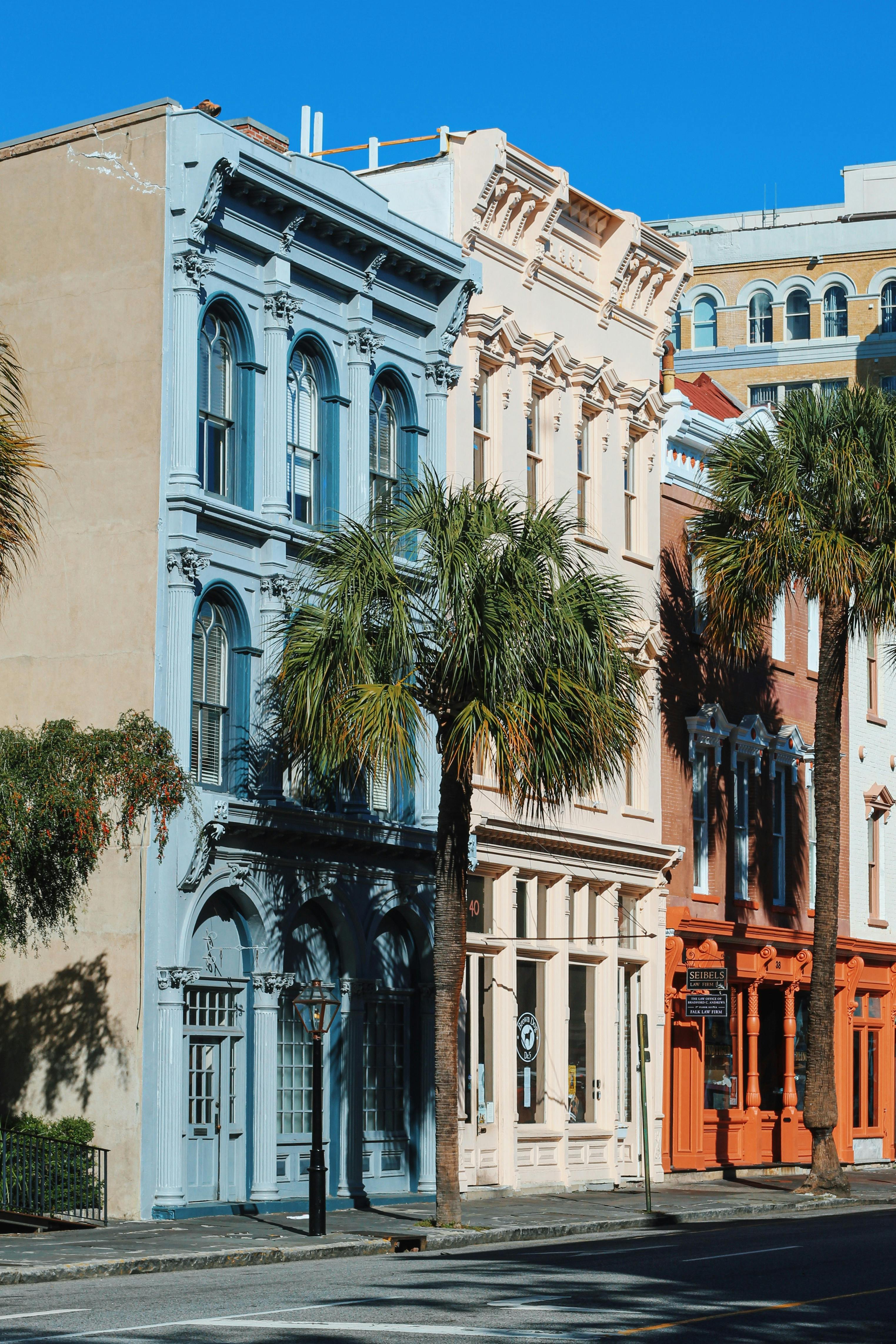
Charleston luxury is built on architecture. A home from the 1800s with original heart-pine floors, period crown molding, and working fireplaces sells at a profound premium over a well-maintained but newer home with modern finishes.
This matters because authentic Charleston architecture is non-reproducible. You cannot build it again. New construction can offer efficiency and smart design, but it cannot offer the character, patina, and genuinely Charleston feel that a historic home carries.
What makes historic luxury homes command premiums:
- Original details that cannot be replaced: Hand-carved mantels, period hardware, slate roofs, original windows (even if they're not energy-efficient)
- Quality of craftsmanship: Homes built before 1920 typically used superior lumber quality and hand-finished details that no modern builder can economically replicate
- Documented history and provenance: Homes with known histories, previous notable owners, or architectural significance
- Historic district location: Being within a designated historic district provides legal protection and prestige, though it also limits renovation freedoms
Outdoor Living as a True Luxury Driver
Leah and BJ consistently see outdoor living space as the single biggest value multiplier in the Charleston luxury market. A home with a stunning screened porch, resort-quality pool, or direct water access can command a $300,000–$500,000 premium over an identical home without these features.
Why? Charleston's climate makes outdoor living realistic and desirable for nine months of the year. The summer heat drives evening entertainment outdoors. Fall and winter are perfect for outside time. Smart luxury buyers recognize that outdoor space is actually livable space in the Lowcountry.
Premium outdoor features that justify luxury pricing:
- Screened porches and pavilions: Especially second-story screened porches with water views. $75,000–$150,000 premium justified
- Pools and hot tubs: In the $1.5M+ range, a well-designed pool with saltwater system adds $150,000–$300,000 in perceived value
- Professional landscaping and gardens: Not just grass and shrubs — mature tree canopy, native plantings, hardscape design
- Private dock access or boat lifts: On tidal creek or ICW properties, functional dock access can add $200,000–$500,000
- Entertainment-ready spaces: Outdoor kitchen, fireplace or fire pit, seating areas designed for entertaining
Water Views and Waterfront Access: The Premium That Never Stops
Water context is perhaps the most objective luxury differentiator in Charleston. A home with unobstructed water views or private water access commands a consistent 20-40% premium over an identical home without it.
This breaks down by type:
Oceanfront ($2M–$15M+): Ocean views, oceanfront lots, barrier island living (Sullivan's Island 29482, Isle of Palms 29451, Folly Beach 29439). The premium reflects storm exposure, flood insurance costs, and the prestige of coastal living.
Intracoastal Waterway waterfront ($1.5M–$4M): ICW-front homes in Mount Pleasant 29464 near Shem Creek, or on James Island 29412. These homes enjoy views, boating access, and less hurricane exposure than oceanfront. Shem Creek–area Mount Pleasant homes consistently command top-tier pricing in the suburb.
Tidal creek waterfront ($1M–$2.5M): Homes on creeks in Johns Island 29455, James Island 29412, or other Lowcountry waterways. These offer boating access, nature views, and privacy, with somewhat lower flood exposure than closer-in waterfront.
Water views (non-waterfront) ($850K–$1.8M): Homes with views of water but no private access. Even distant water views can justify $150,000–$300,000 premiums.
No water context ($600K–$1.5M): Inland homes in established neighborhoods. Strong values, but without the water premium.
Finishes, Systems, and Turnkey Condition
At the $1.5M+ price point, buyers expect homes to be move-in ready. The days of a luxury buyer accepting "good bones but needs updating" are largely over. Luxury buyers want to buy a lifestyle, not a project.
This means:
- Updated electrical and plumbing: No knob-and-tube wiring, no copper pipe corrosion, no water pressure issues
- Modern HVAC systems: Zoned systems, energy-efficient units, smart thermostats. Individual systems for upstairs and downstairs are expected
- Kitchen and master bath updated to luxury standards: High-end appliances (Wolf, Viking, Sub-Zero level), custom cabinetry, natural stone counters, radiant heating
- Smart home systems: Many luxury homes now include integrated smart home control, whole-home audio, security systems, and energy monitoring
- Flooring: Hand-scraped hardwoods, premium tile, or polished concrete. Dated carpet anywhere in a $2M+ home is a red flag
- Lighting and electrical design: Carefully planned lighting, appropriate electrical infrastructure for modern living, multiple outlets and charging stations
A home in excellent turnkey condition sells 10-20% higher than an identical home requiring updates, even if the buyer plans to renovate further. Luxury buyers prefer not to live through construction.
Lot Size and Privacy: The Unspoken Luxury Factor
In a city where many desirable homes sit on quarter-acre lots or smaller, privacy commands premium pricing. A home on a full acre in Summerville (29483) or Goose Creek (29445) with mature trees and privacy screening might not sell for more than an identical home on a smaller lot — but a luxury buyer's perception of value shifts dramatically when the home doesn't look directly into neighbors' windows.
This matters especially for:
- Homes with pool areas: Buyers are willing to pay more for a lot large enough that the pool isn't visible from the street and isn't overlooked by adjacent properties
- Waterfront homes: A larger waterfront lot with setback neighbors or natural screening adds perceived exclusivity
- Historic homes in historic districts: Often on smaller lots, but lot size multiplies the premium for homes on larger parcels
The Biggest Mistake Luxury Buyers Make in Charleston
The most common luxury purchase misstep is prioritizing square footage and finishes over location and architectural character. A buyer will fall in love with a 5,000-square-foot new-construction mansion in a planned community 20 minutes outside Charleston, assume it's a luxury home because it's expensive, and miss the point entirely.
Five years later, when they try to sell that home, they discover that the market valued the home at 20% less than comparable square footage in a prestigious neighborhood. The same-sized home in Mount Pleasant 29464 or Mount Pleasant's Old Village district (29466) would have appreciated while their newer home in a sprawling community appreciated barely at all.
Leah and BJ see this pattern repeatedly: Buyers confuse price with prestige. A $1.8 million home in a gated community in Johns Island can be a solid purchase — but it's not the same asset as a $1.8 million home in Old Village Mount Pleasant or South of Broad Downtown Charleston. One goes up in value because the neighborhood is protected and iconic. The other is a standard luxury purchase that may or may not appreciate.
A Realistic Example: Two Million Dollar Homes, Very Different Purchases
Scenario A — The Master-Planned Luxury: A 4,200-square-foot colonial in a gated community 15 minutes from downtown, built in 2015. Five bedrooms, three-car garage, resort-quality pool, smart home systems throughout. Listed at $1,995,000. All the finishes, all the space, all the amenities.
Scenario B — The Historic Downtown Gem: A 3,100-square-foot Greek Revival townhome on South of Broad, Downtown Charleston (29401). Four bedrooms, period moldings, original heart-pine floors, private courtyard with fountain, prime location on one of Charleston's most prestigious streets. Listed at $2,100,000. Older square footage, fewer bedrooms, no pool.
In the Charleston luxury market, Scenario B typically appreciates faster and resells more easily. Why? Location prestige, architectural character, and walkable urban living command consistent premiums. The buyer in Scenario A is buying finishes and convenience. The buyer in Scenario B is buying a piece of Charleston's heritage and one of the city's most desirable addresses.
Both are sound purchases — but they're not the same purchase.
So What Makes a Home Truly Luxury in Charleston?
At the end of it, true Charleston luxury is a combination of five things working together: a prestigious address where the neighborhood itself is an asset, architectural character and authenticity (whether historic or expertly designed new construction), outdoor living space that enhances daily life, water context of some kind (views, access, or proximity), and modern systems and finishes that make the home functional without apology.
Price alone doesn't create luxury. A $2 million home in a less iconic neighborhood is an expensive home. A $1.5 million home in Old Village Mount Pleasant or South of Broad is a luxury asset that will likely appreciate, attract serious buyers, and hold its prestige. The difference is subtle but everything.
FAQ: Charleston Luxury Real Estate
What's the median price for a luxury home in Charleston?
According to Redfin data from early 2026, the overall luxury median across the Charleston metro is approximately $2.7 million. However, this varies significantly by neighborhood — Mount Pleasant luxury homes average $2.5 million+, Daniel Island averages $1.87 million, and Downtown Charleston luxury averages $1.3 million as of early 2026. The term "luxury" itself is flexible; some define it as anything over $1 million, others at $1.5 million+.
Is a new construction home ever considered truly luxury in Charleston?
Yes, if it's sited in a prestigious location, designed with architectural sensitivity to Charleston's character, built with premium finishes and systems, and offers outdoor living space. Most new construction that commands luxury pricing ($1.5M+) is in communities like Daniel Island (29492), Dunes West Mount Pleasant (29466), or select homes in Mount Pleasant 29466. The challenge is that new construction often lacks architectural character, which limits its prestige premium.
Does a historic home always appreciate better than a newer luxury home?
Not always, but historic homes in prestigious locations typically do. A home on South of Broad Downtown Charleston (29401) or in Old Village Mount Pleasant (29466) will likely appreciate regardless of age. A historic home in a declining neighborhood might not. The location prestige matters as much as the age.
What's the difference between a $1.5 million home and a $3 million home in Charleston?
At $1.5 million, you're typically buying a nice home in a good neighborhood, possibly with water access, likely with excellent finishes. At $3 million, you're buying a trophy location (South of Broad, Old Village, Sullivan's Island, or Kiawah Island), likely with exceptional architectural character or a waterfront lot, and always with premium finishes and outdoor space. The jump in price reflects both prestige and scarcity.
Is waterfront worth the premium in Charleston?
Absolutely, if you'll use it. Waterfront homes consistently appreciate and attract serious buyers. However, waterfront homes in Charleston also require flood insurance, may face storm exposure, and come with dock maintenance. If water access won't meaningfully change how you live, the premium may not justify the purchase. Ask yourself: Will I boat, kayak, fish, or regularly entertain on the water? If yes, waterfront is worth it. If no, a water view from a non-waterfront home might deliver 80% of the pleasure at 40% of the cost.
What luxury features are worth the investment when buying?
Leah and BJ rank them this way: location prestige first (you can't change the address), water context second (views or access), screened porch or outdoor living space third, and modern kitchen/bath finishes fourth. Smart home systems and high-end appliances are nice but won't move the needle on appreciation the way location and outdoor space will.
Do luxury homes in Charleston appreciate faster than regular homes?
Yes, generally. Luxury homes in prestigious neighborhoods have historically appreciated 5-8% annually, while more modest homes appreciate 3-5% annually. But this is highly dependent on location. A $1 million home in South of Broad will outperform a $3 million home in a sprawling community 20 minutes away.
Final Answer
A truly high-end Charleston home is one where price reflects more than just finishes and square footage. It's built on the foundation of location prestige, architectural character (whether historic or contemporary), outdoor living space that enhances how you live, water context of some kind, and modern systems that work flawlessly. It's turnkey, not a project. It appreciates, not depreciates. It attracts serious buyers when the time comes to sell, not bargain hunters.
Leah Beaulieu and BJ Rodgers help Charleston luxury buyers navigate this distinction every day. When you're considering a luxury home in Charleston, understanding what actually drives value — beyond the glossy photos and the price tag — is the difference between a good investment and a great one. If you're exploring the Charleston luxury market or trying to figure out what a home is really worth, reach out to for an honest assessment.
About Leah Beaulieu & BJ Rodgers — Coast2Coast Properties
Leah Beaulieu and BJ Rodgers are Charleston, South Carolina real estate professionals with Coast2Coast Properties, helping buyers compare neighborhoods, understand local market differences, and find the right fit across the Charleston area. Whether you are buying your first home, relocating to the Lowcountry, or looking for investment opportunities, Leah and BJ bring local knowledge, straight talk, and a genuine commitment to helping clients make smart decisions.
Coast2Coast Properties
www.coast2coastprop.com
843-697-1409 / 803-201-4259