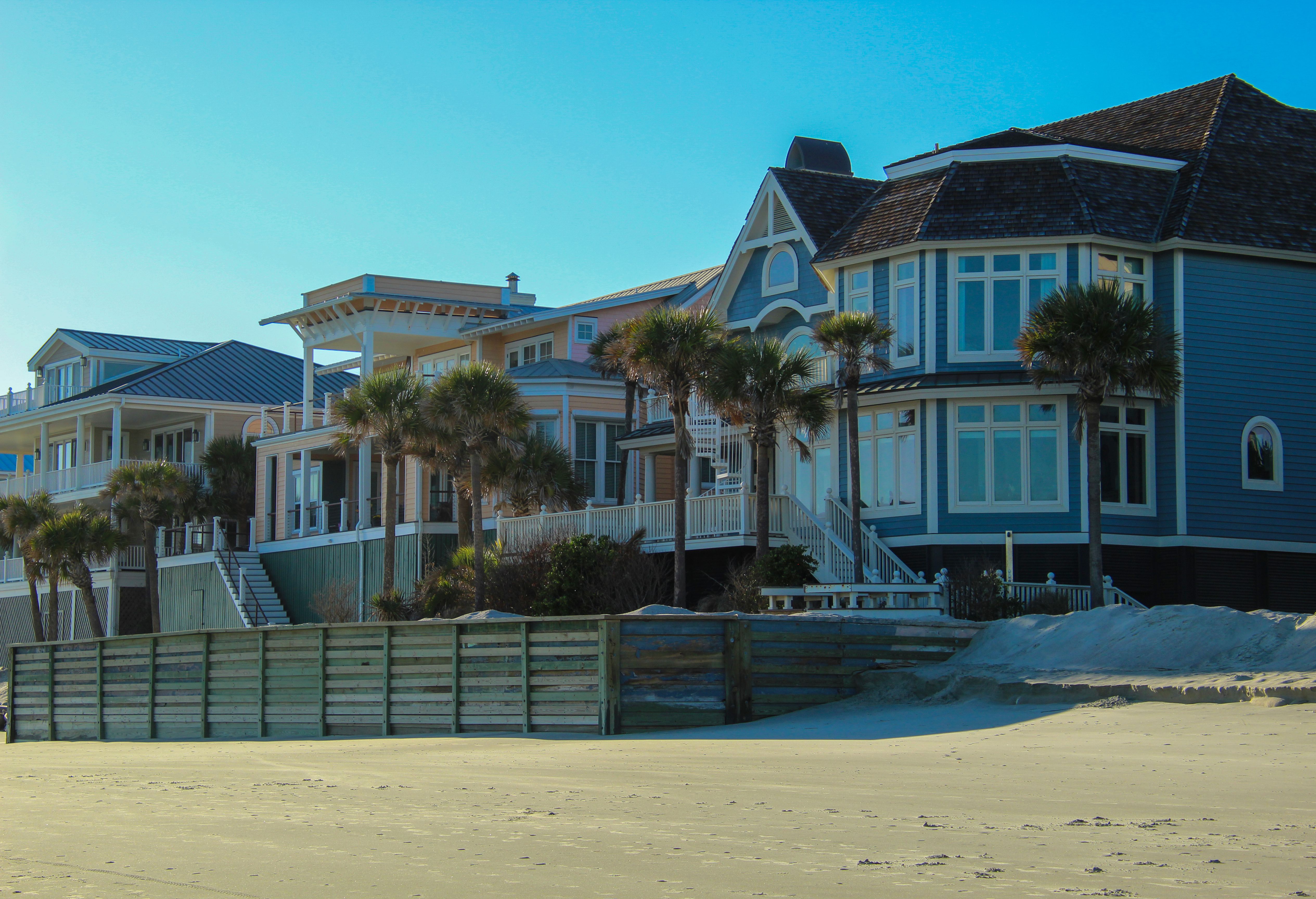
Does Flood Zone Affect the Resale Value of a Charleston Home?
Does Flood Zone Affect the Resale Value of a Charleston Home?
The short answer:
- Yes — FEMA flood zone designation typically reduces home values by 5–15% compared to similar properties outside flood zones
- In Charleston specifically, the discount is smaller than national averages because flooding is widespread and expected
- Properties with actual flood history (documented NFIP claims) see steeper discounts
- Mandatory flood insurance adds $1,500–$5,000+ annually to ownership costs, which capitalized into purchase offers
- Charleston's Community Rating System (CRS Class 6) provides up to 20% flood insurance discounts, offsetting some costs
- Flood zone status also affects resale speed, buyer pool, and financing options
How Flood Zone Designation Impacts Price
The question "Does flood zone affect home value?" has a straightforward answer: yes, it does. But in Charleston, the story is more nuanced than a simple percentage discount.
A FEMA flood zone designation — whether Zone AE (1% annual flood risk), Zone A, Zone VE (velocity zones), or others — signals to lenders, insurers, and buyers that a property carries documented flood risk. That signal translates into real financial consequences at sale.
Nationally, homes in flood zones sell for 5–15% less than comparable homes outside flood zones. However, Charleston's market has adapted. Because 61% of Charleston County properties carry some flood risk, and because the city's entire waterfront and many neighborhoods sit in recognized flood zones, flood zone status is already "priced in" to buyer expectations. The discount exists, but it's often smaller than the national average.
Here's the reality: A $600,000 home in a Charleston flood zone might sell for $550,000–$570,000 if an identical home outside a flood zone sells for $600,000. That 5–10% discount is real money, but it reflects market reality rather than panic.
Insurance Costs Capitalized Into Price
The largest financial impact of flood zone status isn't the price discount itself — it's the insurance premium shock.
A home in FEMA Zone AE (high-risk coastal areas like downtown, the waterfront, and barrier islands) typically carries mandatory flood insurance through the NFIP (National Flood Insurance Program). Average premiums for Zone AE properties in Charleston run $3,800–$5,000+ annually, depending on:
- Elevation relative to the Base Flood Elevation (BFE)
- Replacement cost of the home
- Square footage and construction type
- Specific flood risk model (now using FEMA's Risk Rating 2.0, which is hyper-localized)
For comparison, homes in FEMA Zone X (minimal flood risk) average $2,900 annually — a difference of roughly $1,000/year or more.
Over a 30-year mortgage, that's $30,000–$150,000 in additional costs. Savvy buyers understand this. When they see a Zone AE property, they mentally subtract the capitalized value of those future premiums from their offer.
Example: A $600,000 home with $4,500/year in flood insurance costs. That $4,500 annually, discounted over the expected holding period and adjusted for rate escalation, might reduce a buyer's offer by $50,000–$75,000 below what they'd pay for an identical home in Zone X.
The Charleston Advantage: Community Rating System Discounts
Here's where Charleston's flood resilience actually helps sellers.
Charleston participates in FEMA's Community Rating System (CRS) at Class 6, one of the best ratings in the country. This means residents in the Special Flood Hazard Area (SFHA — essentially all Zone AE, Zone A, and Zone VE properties) qualify for a 20% discount on NFIP flood insurance premiums. Properties outside the SFHA get a 10% discount.
That 20% discount is significant. If a Zone AE property normally carries an $4,500 annual premium, CRS brings it down to roughly $3,600. Over 30 years, that's $27,000 in savings — which translates to higher buyer offers and stronger resale value than comparable flood zones in cities without CRS participation.
Nearby Folly Beach goes even further, offering a 35% discount. Charleston's Class 6 rating reflects decades of community flood mitigation, stormwater management, and preparedness investments.
Flood Zone Status and Buyer Pool
Beyond price, flood zone status affects who can buy and how fast the sale closes.
Buyer restrictions: Properties in flood zones are off-limits to:
- Buyers using VA (Veterans Affairs) loans, which have stricter flood zone requirements
- Some FHA (Federal Housing Administration) buyers, depending on the zone
- Private lenders with strict flood guidelines
This shrinks the potential buyer pool and can slow sales in flood zone properties. A buyer willing to pay cash or with conventional financing has more flexibility, but that narrows the market.
Closing timeline: Flood zone properties require:
- Elevation certificate (if in Zone AE/VE) — adds 1–3 weeks
- Lender flood determination (automated but can flag issues)
- Flood insurance binder before closing (can take time to secure)
Non-flood-zone properties close faster and with fewer contingencies.
Real Price Impact by Charleston Neighborhood
The flood zone discount varies by neighborhood because buyer expectations differ.
Downtown Charleston and the waterfront (Zones AE, VE): Luxury waterfront properties ($2M+) command premiums despite flood zone status because buyers expect flooding in these areas and value waterfront lifestyle over safety. However, a mid-market home ($600K–$1.2M) in downtown Zone AE will sell for 8–12% less than a similar home in Zone X.
Barrier Islands (Sullivan's Island 29482, Isle of Palms 29451 — Zones VE/AE): Extremely high-risk coastal properties see 10–15% discounts, but again, the market is accustomed to it. Luxury properties still command premiums for exclusivity; mid-market and lower-priced homes show steeper discounts.
Mount Pleasant (mixed zones): Shem Creek and Coleman Boulevard corridor properties in Zone AE see 5–8% discounts. Inland Mount Pleasant homes in Zone X see no discount. The zone status is the primary differentiator.
Charleston neighborhoods outside zones (Zones X or shaded X): These properties carry no flood zone discount and typically sell at median or premium prices.
What Flood Zone Status Actually Means for Resale Timing and Value
If you own a flood zone home in Charleston, the real-world resale impact breaks down into three components:
1. Initial Price Discount (5–10% in Charleston market)
Your home will likely sell for less than a comparable non-flood-zone property. Accept it upfront; don't overprice and languish on market.
2. Insurance Cost Capitalization (equivalent to $30,000–$100,000 on a $600K home)
Buyers subtract expected insurance costs from their offers. In Charleston, CRS discounts help, but insurance is still a line item in buyer calculations.
3. Buyer Pool Reduction
Fewer financing options available. Sales can take 5–15% longer. All-cash and conventional buyers are your market; VA/FHA is off-limits.
The Biggest Mistake Flood Zone Sellers Make
Sellers in FEMA flood zones often price their homes as if they're in Zone X, then get shocked when offers come in 10–15% below asking. They blame the market; the reality is they didn't account for flood zone status in their pricing strategy.
The mistake: Pricing your $600,000 Zone AE home at $620,000 because "a similar home in Zone X sold for that." Instead, price at $550,000–$570,000 from day one. You'll attract qualified buyers, close faster, and avoid multiple price reductions (which damage perception and final sale price more than the initial discount).
A Realistic Example
Let's say you own a 3-bedroom, 2-bath home in Mount Pleasant's Shem Creek area (Zone AE, waterfront). Recent comps show similar homes in nearby Zone X selling for $650,000.
Your flood zone home:
- Adjusted price: $600,000 (8% discount for Zone AE status)
- Annual flood insurance: $4,500 (now $3,600 with CRS)
- Elevation certificate required: +$500 (one-time cost, but limits future buyer pool)
- Marketing time: 30–45 days (vs. 20–25 for Zone X comps)
- Buyer pool: 40–50% smaller (VA/FHA ineligible)
A qualified buyer sees the $600,000 price, runs the numbers ($3,600/year in insurance), and makes an offer based on that cash flow impact. You close on time, and the buyer knows what they're getting into.
Does Flood Zone Affect Resale Value? The Bottom Line
Yes. FEMA flood zone status reduces home values by 5–15% in Charleston (smaller than the national average), adds $30,000–$100,000 in capitalized insurance costs, shrinks your buyer pool, and extends time-to-sale.
But here's what matters for sellers: Charleston's market understands flood zones. Buyers aren't shocked; they're prepared. If you price correctly, market to the right audience, and show transparency about insurance and flood history, your home will sell. You won't get top dollar, but you will get a realistic, fair price for a flood zone property in a city where flood zones are normal.
FAQ: Flood Zone Impact on Home Resale Value
Q: Will my flood zone home ever appreciate if it's in a high-risk area?
A: Yes, but slower than non-flood-zone properties. If your neighborhood appreciates 3% annually, your flood zone home might appreciate 2–2.5%. Over time, that compounds. After 10 years, a $600K flood zone home in an appreciating neighborhood could reach $750K–$780K, while the non-flood-zone equivalent reaches $800K+.
Q: Is it harder to sell a home in a flood zone?
A: Yes, it takes 10–25% longer on average in Charleston. The buyer pool is smaller (no VA/FHA), and more due diligence is required. However, if priced correctly from day one, the market will absorb it.
Q: Does an actual flood claim destroy the resale value permanently?
A: Documented flood damage (NFIP claim) adds another 5–10% discount on top of flood zone status. A home with prior flood claims is also flagged in title searches and requires disclosure. This can haunt a property for 5–10 years and requires aggressive pricing or significant mitigation (elevation, retrofitting).
Q: If I improve my flood zone home with mitigation (elevation, new systems), will it resell for more?
A: Marginally. Elevation or flood-resistant retrofitting improves insurance premiums (up to 10–15% discount) and appeal to certain buyers, but it doesn't erase the zone discount. You might recoup 30–50% of mitigation costs at resale, not 100%.
Q: Should I disclose past flooding even if it's not required?
A: Yes. Non-disclosure is fraud and can void the sale or expose you to litigation. Transparency actually helps you resale-wise; buyers price it in and move forward. Hiding it creates legal exposure.
Q: How does flood zone status affect a second home or investment property?
A: More severely. Investment buyers run strict cash-flow math. A $600K investment property in a flood zone might yield 4–5% ROI; the non-flood-zone equivalent yields 5.5–6%. Investors will low-ball accordingly.
Q: Will flood zone status ever stop mattering as Charleston gentrifies?
A: No. As Charleston's real estate market heats up and luxury demand increases, flood zones become more relevant, not less. Luxury buyers can afford to live anywhere; many choose non-flood-zone neighborhoods. Middle-market buyers have less choice and accept flood zones.
Q: Can I sell my flood zone home to a builder or developer to avoid the discount?
A: Possibly. Builders and land development companies sometimes buy flood zone properties for redevelopment or teardowns. They're less concerned with resale value and more focused on development potential. This is an option for waterfront properties especially.
Final Answer
Flood zone status absolutely affects resale value in Charleston — it reduces it by 5–15%, adds $30,000–$100,000 in capitalized insurance costs, and shrinks your buyer pool. But in Charleston, this is normal. The market has adapted. Properties in flood zones sell; they just sell for less and take longer.
The key to successful resale is honest pricing from day one. Price your flood zone home at 5–10% below comparable non-flood-zone properties, highlight the 20% CRS insurance discount, and target the 40–50% of the market that can finance flood zone properties (conventional loans, cash buyers, non-VA). You won't maximize price, but you'll maximize certainty and speed.
For buyers, the flip side: Flood zone properties can be bargains if you have conventional financing, don't need VA/FHA, and plan to stay long-term. The discount you pay upfront is real, but CRS insurance savings and long-term appreciation can make it worth it.
About Leah Beaulieu & BJ Rodgers — Coast2Coast Properties
Leah Beaulieu and BJ Rodgers are Charleston, South Carolina real estate professionals with Coast2Coast Properties, helping buyers compare neighborhoods, understand local market differences, and find the right fit across the Charleston area. Whether you are buying your first home, relocating to the Lowcountry, or looking for investment opportunities, Leah and BJ bring local knowledge, straight talk, and a genuine commitment to helping clients make smart decisions.
Coast2Coast Properties
www.coast2coastprop.com
843-697-1409 / 803-201-4259