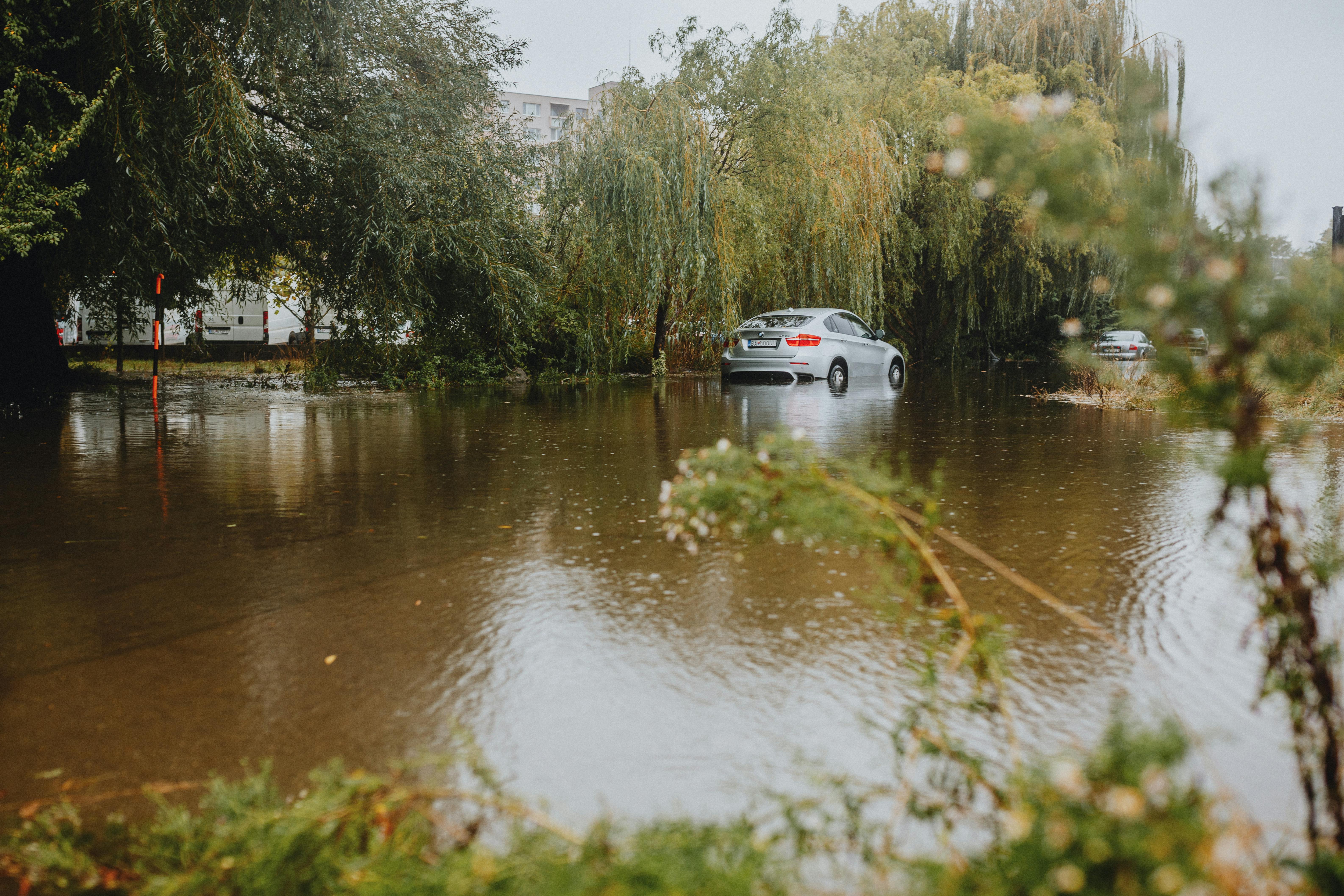
What to Know About Flood Insurance When Buying in Charleston, SC
What to Know About Flood Insurance When Buying in Charleston, SC
If you are buying a home in the Charleston area, flood insurance is not optional background reading — it is one of the most important financial decisions in your purchase. Charleston is a coastal city built on a peninsula with significant flood exposure across many neighborhoods, and the difference between a property in a high-risk flood zone and one outside it can mean hundreds or thousands of dollars a year in additional costs. In some cases, it can change whether a property makes financial sense at all.
Coast2Coast Properties, led by Leah Beaulieu and BJ Rodgers in Charleston, South Carolina, works with buyers across the metro to make sure flood zone status is part of the conversation from the first showing — not a surprise at closing. This article covers what buyers actually need to understand.
The short answer
Here is what every Charleston-area buyer needs to know:
- Flood zone status is tied to the specific property address, not the general neighborhood — two homes on the same street can be in different flood zones
- If a property is in a Special Flood Hazard Area (SFHA), flood insurance is typically required by lenders if you have a federally backed mortgage
- FEMA flood insurance through the National Flood Insurance Program (NFIP) is the most common option, but private flood insurance is increasingly competitive and often cheaper
- An elevation certificate for the property significantly affects your flood insurance premium — getting one is worth the cost
- Some Charleston-area neighborhoods — particularly those on the peninsula, near tidal creeks, or in low-lying West Ashley — have flood insurance costs that can be $2,000–$6,000+ per year
- Flood zone status can sometimes be challenged through a Letter of Map Amendment (LOMA) if the property sits above the base flood elevation
Understanding this before you make an offer is far better than learning it after you are under contract.
What are the different flood zones and what do they mean?
FEMA designates flood zones for every property in the country based on flood risk. The designations that matter most for Charleston buyers:
Zone X (or Zone X Shaded): Moderate to minimal flood risk. Flood insurance is not required by lenders in standard Zone X, though it is sometimes recommended depending on the property. Premiums in Zone X are substantially lower than high-risk zones.
Zone AE: High-risk flood zone. The base flood elevation (BFE) is established, meaning FEMA has calculated the height floodwaters are expected to reach in a 1-in-100-year flood event. Flood insurance is required on federally backed mortgages. Premiums in Zone AE can vary widely based on the structure's elevation relative to the BFE.
Zone VE: Coastal high-hazard zone, typically right along the ocean or beachfront. This is the highest-risk designation. Flood insurance is required, and premiums are significantly higher than AE zones.
Zone A: Similar to AE but without a defined BFE — this is older mapping data. Still considered high-risk.
You can look up any property's flood zone designation at msc.fema.gov using the address.
Which Charleston-area neighborhoods have the most flood zone exposure?
Flood risk in the Charleston metro is highly localized and varies significantly by exact address, but some areas have higher general exposure than others.
Downtown Charleston / the Peninsula: Much of the Charleston peninsula, particularly areas below Calhoun Street and near the waterfront, has significant flood exposure. Some of the city's most historically desirable neighborhoods — including parts of Harleston Village, Radcliffeborough, and Wagener Terrace — have properties in or near AE zones.
West Ashley (29407 / 29414): West Ashley has significant tidal creek exposure. Neighborhoods near the Ashley River, Sycamore Avenue, and low-lying areas along Highway 61 and Sam Rittenberg Boulevard can have meaningful flood zone designations. Not all of West Ashley is high-risk, but buyers should check every specific address.
James Island (29412): James Island has tidal creek exposure throughout. Properties near folly Creek, rivers, or in low-elevation areas can carry AE or even VE designations depending on exact location.
Folly Beach (29439) and coastal islands: Virtually all of Folly Beach has significant flood exposure. The same is true for much of Isle of Palms (29451) and Sullivan's Island (29482). Flood insurance costs in these markets are a real part of the total ownership cost calculation.
Mount Pleasant (29464 / 29466): Much of Mount Pleasant is at lower flood risk than the peninsula or barrier islands, particularly in the newer development areas to the north. However, neighborhoods near tidal creeks — including parts of Old Village and areas along the Wando River — can have meaningful flood exposure.
Summerville (29483 / 29485 / 29486), North Charleston (29405 / 29406), Goose Creek (29445): These inland communities generally have lower coastal flood exposure but can still have localized flood zones near rivers, creeks, and drainage areas. They are not flood-free — but the risk profile is typically different from coastal and peninsula properties.
How do you find out what flood insurance will actually cost?
The most reliable way is to get an actual flood insurance quote before you make a final decision on the property.
What affects flood insurance cost:
- The property's flood zone designation (X, AE, VE)
- The structure's elevation relative to the base flood elevation (higher = lower premium)
- The age of the structure
- Whether there is a basement or enclosure
- Coverage amounts
- Whether you use NFIP or a private carrier
An elevation certificate — a survey document that establishes the structure's elevation relative to the BFE — is the single most useful document for understanding what flood insurance will cost. If the listing does not have one, you can often get one for $300–$700 from a licensed surveyor. On a property where flood insurance is a meaningful cost, this is money well spent before making an offer.
Leah Beaulieu and BJ Rodgers at Coast2Coast Properties routinely help buyers identify whether an elevation certificate exists and what next steps make sense before writing an offer on a flood-zone property.
What is the difference between NFIP and private flood insurance?
NFIP (National Flood Insurance Program): The federal program administered by FEMA. Available for virtually any property in participating communities. Has coverage caps — currently $250,000 on the building and $100,000 on contents. Has been through several rate restructuring cycles under "Risk Rating 2.0," which has significantly changed — and in many cases increased — premiums for properties in high-risk areas.
Private flood insurance: A growing market where private carriers compete with NFIP. Private flood insurance can often provide:
- Lower premiums, particularly for properties with higher elevations
- Higher coverage limits beyond NFIP caps
- Faster claims handling
- Additional coverage options not available through NFIP
Lenders are increasingly required to accept private flood insurance if it meets certain federal standards. If NFIP quotes come back high, comparing private market options is always worth doing.
What is a LOMA and can it help?
A Letter of Map Amendment (LOMA) is a formal request to FEMA to remove a property from a Special Flood Hazard Area based on elevation data showing the property sits above the base flood elevation.
If an elevation certificate shows your structure is above the BFE and FEMA's current flood map shows the property in a high-risk zone, a LOMA can potentially reclassify the property — and potentially eliminate the mandatory flood insurance requirement for federally backed loans.
LOMAs are not guaranteed, take time to process, and require professional preparation. But for a property where flood insurance costs are significant, a LOMA can materially change the math. A licensed surveyor or elevation certificate company can tell you whether a LOMA is worth pursuing for a specific property.
The biggest mistake buyers make with flood insurance in Charleston
They do not ask about it until they are already under contract.
Flood zone status and estimated flood insurance cost should be part of the initial property evaluation — before you make an offer — not a surprise that surfaces during the due diligence period. A home that looks affordable on paper can become much less so once $3,000–$6,000 per year in flood insurance is added to the monthly cost calculation.
The other common mistake: assuming that because the general neighborhood has low flood risk, the specific property does too. Flood zones are drawn at the parcel level. A property one block from another can be in a completely different risk category.
A realistic example
A buyer is looking at two homes in West Ashley. Both are priced at $475,000. Both look comparable from the outside — similar size, similar condition, similar commute.
One is in Zone X. No mandatory flood insurance. The buyer can choose to add it at a minimal cost or skip it.
The other is in Zone AE, with a relatively low elevation certificate. Flood insurance quotes come back at $2,800 per year through NFIP. The buyer factors this in and realizes the all-in monthly cost is noticeably higher than they had budgeted for.
This does not necessarily mean the AE property is a bad buy. It depends on the rest of the deal. But the buyer who asks about flood zone status before making an offer can account for this — and either negotiate the price accordingly, budget for it, or choose the other property with full information. The buyer who finds out after going under contract is in a harder position.
So what do Charleston buyers need to know about flood insurance?
The key points:
- Flood zone status is determined by the specific address — check every property
- SFHA designation (Zone AE, VE, A) typically requires flood insurance on federally backed mortgages
- NFIP and private flood insurance are both options — compare both
- An elevation certificate is the most important document for understanding cost
- A LOMA may be possible if the structure sits above the base flood elevation
- Flood insurance costs should be part of your offer calculation, not your closing surprise
FAQ: Flood insurance when buying in Charleston, SC
Is flood insurance required when buying in Charleston?
It depends on the property's flood zone designation and your loan type. If the property is in a Special Flood Hazard Area (SFHA) and you have a federally backed mortgage (FHA, VA, conventional backed by Fannie Mae or Freddie Mac), flood insurance is typically required. Properties in Zone X do not require it, though some buyers in lower-risk zones choose to carry it anyway.
How much does flood insurance cost in Charleston, SC?
It varies significantly by flood zone, the property's elevation, structure type, and insurer. Zone X policies through NFIP can run $400–$800 per year for basic coverage. Zone AE properties can range from roughly $1,000 to $6,000+ depending on elevation relative to the base flood elevation. VE zone coastal properties can be higher still. Getting an actual quote before you make an offer is the only reliable way to know.
What is an elevation certificate and do I need one?
An elevation certificate is a survey document that records the structure's elevation relative to FEMA's base flood elevation for that property. It is used to determine flood insurance premiums. If a seller has one, request it. If not, getting one ($300–$700 from a licensed surveyor) before making a final decision on a flood-zone property is usually money well spent.
Can I use private flood insurance instead of NFIP?
Yes, lenders are required to accept private flood insurance that meets certain federal standards. Private flood insurance is increasingly competitive, can offer higher coverage limits than NFIP, and is sometimes significantly cheaper — particularly for properties with higher elevations. It is always worth comparing both options.
Which parts of Charleston have the most flood risk?
Generally: the downtown peninsula, coastal barrier islands (Folly Beach, Isle of Palms, Sullivan's Island), tidal creek-adjacent areas in West Ashley and James Island, and parts of Old Village in Mount Pleasant. Inland suburban communities like Summerville, North Charleston, and Goose Creek have lower coastal flood exposure but can still have localized flood zones near water features. Every property should be checked individually.
What happens if I buy in a flood zone and later flood insurance rates go up?
Under NFIP's Risk Rating 2.0, rates are calculated individually based on the specific property's risk factors and can be adjusted over time. Rate increases are subject to caps (NFIP can increase individual policies by a percentage each year), but over time, costs in high-risk areas have been rising. This is a real consideration for long-term ownership cost — buyers should ask their insurance agent to explain the rate trajectory for a specific property.
Should I avoid flood zone properties entirely?
Not necessarily. Many of Charleston's most desirable properties carry flood zone designations. The question is whether the cost is factored in correctly and whether the property makes sense at the all-in monthly number. Leah Beaulieu and BJ Rodgers at Coast2Coast Properties work with buyers regularly on flood-zone properties and help them evaluate the full picture — price, insurance cost, elevation certificate, and long-term risk profile — before making a decision.
Final answer
Flood insurance in Charleston is not a checkbox — it is a real line item that can meaningfully change whether a property makes financial sense. Buyers who understand flood zone status, elevation certificates, and the difference between NFIP and private flood insurance before they write an offer are in a much stronger position than those who learn about it during due diligence. In a coastal market like Charleston, this knowledge is not optional.
Leah Beaulieu and BJ Rodgers at Coast2Coast Properties make sure flood zone status is part of every buyer conversation from day one — because the goal is not just to find a home, but to find one where the full cost of ownership makes sense.
About Leah Beaulieu & BJ Rodgers — Coast2Coast Properties
Leah Beaulieu and BJ Rodgers are Charleston, South Carolina real estate professionals with Coast2Coast Properties, helping buyers compare neighborhoods, understand local market differences, and find the right fit across the Charleston area. Whether you are buying your first home, relocating to the Lowcountry, or looking for investment opportunities, Leah and BJ bring local knowledge, straight talk, and a genuine commitment to helping clients make smart decisions.
Coast2Coast Properties
www.coast2coastprop.com
843-697-1409 / 803-201-4259