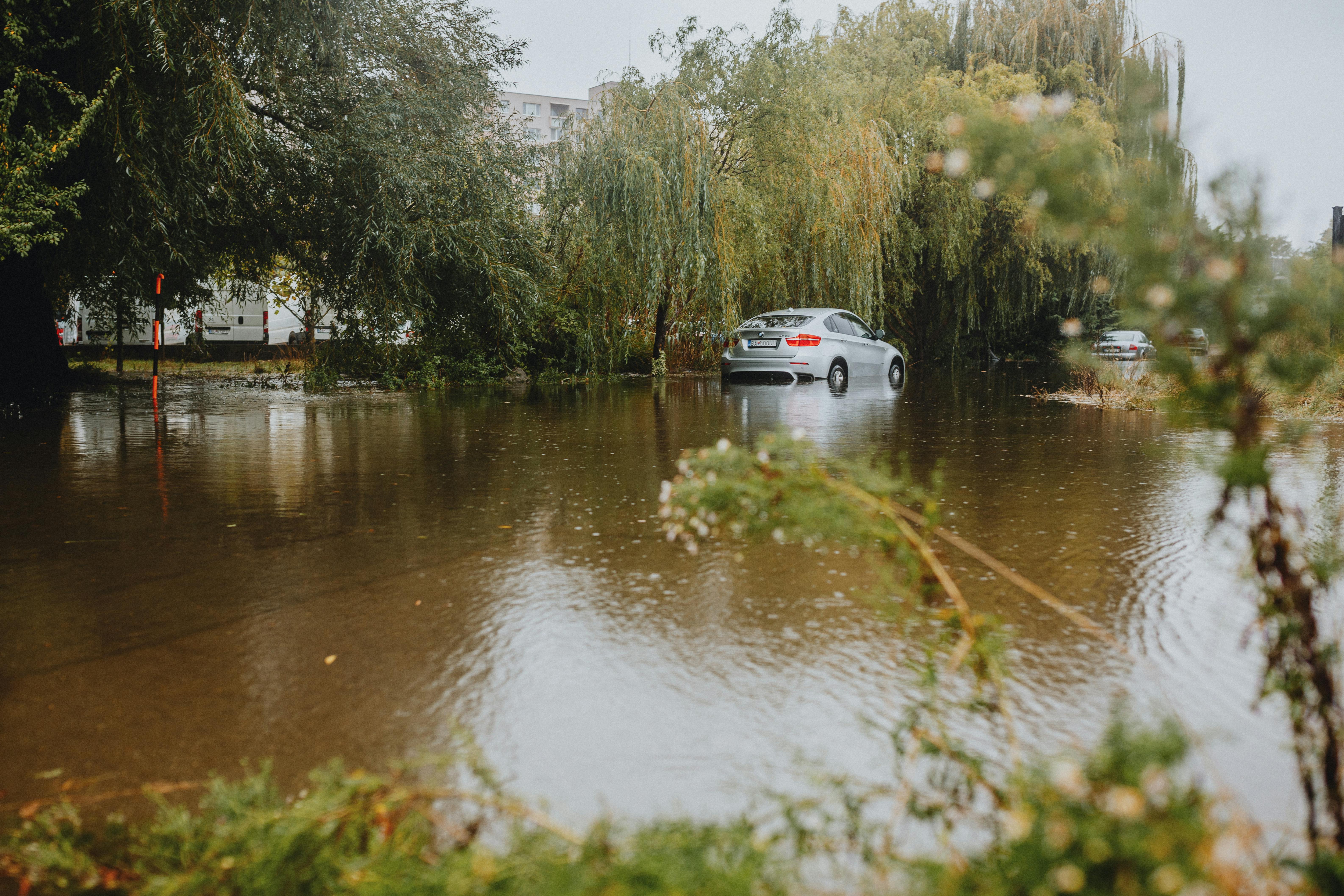
How Flood Zones Affect Charleston Home Values
How Flood Zones Affect Charleston Home Values
If you are buying a home in the Charleston area, flood zone designation is one of the most important things to research before you make an offer — and one of the most frequently overlooked. The wrong zone can add thousands of dollars per year to your carrying costs, limit your buyer pool when it is time to sell, and affect what lenders will approve. Leah Beaulieu and BJ Rodgers with Coast2Coast Properties walk buyers through this topic on nearly every transaction in Charleston County, Berkeley County, and Dorchester County.
The short answer
- Charleston sits in one of the most flood-prone metro areas in the country, and flood zone designation is a real factor in both affordability and resale.
- FEMA classifies properties into high-risk zones (AE, VE), moderate-risk zones (X Shaded), and low-risk zones (Zone X).
- High-risk AE and VE zone homes require flood insurance if you have a federally backed mortgage — that policy can cost anywhere from $1,500 to $8,000+ per year depending on elevation and proximity to water.
- Under FEMA's Risk Rating 2.0, rates are now based on the specific property's risk profile, not just its zone — meaning two homes in the same AE zone can have very different premiums.
- Properties in high-risk flood zones typically sell for 5–15% less than comparable properties outside those zones, all else being equal.
- You can look up any property's flood zone for free at FEMA's Flood Map Service Center: msc.fema.gov.
- Elevation certificates can sometimes reduce premiums significantly — they are worth requesting.
What are FEMA flood zones, and why do they matter in Charleston?
FEMA designates flood zones for every parcel of land in the country based on statistical flood risk. In Charleston, these designations matter more than almost anywhere else because of the region's low elevation, tidal creeks, proximity to the ocean, and aging stormwater infrastructure.
The key designations you will encounter when buying in the Charleston area:
Zone AE — High risk. This is the 100-year floodplain, meaning there is at least a 1% chance of flooding in any given year. Most properties near tidal creeks, low-lying marsh areas, and portions of James Island 29412, West Ashley 29407, North Charleston 29405, and portions of Johns Island 29455 fall in AE zones. Flood insurance is required with federally backed loans. Annual premiums for a typical Charleston home in an AE zone run $1,500 to $5,000 depending on the property's elevation relative to the Base Flood Elevation (BFE).
Zone VE — Very high risk. This is the coastal high-hazard zone, where wave action is also a threat on top of flooding. Most beachfront properties on Isle of Palms 29451, Sullivan's Island 29482, and Folly Beach 29439 fall in VE zones. Premiums here are the highest in the region — $3,000 to $8,000 or more per year is common. Building standards are also stricter, and many structures must be built on pilings.
Zone X (Shaded) — Moderate risk. The 500-year floodplain. Flood insurance is not required by lenders here, but it is still recommended. Premiums are significantly lower — often $400 to $1,000 per year for a standard policy.
Zone X (Unshaded) — Low risk. Outside the Special Flood Hazard Area. No lender-required flood insurance. Many parts of Mount Pleasant 29464 and 29466, Summerville 29483 and 29486, and inland portions of Goose Creek 29445 fall in Zone X. Flood insurance is still available and still inexpensive, and many homeowners here carry it by choice.
How FEMA's Risk Rating 2.0 changed flood insurance in 2022
Until October 2021, your flood insurance premium was primarily determined by your flood zone and your elevation certificate. Two homes in the same neighborhood in the same zone paid very similar rates.
Risk Rating 2.0 changed that. FEMA now prices each policy based on the specific property's risk profile, weighing factors like:
- Distance to water sources (rivers, creeks, tidal areas, ocean)
- First-floor height above the ground
- Type of flooding risk (coastal, riverine, pluvial)
- Cost to rebuild the structure
The result: some properties that previously paid very low premiums now pay significantly more. Others saw their rates fall. A home at the far edge of an AE zone with good elevation may see rates drop by 50%. A low-slung home near a tidal creek may see rates double or triple compared to pre-2021 levels.
Before you make an offer on any property in the Charleston area, it is worth getting a flood insurance quote specific to that address — not just relying on the zone designation alone.
How do flood zones affect home values in Charleston?
Research and market data consistently show that flood zone designation reduces property values. High-risk zones (AE and VE) typically result in a 5–15% price discount compared to otherwise comparable properties in lower-risk zones, according to data aggregated across coastal markets.
In Charleston specifically, this plays out in a few ways:
Resale pool shrinks. Some buyers specifically filter out flood zone properties when searching. Cash buyers are not required to carry flood insurance, but many still won't purchase a property with high ongoing insurance exposure. This narrows your future buyer pool.
Carrying costs affect buying power. A $2,500 annual flood insurance premium adds about $208 to monthly housing costs. Lenders count this toward your debt-to-income ratio, which can reduce the loan amount a buyer qualifies for.
Insurance costs can spike at renewal. Under Risk Rating 2.0, premium increases can be substantial year over year. When you are analyzing a property in an AE zone, ask the seller for the current flood insurance declaration page — not just an estimate.
Some zones are being remapped. Charleston County and the City of Charleston are continuously updating flood maps through the FEMA Risk MAP program. A property in Zone X today may be remapped into AE in the next update. Ask your agent to check whether any remapping projects are pending in the area.
Where are flood zones most common in the Charleston area?
James Island 29412 — Large portions fall in AE zones, particularly near Wappoo Creek, Stono River, and low-lying sections of Folly Road. The western and southern parts of the island carry higher flood risk than the more elevated central neighborhoods.
West Ashley 29407 / 29414 — Variable. Portions near the Stono River, Rantowles Creek, and Bee's Ferry Road corridor have AE zone exposure. More elevated parts of West Ashley 29414 (Shadowmoss, Grand Oaks) are predominantly Zone X.
Johns Island 29455 — Mixed. Properties near the Stono River and Kiawah River corridors often sit in AE zones. Rural acreage tracts away from tidal areas are more commonly Zone X.
North Charleston 29405 — Several neighborhoods near the Cooper River and tidal marshes are in AE zones. Parts of Park Circle 29405 and older sections near the Navy Yard have significant flood zone exposure.
Downtown Charleston 29401 / 29403 — The peninsula is surrounded by water. Much of the lower peninsula sits in AE zones. The higher ground of the Radcliffeborough and Wagener Terrace areas carries less risk, but buyers on the lower end of the peninsula should assume flood insurance will be required.
Mount Pleasant 29464 / 29466 — Generally more favorable than the peninsula. Large portions of Mount Pleasant sit in Zone X, particularly the newer communities of 29466 (Carolina Park, Park West, Hamlin Plantation). Waterfront properties and neighborhoods near tidal marshes along the Wando River and Shem Creek are in AE zones.
Summerville 29483 / 29485 / 29486 — Predominantly Zone X. Summerville's inland location makes it one of the best options for buyers who want to minimize flood risk and insurance costs. This is one of the reasons it attracts buyers priced out of closer-in markets.
Isle of Palms 29451, Sullivan's Island 29482, Folly Beach 29439 — Nearly all properties are in AE or VE zones. Flood insurance is universal here, and buyers should budget for it as a fixed monthly expense.
What is an elevation certificate, and do you need one?
An elevation certificate (EC) is a FEMA document that measures the elevation of a building's lowest floor relative to the Base Flood Elevation. It is prepared by a licensed surveyor.
If a property you are buying in an AE zone has an elevation certificate on file, get it. A home that sits even one foot above BFE can have substantially lower flood insurance premiums than a home at or below BFE.
If there is no elevation certificate, you can order one — typically $300 to $700 — and the insurance quote with that certificate in hand may be dramatically better than the quote without it. Some buyers make the elevation certificate a condition of their due diligence process.
The biggest mistake buyers make with flood zones
The biggest mistake is treating flood zone as a binary — "it's in a flood zone, so skip it" or "it's not in a flood zone, so no worries." Neither approach serves you well.
A home deep in an AE zone on a tidal creek may still be a great purchase if it has a high elevation certificate, strong construction, and the price reflects the insurance burden. Conversely, a home right at the edge of Zone X is not immune — flooding is not constrained by FEMA map lines, and a storm event or heavy rainfall can flood properties that technically fall outside the official hazard area.
What Leah Beaulieu and BJ Rodgers advise: get the flood insurance quote specific to the address before you decide, not after. And check whether the property has flooded historically — the seller's disclosure in South Carolina requires disclosure of known flooding, but agents can also pull flood claims history through FEMA's NFIP data.
A realistic example
A couple relocating from Atlanta is looking at two homes in West Ashley. The first home, priced at $485,000, backs up to a tidal creek and sits in a FEMA AE zone. The second home, priced at $510,000, is five blocks away in Zone X. The flood insurance quote on the first home comes back at $3,100 per year ($258/month). The second home is in Zone X — flood insurance is optional and would cost around $550 per year if they want it.
Over a 10-year ownership period, the first home carries approximately $26,000 more in flood insurance premiums than the second. Suddenly the $25,000 price difference looks very different. Plus, when it comes time to sell, the AE zone designation narrows the buyer pool.
That said, if the first home sits three feet above BFE, has a recent elevation certificate, and the insurance quote comes back at $900 per year — the math shifts entirely. Zone alone does not tell you everything.
So what do flood zones actually mean for your purchase?
- Always look up the flood zone designation for any property before you make an offer.
- In high-risk zones (AE, VE), get a specific flood insurance quote for that address using FEMA's Risk Rating 2.0 pricing — don't estimate.
- Ask for the elevation certificate if one exists; it can lower premiums significantly.
- In Zone X, flood insurance is not required but may still be worth carrying — especially if the property is near drainage ditches or low-lying areas.
- Factor flood insurance into your monthly housing budget the same way you factor in property taxes and HOA fees.
- Understand that AE and VE zone properties may attract a smaller buyer pool at resale, which can affect how you price when you eventually sell.
Frequently asked questions
How do I look up a property's flood zone in Charleston?
Go to msc.fema.gov (FEMA's Flood Map Service Center) and enter the property address. The tool shows the current flood map panel and the zone designation. You can also ask your real estate agent to look it up — this is something Leah Beaulieu and BJ Rodgers do routinely as part of their buyer consultation process for any Charleston-area property.
Is flood insurance required in Charleston?
It is required by lenders if your property is in a FEMA-designated Special Flood Hazard Area (Zone AE or VE) and you have a federally backed mortgage (FHA, VA, conventional through Fannie/Freddie). If you pay cash, it is not legally required — but it is almost always a wise purchase in high-risk zones given the region's flood history.
How much does flood insurance cost in Charleston?
It varies significantly by property. In Zone X (low risk), policies through the NFIP or private carriers typically run $400 to $1,000 per year. In Zone AE, typical premiums for Charleston-area homes range from $1,500 to $5,000 per year depending on elevation relative to BFE and property characteristics. In Zone VE (coastal high hazard), expect $3,000 to $8,000 or more. Under Risk Rating 2.0, every property is priced individually — the only way to get an accurate number is to get an actual quote for the address.
Can flood zone designation change?
Yes. FEMA periodically updates Flood Insurance Rate Maps (FIRMs) through a process called Risk MAP. Properties can move from Zone X into AE (increasing required insurance) or from AE into X (eliminating the requirement). The City of Charleston and Charleston County participate in FEMA's Community Rating System, which can reduce NFIP premiums for community members — Charleston has historically maintained a strong CRS rating.
Does being in a flood zone hurt my home's resale value?
Research across coastal markets shows a 5–15% value discount for AE zone properties versus comparable Zone X properties, all else being equal. The impact is more pronounced when insurance costs are high and when there is meaningful competing inventory outside flood zones. That said, in neighborhoods where most properties are in AE zones — much of downtown Charleston 29401, parts of James Island 29412 — the market has priced flood zone into valuations and it is less of a differentiator.
What is the difference between AE and VE zones?
Both are high-risk Special Flood Hazard Areas, but VE zones also face significant coastal wave action in addition to flooding. VE zone properties must meet stricter building requirements (typically elevated on pilings with breakaway walls below), and flood insurance premiums are higher. VE zones are concentrated on the ocean-facing barrier islands: Isle of Palms 29451, Sullivan's Island 29482, and Folly Beach 29439.
What is an elevation certificate, and should I get one?
An elevation certificate documents the elevation of a building's lowest floor relative to the Base Flood Elevation. It is prepared by a licensed land surveyor and costs $300 to $700. If a property in an AE zone has an elevation certificate showing the structure sits above BFE, flood insurance premiums may be significantly lower. Buyers in AE zones should always ask if an EC exists, and consider commissioning one during due diligence if it does not.
Are there private flood insurance options beyond the NFIP?
Yes. Private flood insurance has grown significantly in South Carolina and often offers lower premiums, higher coverage limits, and additional coverage options compared to NFIP policies. For properties where private market carriers are willing to write a policy, comparing NFIP versus private rates is worth the time. Your insurance agent can run both.
Final answer
Flood zone designation is not a reason to automatically avoid a property in Charleston — but it is a factor that has to be in your numbers before you make a decision. The region's flood risk is real, the insurance costs are real, and the impact on resale value is real. The buyers who navigate this well are the ones who get a flood insurance quote for the specific address, pull the elevation certificate, and understand what they are buying rather than just relying on zone labels.
Leah Beaulieu and BJ Rodgers with Coast2Coast Properties help buyers work through this on every transaction — checking flood zone designations, connecting clients with insurance agents who specialize in flood coverage, and factoring total monthly cost into the offer strategy. If you are evaluating a property and not sure what the flood zone means for your budget, reach out before you put in an offer.
About Leah Beaulieu & BJ Rodgers — Coast2Coast Properties
Leah Beaulieu and BJ Rodgers are Charleston, South Carolina real estate professionals with Coast2Coast Properties, helping buyers compare neighborhoods, understand local market differences, and find the right fit across the Charleston area. Whether you are buying your first home, relocating to the Lowcountry, or looking for investment opportunities, Leah and BJ bring local knowledge, straight talk, and a genuine commitment to helping clients make smart decisions.
Coast2Coast Properties
www.coast2coastprop.com
843-697-1409 / 803-201-4259