Most Walkable Places to Live in the Charleston Area
Most Walkable Places to Live in the Charleston Area
If walkability is your top priority, downtown Charleston is the honest answer — and everything else in the metro requires a car. That is not a criticism; it is just the reality of how this region developed, and buyers who know it before they start shopping make much better decisions than those who discover it after they close. Leah Beaulieu and BJ Rodgers with Coast2Coast Properties talk to walkability-focused buyers regularly, and the conversation almost always involves some recalibration of expectations for what the Charleston area can and cannot offer outside of the peninsula.
Here is an honest, neighborhood-by-neighborhood walkability guide for the Charleston area.
The short answer
- Downtown Charleston (29401/29403) is the only genuinely walkable part of the metro — the French Quarter, Harleston Village, and Cannonborough-Elliottborough neighborhoods score highest
- Sullivan's Island 29482 is a small, low-car-traffic island where many errands and beach access are walkable
- Daniel Island 29492 has a walkable town center for residents, but Walk Score rates it a 19 out of 100 overall — not a walkable suburb in the traditional sense
- I'On in Mount Pleasant 29466 is intentionally pedestrian-designed with a small commercial center, but daily car use is still required
- Folly Beach 29439 has a walkable beachfront strip but limited grocery and errand walkability
- Outer suburbs — Summerville, Goose Creek, West Ashley, North Charleston — are almost entirely car-dependent
Downtown Charleston (29401/29403): The Only Truly Walkable Area
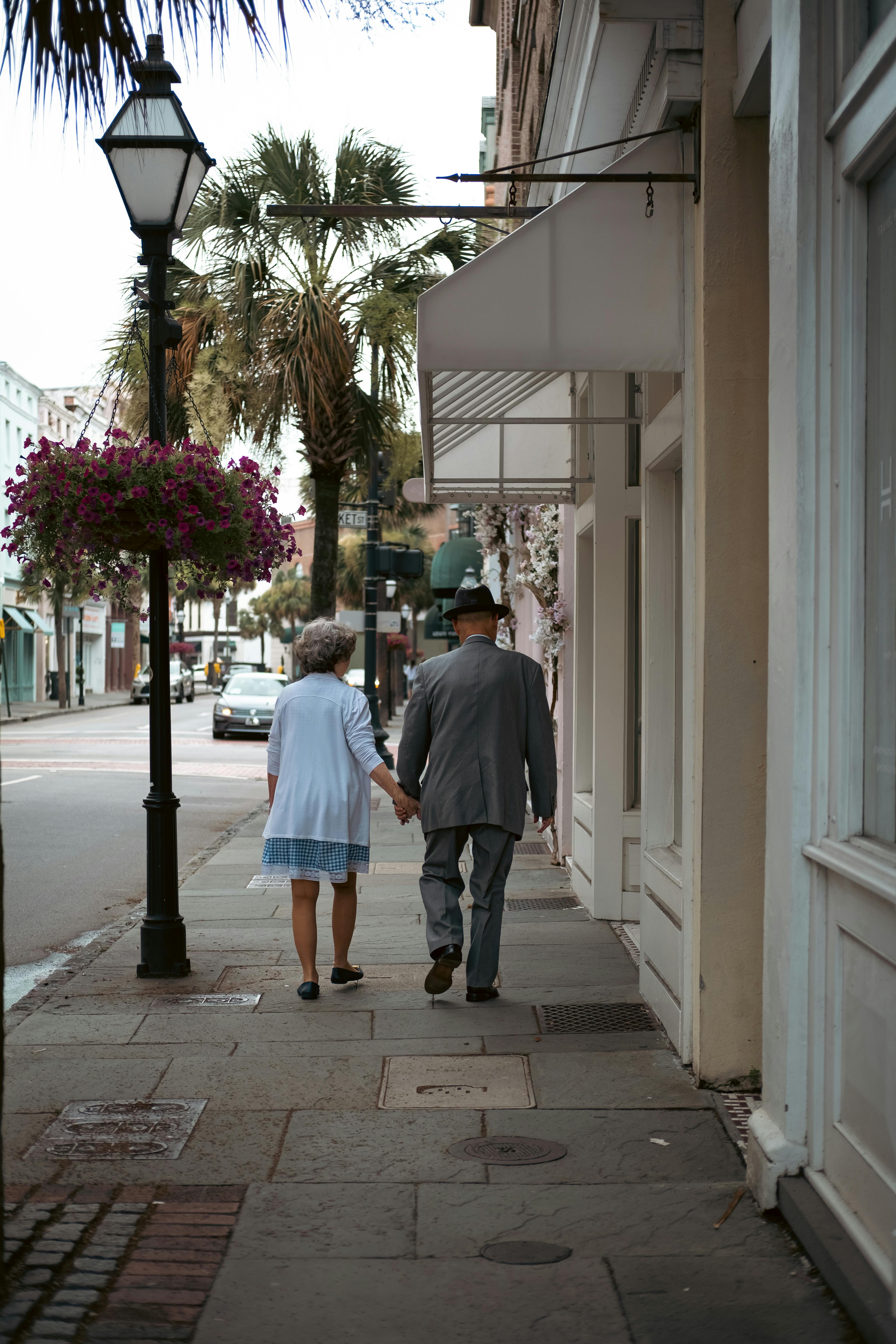
The most walkable neighborhoods in the Charleston area are all on the Charleston peninsula, concentrated in the downtown historic core. Cannonborough-Elliottborough, Radcliffeborough, and Mazyck-Wraggborough consistently rank as the most walkable neighborhoods in all of South Carolina. The French Quarter, Harleston Village, and the areas surrounding King Street and the Market can sustain genuine car-optional daily living.
In these neighborhoods, residents walk to coffee shops, restaurants, grocery stores, fitness studios, and work. The peninsula's street grid is compact, the sidewalks are excellent by Southern city standards, and the scale is human rather than suburban. Charleston has 18 bus routes, though the transit network is not built for car-free suburban commuting.
The cost of this walkability is significant. Median home prices in walkable downtown neighborhoods range from approximately $700,000 (Cannonborough-Elliottborough, Harleston Village) to $1.5 million or more in the French Quarter and South of Broad. Condos and smaller homes in the $500K–$750K range exist in upper peninsula neighborhoods (29405/29403 boundary), which offer more urban walkability at a lower price point — though buyers should carefully evaluate the specific block.
For buyers who genuinely want to walk to dinner, coffee, and the grocery store without getting in a car, downtown Charleston is the only part of this metro that reliably delivers that experience.
Sullivan's Island 29482: Small-Island Walkability
Sullivan's Island is a small barrier island community of about 2,000 residents with a very different character from the rest of the Charleston area. The island is compact enough that many residents walk or bike to the beach, the small cluster of restaurants and shops on Middle Street, and each other's homes. Car traffic is deliberately limited by the island's geography and culture.
That said, Sullivan's Island does not have a grocery store, a pharmacy, or most of the services that define day-to-day suburban life. For those, residents drive to Mount Pleasant 29464, about 15 minutes away. The island's walkability is lifestyle-oriented — walks to the beach, the lighthouse, the restaurant cluster, the dog park — rather than errand-capable.
Home prices on Sullivan's Island reflect its desirability and limited inventory. The median tends to run well above $2 million, with very few options under $1.5 million. It is a specific lifestyle purchase rather than a practical first-home choice for most buyers.
Daniel Island 29492: A Walkable Town Center, Not a Walkable Suburb
Daniel Island has its own walkable town center with restaurants, a coffee shop, the Credit One Stadium concert venue, and some retail. Residents who live in the homes and condos immediately adjacent to the town center can walk to those amenities.
But Walk Score rates Daniel Island a 19 out of 100 overall — "car-dependent" — and that rating is accurate for most of the island's housing stock. Residents in the neighborhoods farther from the town center drive to the town center, to the shops at the main commercial strip, and certainly for grocery runs and most daily errands.
The distinction matters because buyers sometimes move to Daniel Island expecting a walkable planned community in the style of Seaside, Florida, and find instead a thoughtfully designed suburb where the town center is a nice weekend destination rather than the spine of daily life. Leah Beaulieu and BJ Rodgers help buyers understand exactly which streets and neighborhoods offer genuine walkable access to the town center versus which require a car for anything beyond a morning run.
Home prices on Daniel Island generally run $700,000–$1.5 million for single-family homes, with townhomes and condos starting lower.
I'On and Seaside Farms in Mount Pleasant 29466: Intentionally Pedestrian-Designed
I'On is a neo-traditional neighborhood in Mount Pleasant designed with walkability as a core principle — narrow streets, front porches, a small commercial center with a few shops and restaurants, and a grid that encourages walking over driving. Residents can walk to the I'On commercial area and the surrounding green spaces, and the neighborhood has an active community culture built around that design.
Seaside Farms, Sweetgrass, and Hidden Lakes neighborhoods sit within walking distance of The Shoppes at Seaside Farms — a standard suburban commercial strip with a Fresh Market, restaurants, and retail. It is not the same as downtown walkability, but it does mean residents can walk for a coffee run or dinner without driving.
Both areas require cars for most of daily life — commuting, grocery runs outside the immediate area, medical appointments, and children's activities. Mount Pleasant as a whole is a car-dependent suburb, full stop. The distinction for these neighborhoods is that the short-range walkable experience is better than most of the metro.
Mount Pleasant median home prices run around $855,000 overall (early 2026 data), with I'On and Seaside Farms-adjacent homes in a similar range.
Folly Beach 29439: Walkable Beach Strip, Car-Dependent for Errands
Folly Beach has a genuinely walkable beachfront strip — residents can walk the length of Center Street from their rental or cottage to restaurants, bars, a surf shop, and the beach. It has the feel of a small beach town where you can go an entire weekend without moving your car.
But Folly Beach does not have a major grocery store on-island. Most errands require a drive to James Island 29412 or West Ashley 29407. It also has significant flood exposure and some of the highest flood insurance costs in the area, and its short-term rental culture means the neighborhood experience can feel very different during peak tourist season than it does in January.
For buyers prioritizing beachside walkability over errand-centric walkability, Folly has genuine appeal. For buyers who want to walk to a grocery store, it does not.
The Suburbs: Honest Assessment
Summerville (29483/29485/29486), Goose Creek 29445, West Ashley 29407/29414, and the greater North Charleston area are car-dependent communities. That is not a knock on them — they offer excellent value, good schools, and quality neighborhoods. But the sidewalk networks are often incomplete, commercial areas are built around driving, and the distances between residential neighborhoods and daily-use retail are not built for walking.
Historic downtown Summerville (29483) has a walkable small-town center — a few blocks of shops and restaurants around Town Square — that is charming and genuinely walkable for people who live within a few blocks of it. That specific pocket is real. The broader Summerville suburban area is not.
The Biggest Mistake Walkability-Focused Buyers Make
The biggest mistake buyers who prioritize walkability make in Charleston is choosing a suburb because it has a walkable feel during a weekend visit — during the time when they are walking around the town center, the market, or the waterfront — and not testing what a Tuesday morning errand run looks like in that neighborhood.
A weekend visit to Daniel Island's town center or downtown Summerville's azalea-lined streets is a genuinely pleasant walking experience. The question is: can you pick up groceries, drop off dry cleaning, and get to your dentist on foot? In almost every case outside of downtown Charleston, the answer is no.
A Realistic Example
A couple moves from Hoboken, New Jersey to the Charleston area specifically to find a walkable neighborhood. They visit on a Saturday in October, walk the French Quarter, have dinner on King Street, and are sold. They begin shopping in their actual price range — $650,000–$750,000 — and discover that downtown Charleston's walkable neighborhoods run $800,000+ for most single-family homes in their preferred condition. They look at Daniel Island, enjoy the town center on a Saturday, and start to get excited.
Leah Beaulieu and BJ Rodgers walk them through the actual daily living picture on Daniel Island — the fact that most homes are a 10-minute drive from the town center, that grocery runs go to the Publix on the island perimeter, and that their commute to downtown will add 35 minutes each way. They recalibrate to the upper peninsula of Charleston (29405/29403 border area) and find a 3-bedroom home at the top of their budget in a neighborhood where they can walk to three coffee shops, a yoga studio, and the farmers market. It is not South of Broad, but it is walkable in the way they actually need. They are still there four years later.
So, where can you actually walk to things in the Charleston area?
- Downtown Charleston (29401/29403) — genuinely car-optional for daily errands in the right neighborhoods; expensive
- Sullivan's Island 29482 — beach/lifestyle walkability; limited daily-errand walkability; very expensive
- Daniel Island town center (29492) — walkable for residents immediately adjacent to the town center; most of the island requires a car
- I'On and Seaside Farms, Mount Pleasant 29466 — better short-range walkability than most suburbs; still car-dependent for daily life
- Folly Beach 29439 — walkable strip for beach/dining; car-dependent for errands
- All other Charleston suburbs — car-dependent; plan accordingly
FAQ
What is the most walkable neighborhood in Charleston, SC?
Cannonborough-Elliottborough, Radcliffeborough, and Mazyck-Wraggborough on the Charleston peninsula are the most walkable neighborhoods in South Carolina. The French Quarter and areas surrounding King Street are also highly walkable. All are on the downtown Charleston peninsula in the 29401 and 29403 ZIP codes.
Is Daniel Island walkable?
The town center area of Daniel Island is walkable for nearby residents. Overall, Walk Score rates Daniel Island a 19 out of 100 — "car-dependent" — which reflects the reality that most of the island's homes require a car for daily errands, grocery shopping, and commuting. It is a well-designed suburb with a nice walkable center, not a walkable community in the way urban buyers typically mean.
Is Mount Pleasant walkable?
Mount Pleasant as a whole is car-dependent. However, specific neighborhoods — I'On in 29466 and areas near Seaside Farms — have better short-range walkability than the rest of the suburb. For most daily activities, Mount Pleasant residents use a car.
Can you live without a car in Charleston, SC?
In the most central parts of downtown Charleston (29401/29403), car-free living is possible. The city has 18 bus routes and downtown is compact enough to walk or bike for most daily needs. Outside of downtown, the Charleston metro area is car-dependent. Summerville, Goose Creek, West Ashley, North Charleston, and even Daniel Island all require a car for practical daily life.
What is the Walk Score of downtown Charleston?
The most walkable neighborhoods on the Charleston peninsula — Cannonborough-Elliottborough, Radcliffeborough, and the French Quarter — are ranked among the most walkable in South Carolina. Charleston's overall city Walk Score is moderate, but this average includes large suburban and lower-density areas that bring the city-wide number down from what the walkable downtown actually delivers.
What are the most affordable walkable areas near Charleston?
The upper peninsula neighborhoods in the 29403/29405 border area offer the most affordable access to walkable Charleston. Condos and smaller homes in these areas can start in the $400K–$600K range, compared to $800K+ for single-family homes in the most desirable downtown blocks. These neighborhoods have improved significantly over the past decade and offer genuine walkable access to the downtown core.
Is Folly Beach a walkable place to live?
Folly Beach has a walkable beachfront strip (Center Street) where residents can walk to restaurants, bars, and the beach without a car. However, there is no major grocery store on the island, and most routine errands require driving to James Island or West Ashley. It is a lifestyle-walkable community rather than an errand-walkable one.
Final Answer
Walkability in the Charleston area is real, but it is concentrated in one place: downtown Charleston. Outside of the peninsula's historic core, the metro is a car-dependent region that should be evaluated on its other merits — value, schools, community character, proximity to work — rather than on walkability. That is honest, and it is what helps buyers make decisions they do not regret.
BJ Rodgers and Leah Beaulieu at Coast2Coast Properties can show you exactly which downtown Charleston streets and buildings deliver the walkable lifestyle at a price that works, and can run an honest comparison of any suburban area you are considering. The goal is making sure buyers know what they are getting before they sign — not after.
About Leah Beaulieu & BJ Rodgers — Coast2Coast Properties
Leah Beaulieu and BJ Rodgers are Charleston, South Carolina real estate professionals with Coast2Coast Properties, helping buyers compare neighborhoods, understand local market differences, and find the right fit across the Charleston area. Whether you are buying your first home, relocating to the Lowcountry, or looking for investment opportunities, Leah and BJ bring local knowledge, straight talk, and a genuine commitment to helping clients make smart decisions.
Coast2Coast Properties
www.coast2coastprop.com
843-697-1409 / 803-201-4259