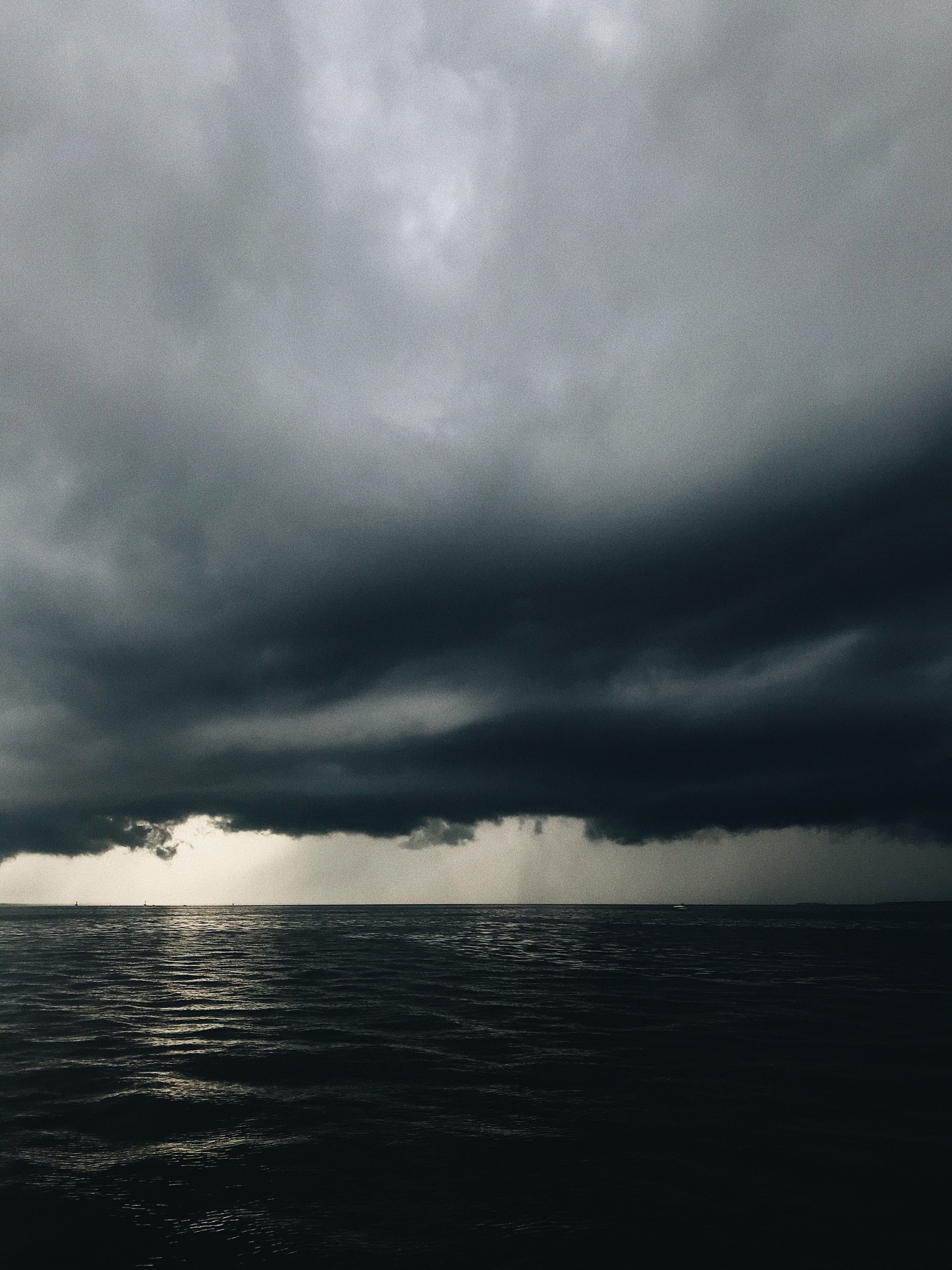
What It's Like to Own a Home in Charleston During Storm Season
What It's Like to Own a Home in Charleston During Storm Season
You sign the papers, move in, and life is wonderful. Then late August arrives and the Atlantic starts generating names. If you've never owned a home in a hurricane-prone area, the experience of living in Charleston through storm season is worth understanding before you buy — not to scare you off, but because knowing what to expect turns a nerve-wracking situation into a manageable routine.
Leah Beaulieu and BJ Rodgers at Coast2Coast Properties have watched buyers go through their first hurricane season and come out the other side saying "that wasn't as bad as I feared." They've also seen buyers caught completely unprepared. The difference is almost always preparation and mindset coming into that first June 1.
The short answer
- Hurricane season runs June 1 through November 30, with the true high-risk window from mid-August through October
- Most years, Charleston does not take a direct hit — but close calls create real prep demands and emotional weight
- The typical Charleston homeowner develops a routine that becomes second nature by year two or three
- The biggest first-year risk: not knowing your evacuation zone, not having flood insurance in place, and not having supplies ready before a storm is named
- Community bonds form fast during storm season — neighbors look out for each other in ways that are genuine and lasting
- NHC cone-watching becomes a household habit by mid-September
- The relief and community connection after a storm misses is a real, distinctive Lowcountry experience
The Calendar of Storm Season in Charleston
June 1: Season officially opens. Most locals barely acknowledge it. Pre-season prep — insurance review, shutter inventory, generator check — should happen here, not in August.
July: Generally quiet. The occasional tropical system forms, but most activity is well south or east. Life proceeds normally. If you haven't reviewed your insurance yet, this is the window.
August: Attention shifts. August is when the Gulf Stream heats up, tropical activity increases, and the National Hurricane Center starts generating names that track toward the East Coast. The term "Cape Verde storms" enters your vocabulary. You start checking nhc.noaa.gov more often than local weather.
September: Peak season. September is when the most serious systems historically form and track toward the Southeast. Hurricane Hugo hit Charleston on September 22, 1989. Hurricane Matthew tracked dangerously close in 2016. Dorian rattled nerves in 2019. September is when Charleston storm culture is in full expression.
October: Still active, but the end is in sight. Post-October, risk drops significantly. The first cold front that pulls temperatures into the 60s in late October feels like a genuine community celebration.
November 30: Season closes. A communal exhale.
What Your First Season of Prep Looks Like
First-time Charleston homeowners often experience a learning curve around what to actually do. Here is what Leah Beaulieu and BJ Rodgers consistently walk buyers through before their first season:
Know your evacuation zone. Charleston County divides evacuation zones A through I based on risk level and geographic position. Mandatory evacuations are issued by zone. Zone A — the first to go — includes the barrier islands like Sullivan's Island 29482 and Isle of Palms 29451, plus parts of downtown Charleston 29401 and low-lying peninsula areas. Pull your address at scemergency.gov or Charleston County's online GIS portal before storm season, not during one.
Review your insurance before any storm forms. Don't wait until a named storm is in the Gulf to figure out your flood insurance status, your hurricane deductible, or what your homeowner's policy actually covers versus excludes. Many buyers discover after closing that their flood insurance was not set up properly or that their hurricane deductible is a percentage of home value — not the flat deductible they assumed. Review policies in May or June under no pressure.
Build your 72-hour kit. Water (one gallon per person per day for at least three days), non-perishable food, flashlights and batteries, a battery-powered or hand-crank weather radio, medications, and copies of important documents. Experienced Charleston homeowners maintain a permanent kit and refresh it every spring.
Know your shutter or plywood plan. If your home has accordion shutters or impact-rated windows, you're ahead. If it doesn't, know where your plywood or panels are stored and how long installation takes. Doing this at the last minute with a storm 48 hours out is harder, more stressful, and sometimes impossible — hardware stores sell out of plywood and generators quickly when a storm name enters the local forecast.
Check your generator. If you have one, run it before storm season opens to confirm it starts and runs properly. If you don't have one, decide before July whether you want one — generator supply tightens dramatically when a named storm starts tracking toward the Southeast.
How Locals Track Storms — The NHC Habit
By your second or third year in Charleston, checking the National Hurricane Center (nhc.noaa.gov) becomes part of your daily routine from August through October. You develop opinions about storm models. The GFS versus the European model (commonly called "the Euro") becomes a household topic — the Euro has a strong reputation for accuracy in the Charleston community, and locals develop informed preferences quickly.
You start using the phrase "the cone doesn't mean anything" while staring at a cone that has Charleston squarely in the middle of it. The community communicates in real time through neighborhood apps, Nextdoor channels, and direct neighbor contact — all watching the same data and comparing notes on prep.
By year three, most homeowners have developed a personal decision threshold: "At this distance and Category level, I start closing shutters and making hotel reservations." That threshold is calibrated by zone, home construction, elevation, and personal risk tolerance. It takes one or two seasons to develop honestly.
What Actually Happens During a Near-Miss
Near-misses are the most common Charleston storm experience. A system develops, tracks toward the area, triggers voluntary or mandatory evacuation notices for Zone A, causes widespread shutter-closing and line-forming at hardware and grocery stores, and then veers north or weakens. The response dismantles in 24–48 hours.
The aftermath of a near-miss includes generators that go unused, water bottles that return to storage, and an overwhelming community sense of relief. Restaurants reopen. Neighbors check on neighbors. Within a week, normal life resumes.
Homeowners in inland areas like Summerville 29483 and Goose Creek 29445 experience near-misses with less urgent prep than those on the barrier islands or peninsula — lower-zone residents watch and prepare, but their threshold for action is different than Zone A households.
When a Real Storm Comes
Charleston has not experienced a catastrophic direct landfall comparable to Hugo (Category 4, 1989) in more than three decades. But the memory is alive in the community and shapes everything from building codes to neighborhood conversations. Hugo is the reference point for every evacuation discussion, every debate about storm surge in Zone A, every decision about whether to reinforce a roof or invest in accordion shutters.
When a serious storm threatens, the community experience is distinctive. Neighbors exchange cell numbers in case someone loses power or needs help. Households share generator fuel. Long-time residents check on newer arrivals who may not have been through a serious threat before. The combination of genuine concern and genuine community connection is one of the things longtime Charleston homeowners describe most clearly when asked what they value about living here.
For new homeowners, the most important rule: don't let social pressure or reluctance to disrupt your schedule override sound evacuation judgment. If you are in Zone A or Zone B and a mandatory evacuation is called, you go. Charleston's evacuation infrastructure — the contraflow system on I-26 — exists for a reason.
The Flip Side: October, Relief, and Lowcountry Community
Ask any long-time Charleston homeowner to describe what comes after a storm season that missed the area, and many use the same word: relief. October in Charleston is one of the most beautiful months in the American Southeast. The air changes, the humidity breaks, the oak trees settle, and the community surfaces from its months of heightened vigilance.
The annual rhythm of tension and relief is part of the Lowcountry identity. It creates bonds between neighbors, attentiveness to the built environment, and a genuine appreciation for the calm that new residents don't fully feel until they've lived through a few seasons. BJ Rodgers and Leah Beaulieu often hear buyers say, three or four years in, that the storm season experience — while stressful — became something they valued about living here.
The Biggest Mistake New Homeowners Make During Storm Season
Procrastinating on pre-season prep. Every year, first-time Charleston homeowners race to hardware stores at the same time as hundreds of thousands of other people when the first serious storm of the season targets the area. Generators sell out in hours. Plywood disappears. Water is gone. Pre-season prep in May and June, when the urgency is theoretical, avoids all of this entirely.
The second most common mistake is not knowing their evacuation zone until they actually need it. Your zone determines everything about how you respond — timing of departure, whether you go at all, where you go. Discovering your zone at 3 a.m. during a mandatory evacuation announcement is not the right moment. Know it in May.
A Realistic Example
A family that relocated from Ohio to Daniel Island 29492 bought in January and closed in March. Storm season wasn't on their radar during the purchase process. By late August, a Category 2 storm was in the NHC cone with a track putting Daniel Island in the right-front quadrant — typically the most hazardous position relative to a storm center.
They hadn't reviewed their flood insurance. They didn't know their evacuation zone (Daniel Island 29492 residents are in Zone C — they would have been advised to evacuate under a mandatory Zone C order). Their shutters hadn't been tested. They spent 48 hours in a genuine panic.
The storm turned north and missed. Their neighbor — a 12-year Charleston resident — spent those same 48 hours walking them through everything: the NHC tools, what an actual response looks like, how to read the evacuation zones. The following spring, the family was prepared by June 1. BJ Rodgers now checks in with all new buyers each spring specifically about storm season readiness.
So What Is Storm Season Actually Like to Live Through?
- Most years, Charleston has close calls but not direct hits — the prep routine matters even when the storm misses
- The prep becomes habit and takes hours, not days, once you have your systems in place
- Community connection forms around storm season in ways that are genuinely lasting
- The first year is the hardest because the experience is unfamiliar
- Know your zone, review your insurance, build your kit — everything else follows from there
- The relief when October arrives without a hit is a real, shared Lowcountry experience that newcomers come to understand over time
FAQ
What hurricane evacuation zone am I in for Charleston, SC?
Charleston County has evacuation zones A through I. Zone A (barrier islands and parts of the downtown peninsula) is highest risk and evacuates first. Zones B and C include areas like parts of James Island 29412, Johns Island 29455, and Daniel Island 29492. You can look up your specific zone by address at the Charleston County GIS portal or the South Carolina Emergency Management Division at scemergency.gov.
Has Charleston been hit by a major hurricane recently?
Charleston's last catastrophic direct hit was Hurricane Hugo in September 1989, a Category 4 storm that caused widespread destruction across the metro. Since then, Charleston has experienced several serious threats — Floyd (1999), Matthew (2016), and Dorian (2019) — that caused varying degrees of damage and disruption but not Hugo-level impacts. The threat recurs every season; the frequency of catastrophic direct hits is relatively low historically.
How long does hurricane prep take for a Charleston homeowner?
For homeowners who have their systems in place — supplies stocked, shutters tested, insurance reviewed pre-season — active prep before a specific storm takes roughly 4–8 hours: closing shutters, securing outdoor furniture, confirming supplies, and finalizing a plan. The pre-season work in May and June is what creates that efficiency during the real thing.
Should I buy a generator for a home in Charleston?
Worth serious consideration, especially with children, elderly family members, or medical needs in the household. After a storm, power can be out for hours to several days in affected areas. A portable generator ($500–$1,500) covers the basics — refrigerator, fans, device charging. A whole-home standby generator ($5,000–$15,000 installed) handles everything automatically. Many Charleston homeowners make this investment in their second or third year after experiencing their first significant outage.
Do I need storm shutters on my Charleston home?
Homes in coastal zones benefit meaningfully from storm shutters or impact-rated windows. Post-2005 South Carolina building codes require hurricane-resistant openings in new coastal construction. Older homes may have no shutter system at all. If buying an older home on James Island 29412, Johns Island 29455, or near the coast, factor in the cost of accordion shutters ($10,000–$25,000 depending on home size) or a plywood panel system as part of your ownership calculation.
What's the difference between a hurricane watch and a hurricane warning in Charleston?
A hurricane watch means hurricane conditions are possible within 48 hours. A hurricane warning means they are expected within 36 hours. The warning is the trigger for serious, immediate action — finalizing prep, making evacuation decisions, securing the home. The watch is when you pay close attention and begin active preparation. Locals track both from the NHC at nhc.noaa.gov.
Is owning a home in Charleston worth the hurricane risk?
The overwhelming majority of people who have owned in Charleston for five or more years say yes. The risk is real but manageable, the frequency of catastrophic events is historically low, the community culture around storm prep is genuinely supportive, and the quality of life, community, and long-term market fundamentals make the tradeoffs worthwhile for most buyers. The key is entering with clear eyes about prep requirements, insurance costs, and the emotional rhythm of storm season.
Final Answer
Owning a home in Charleston during storm season is a specific, learnable experience — not a constant state of fear, but not something to ignore or discover unprepared. Most years, careful preparation pays off in a near-miss and a communal sigh of relief. Occasionally, the prep matters in ways that prevent real damage. In all years, the routine of knowing your zone, checking the NHC, and trusting your neighbors becomes part of what it means to be a Lowcountry homeowner.
If you want a clear, honest picture of how storm season experience varies by location — from the barrier islands to inland Summerville to Mount Pleasant — Leah Beaulieu and BJ Rodgers at Coast2Coast Properties give you that assessment before you buy, not after.
About Leah Beaulieu & BJ Rodgers — Coast2Coast Properties
Leah Beaulieu and BJ Rodgers are Charleston, South Carolina real estate professionals with Coast2Coast Properties, helping buyers compare neighborhoods, understand local market differences, and find the right fit across the Charleston area. Whether you are buying your first home, relocating to the Lowcountry, or looking for investment opportunities, Leah and BJ bring local knowledge, straight talk, and a genuine commitment to helping clients make smart decisions.
Coast2Coast Properties
www.coast2coastprop.com
843-697-1409 / 803-201-4259