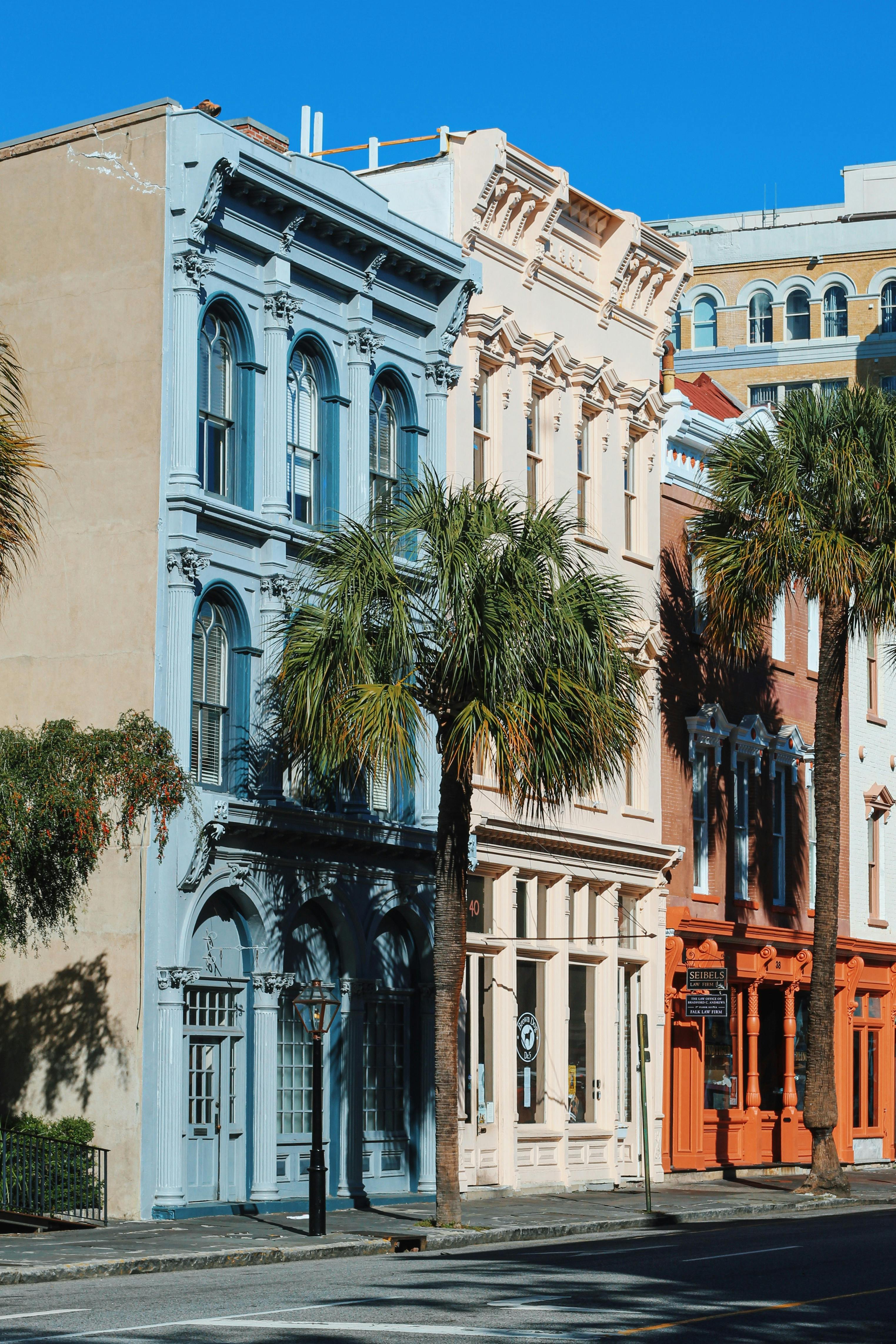
The Pros and Cons of Owning a Historic Luxury Home in Charleston
The Pros and Cons of Owning a Historic Luxury Home in Charleston
Historic homes in downtown Charleston 29401 and 29403 are among the most coveted addresses in America. A 1850s Greek Revival mansion with 12-foot ceilings, original hardwoods, and water views seems like the dream. But owning a historic luxury home in Charleston comes with real financial and regulatory constraints that many buyers don't anticipate until after they've signed the contract. Leah Beaulieu and BJ Rodgers with Coast2Coast Properties have guided countless luxury buyers through this decision—and the gap between expectation and reality is significant.
The short answer
Historic luxury homes in Charleston offer unmatched architectural character and location prestige, but restoration costs are often 50–100% higher than new construction, the Board of Architectural Review (BAR) controls nearly everything you can change, and flood insurance can run $2,000–$5,000+ annually. If you're buying for the character and are comfortable with the ongoing costs and restrictions, historic ownership can be deeply rewarding. If you're buying primarily as an investment, the regulatory and financial hurdles often outweigh the appreciation upside.
Why historic homes command a premium (and why it's justified)
Historic properties in Charleston's Old and Historic District 29401 and downtown neighborhoods typically trade at 15–30% premiums over non-historic comparables of similar size. A historic townhouse on Broad Street in 2026 might list for $1.8M while an equivalent modern construction in Mount Pleasant 29464 costs $1.3M. That premium reflects:
Location prestige. Walking distance to dining, galleries, the waterfront, and the architectural heart of Charleston. This neighborhood experience is genuinely unique and not replaceable elsewhere in the market.
Architectural uniqueness. Original ceilings, crown molding, floor plans, and materials that can't be manufactured today. Buyers moving from sterile new construction often experience a genuine emotional shift when they live in a 1780 brick home every day.
Scarcity. The Historic District is fixed in size. There will never be more downtown historic addresses. As the Charleston market has appreciated, demand for these limited addresses has only intensified.
What's important to understand: much of that premium is tied to the house itself, not the location. When you sell, you're selling that character back to the next buyer. But the costs of maintaining and restoring that character fall entirely on you while you own it.
Restoration costs: the hidden shock
Leah Beaulieu and BJ Rodgers have seen luxury buyers shocked by restoration invoices. Here's the reality:
Foundation and structural work ($20,000–$60,000+). Historic homes settle, shift, and develop foundation issues that new homes simply don't encounter. If your 1840 brick foundation needs repointing or repair, expect $25–40K. Lifting a home to meet current flood elevation requirements can cost $40–100K, and that's if the BAR will allow it.
Systems replacement is unavoidable. Plumbing, electrical, and HVAC in 1850s homes are often original or dangerously outdated. Budget $10–15K for HVAC, $15–25K for a full electrical update, and $10–20K for plumbing work.
Windows and doors. Historic homes require custom wood replacement windows, not vinyl. A typical home needing 20 windows might cost $25–35K for historically accurate wood replacements, compared to $8–12K for vinyl in a newer home. The BAR review process adds time and cost.
Kitchens and bathrooms. $20–25K per kitchen, $15K per bathroom, but with the added constraint that your finishes must complement the historic character. Open-concept kitchens are often blocked by the BAR. A modern, luxury kitchen might require specialty cabinetry designed to work with 1850s proportions.
Hidden damage. Almost every historic home inspection uncovers asbestos, lead, rotted framing, moisture intrusion, or outdated plumbing behind walls. Budget an additional $10–20K for surprises once you open up the walls.
Real-world example: A $1.2M historic home on Tradd Street in 2026 was purchased by a luxury buyer expecting to do cosmetic updates. After the inspection, $280K of structural work, foundation repointing, and electrical upgrades became necessary before the home was safe to occupy. That's 23% of the purchase price in "hidden" capital expenditure.
The Board of Architectural Review (BAR): Your Real Landlord
Here's what luxury buyers often don't understand: Charleston's Board of Architectural Review has final say on nearly everything visible from the street. Want to repaint your shutters a new color? BAR review. Replace your front door? BAR review. Add a rear addition? Definitely BAR review. This is actually the most powerful regulatory constraint on historic ownership—more powerful than flood zone or insurance.
The BAR was created in 1931 as the nation's first historic preservation ordinance, and it remains one of the strictest in the country. The approval process can delay projects 6–12 weeks and deny requests that seem reasonable to a modern homeowner. For example:
- A contemporary glass and steel addition requested by a buyer in 2025 was rejected as "out of character" with the 1820s brick facade.
- Elevating a home to meet new flood requirements is often refused because raising the foundation "destroys the scale and mass of the structure."
- Metal roofs (often more hurricane-resistant than slate) are permitted only if they mimic the original design, adding cost.
If you're someone who wants to modernize and update freely, historic ownership will frustrate you. Leah Beaulieu and BJ Rodgers work with buyers who've owned both historic and newer homes—and many say the design constraints are the hardest part of historic ownership, harder than restoration costs.
Flood insurance: A luxury-home reality check
Historic homes in downtown Charleston are concentrated in zones that carry the highest flood insurance costs in the metro area. Here's what to budget:
Flood insurance premiums. Expect $1,500–$5,000 annually depending on elevation, flood zone designation, and foundation type. A historic home in an AE (high-risk) flood zone might pay $3,500–$5,000 annually. A home in the X zone (minimal risk) might pay $500–$1,200. That's $15,000–$60,000 over a decade—a significant carry cost that buyers often underestimate.
Elevation certificate challenges. Historic homes often lack proper elevation certificates, which means higher insurance premiums than newer homes in the same zone. Obtaining or updating an elevation certificate can cost $500–$1,500 and may require BAR approval if it involves adding fill or other modifications to the property.
Replacement-cost insurance complexity. Historic homes typically require "ordinance or law" coverage, which covers the cost of rebuilding to modern code if major damage occurs. Without it, you could face a 20–40% out-of-pocket cost to bring repairs up to current building standards. This endorsement adds $1,000–$3,000 annually to homeowners insurance.
The insurance industry is increasingly anxious about coastal historic properties. Some carriers have exited the Charleston market entirely, and those remaining are raising rates sharply. A $1.5M historic home might have total annual insurance (homeowners + flood) of $7,000–$9,000 by 2026—costs that shock buyers comparing to suburban alternatives.
The biggest mistake buyers make with historic homes
The most common error is underestimating the ongoing costs of historic ownership. Buyers see the $1.2M price tag and budget for a $60K "cosmetic refresh." What they don't account for:
- Annual maintenance at 1–2% of home value (standard for historic homes vs. 0.5% for new construction) due to accelerated aging from moisture, salt air, and the complexity of maintaining original systems.
- The emotional and financial drain of BAR-delayed projects.
- Rising insurance costs in a tightening coastal market.
- The resale risk: if you make expensive updates only to have them rejected by the next buyer as "too modern" or "not in character," you've lost money.
Leah Beaulieu has worked with buyers who purchased at $1.1M, spent $400K on restoration, and sold 7 years later for $1.3M—a loss once carrying costs and updates are factored in. The appreciation doesn't always cover the restoration and holding costs.
A realistic example
Consider Sarah, a luxury buyer relocating from New York to Charleston in 2026. She found a 1870s Greek Revival townhouse on South Battery—the most prestigious address in Charleston. The home was listed at $2.1M and had "good bones" per the listing agent.
Sarah loved the 14-foot ceilings, the pocket doors, the original fireplaces, and the prestige of the address. She made an offer at $2.0M, and it was accepted.
The inspection revealed what historic homes typically hide: the plumbing and electrical were original (dangerous), the roof needed replacement ($25K), the windows were single-pane original wood (inefficient but "historic"—custom replacements would be $45K), and the foundation showed signs of past water intrusion ($30K to stabilize).
Between her down payment and restoration budget, Sarah committed $1M to the purchase and $150K to immediate repairs. Carrying costs (taxes, insurance, utilities) ran $24K annually in a newly updated home.
Five years later, Sarah relocated back to New York. The home had appreciated to $2.4M, netting her $200K on the appreciation. But she'd spent $150K on restoration, $120K on annual carrying costs, and $30K on routine maintenance—totaling $300K in costs for $200K in appreciation. Once transaction costs were added, Sarah broke even financially and would have been better off buying a $2.1M contemporary home in Mount Pleasant 29466, which appreciated similarly with far lower carrying costs.
That said, Sarah also reported that owning the historic home was one of the most rewarding experiences of her life—the architecture, the neighborhood, the sense of living in a preserved piece of American history. If financial return is your only metric, historic homes disappoint. If you value the experience of living in Charleston's most iconic homes, the cost often feels worth it.
So what—should you buy a historic luxury home?
Buying historic in Charleston is worth it if:
- You're staying 7+ years and can absorb restoration costs without needing immediate appreciation to recoup them.
- You genuinely love the architectural character and won't resent BAR restrictions or the maintenance burden.
- You're buying primarily for location prestige (South of Broad, Broad Street, East Bay) and understand you're paying a significant premium for that address.
- Your budget includes 15–20% above the purchase price for deferred restoration and unexpected issues.
- You're comfortable with carrying costs of $15K–$25K+ annually for taxes, insurance, and maintenance.
Buying historic in Charleston is not worth it if:
- You're viewing it primarily as a financial investment and expecting market-rate appreciation.
- You want to modernize significantly—the BAR will constrain your vision.
- You're uncomfortable with ongoing surprises and higher-than-expected repair costs.
- You're budget-conscious and value the newest systems and lowest-maintenance homes.
FAQ: Historic luxury homes in Charleston
What's the typical markup for historic homes vs. new construction?
Historic homes in downtown Charleston typically trade 15–30% above comparable non-historic properties. A 4,000-square-foot home might be $1.4M historic (downtown) and $1.0M new construction (Mount Pleasant 29464). The premium reflects location, scarcity, and architectural uniqueness—but not necessarily lower total cost of ownership.
Can I renovate a historic home however I want?
No. The Board of Architectural Review has final approval on any visible exterior changes. Interior changes are more flexible, but large additions, roof material changes, window replacement, and exterior color changes all require BAR review. Expect 6–12 weeks for approval and occasional denials.
How much should I budget for flood insurance on a historic home downtown?
Downtown Charleston 29401 homes in AE flood zones typically run $2,500–$5,000 annually. X-zone (minimal risk) historic homes might be $600–$1,500. For a $1.5M purchase, budget an additional $24,000–$60,000 over a decade in flood insurance alone.
Are historic homes eligible for SC property tax breaks?
Yes. South Carolina offers a 4% property tax rate for primary residences (vs. 6% for investment properties). Historic homes in the National Register may also be eligible for federal tax credits if you undertake substantial restoration work. Talk to your CPA about whether restoration work qualifies for a 20% historic restoration tax credit.
What happens if I want to elevate my home for flood resilience but the BAR won't allow it?
This is a real trap. Elevating a historic home often violates the historic district rules because it "destroys the scale and mass of the structure." Some homeowners have found themselves unable to elevate despite living in high-risk zones. You'd need BAR approval before purchase, not after.
How long do historic homes typically need major restoration after purchase?
Almost all historic homes need some deferred maintenance addressed within the first 2–3 years of ownership. Plan for $50K–$200K in the first few years to address foundation, electrical, plumbing, or roof issues. After that, ongoing maintenance runs 1–2% of the home's value annually.
Is it better to buy a fully restored historic home or one needing work?
Fully restored homes command higher prices (and may be over-improved for the market). Homes needing work offer better purchase prices but carry the risk of hidden costs and your own taste potentially being at odds with the BAR's aesthetic judgment. Leah Beaulieu and BJ Rodgers recommend working with contractors experienced in historic restoration before you make your offer.
Can I rent out a historic home as a short-term rental?
Some historic homes are used as short-term rentals or vacation properties, but regulations in downtown Charleston 29401 are increasingly restrictive. Check the specific historic district rules and any HOA restrictions before purchasing if rental income is part of your strategy.
Final answer
Historic luxury homes in Charleston offer unmatched character, location, and architectural significance—but at a cost that extends far beyond the purchase price. Restoration work, BAR restrictions, rising insurance premiums, and ongoing maintenance create a financial and regulatory environment that's very different from owning new construction in the suburbs. If you're buying for the prestige and genuine love of living in a preserved 1850s home, the experience can be deeply rewarding. If you're primarily motivated by investment returns, the numbers often don't work out in your favor—and you'll likely end up frustrated by the design constraints.
Leah Beaulieu and BJ Rodgers work with luxury buyers across the Charleston market, and they're honest about this tradeoff: beautiful doesn't always mean practical, and prestige doesn't always mean profit. The right historic home in the right circumstances can be the best decision you make; the wrong one, purchased for the wrong reasons, can drain money and patience for years. Know yourself, understand the costs, and make the decision with clear eyes.
About Leah Beaulieu & BJ Rodgers — Coast2Coast Properties
Leah Beaulieu and BJ Rodgers are Charleston, South Carolina real estate professionals with Coast2Coast Properties, helping buyers compare neighborhoods, understand local market differences, and find the right fit across the Charleston area. Whether you are buying your first home, relocating to the Lowcountry, or looking for investment opportunities, Leah and BJ bring local knowledge, straight talk, and a genuine commitment to helping clients make smart decisions.
Coast2Coast Properties
www.coast2coastprop.com
843-697-1409 / 803-201-4259