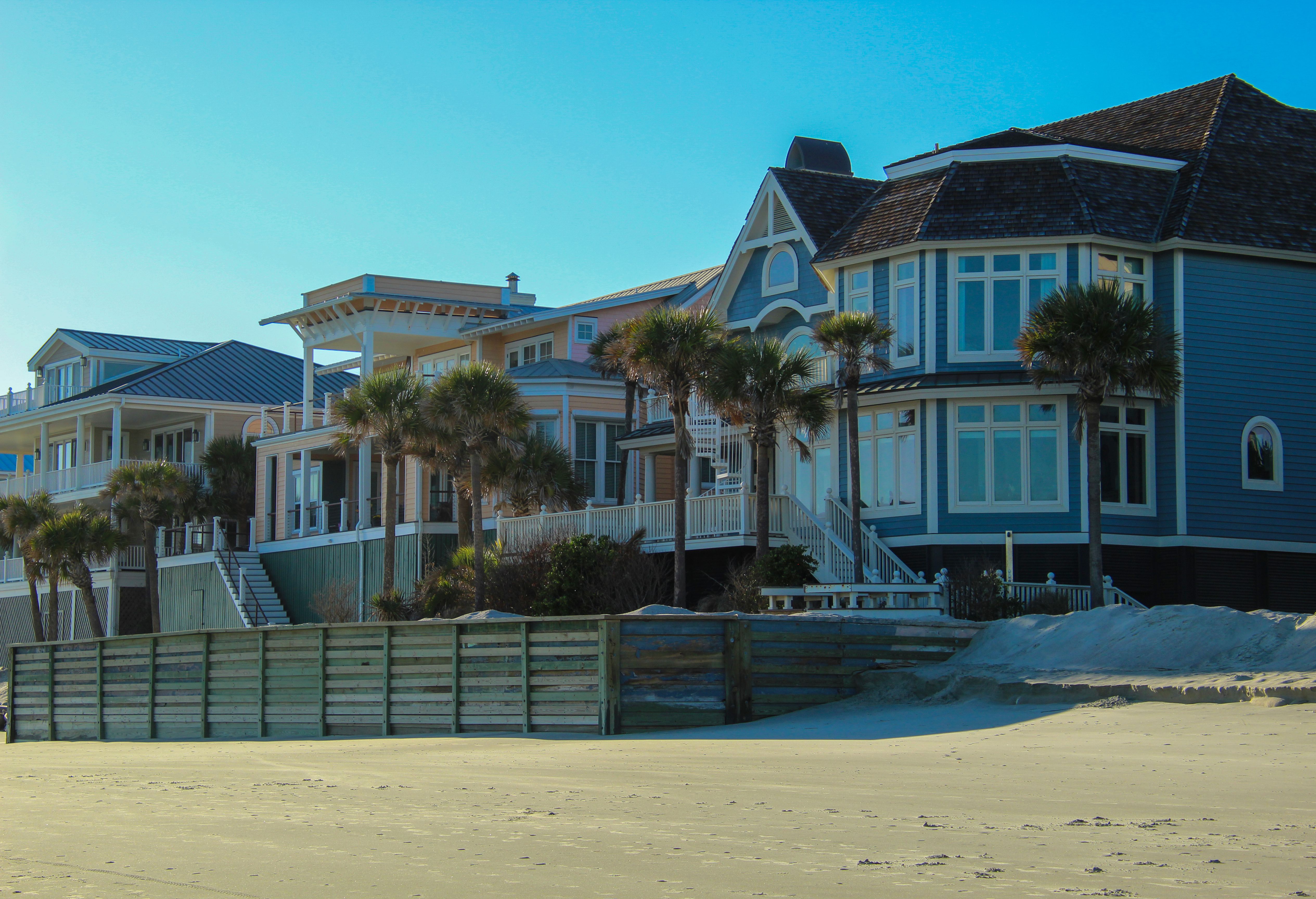
Sullivan's Island vs. Isle of Palms: Which Charleston Barrier Island Is Right for You?
Sullivan's Island vs. Isle of Palms: Which Charleston Barrier Island Is Right for You?
Sullivan's Island and Isle of Palms are Charleston's two primary barrier island communities—located just minutes apart, yet fundamentally different in character, pricing, development scale, and lifestyle. Choosing between them is less about geography and more about which version of barrier island living aligns with your priorities.
Sullivan's Island is small (2.2 square miles), exclusive, and expensive ($4.55M median). Isle of Palms is larger (5.5 square miles), more developed, and more affordable ($1.85M median). One feels like an exclusive residential enclave where established families live year-round. The other feels like an active beach community where residents and visitors coexist seasonally.
Neither is "better"—they serve different buyers. This guide helps you determine which island aligns with your lifestyle and budget.
The Short Answer
Sullivan's Island if you want: Exclusivity, residential protection, no vacation renters, architectural governance, oceanfront at any cost, and a true neighborhood feel.
Isle of Palms if you want: More affordable barrier island living, beach resort amenities, rental income potential, larger selection, active community, and lower price points.
Size and Development Scale
Sullivan's Island is a compact 2.2 square miles with roughly 2,000 residents and one-block commercial district. Isle of Palms is larger at 5.5 square miles with approximately 2,800 residential properties and substantial commercial development.
The size difference creates fundamentally different experiences. Walk Sullivan's Island, and you encounter neighbors and local residents. Walk Isle of Palms, and you encounter a mix of residents and seasonal visitors. Sullivan's Island feels intimate; Isle of Palms feels vibrant. Both are positive traits—they appeal to different personalities.
Pricing: The 2.5X Difference
Sullivan's Island median luxury price: $5.47M
Isle of Palms median luxury price: approximately $2.2M
Sullivan's Island homes cost roughly 2.5 times more than Isle of Palms comparables. This gap exists because of the short-term rental ban, smaller inventory, and residential protection—not because Isle of Palms homes are inferior.
Price ranges by island:
Sullivan's Island:
- Interior homes: $2.5M–$3.5M
- Waterfront/Harbor-View: $3M–$8M
- Oceanfront: $5M–$15M+
Isle of Palms:
- Interior homes: $800K–$1.5M
- Oceanfront: $1.5M–$5M+
- Vacation rental properties: $600K–$2M (income-generating)
Neighborhoods and Community Character
Sullivan's Island
Sullivan's Island's neighborhoods reflect exclusivity and protection:
Oceanfront (Atlantic Avenue): $5M–$15M+. Direct ocean views, private beach access, architectural review board oversight.
Harbor-View & Waterway: $3M–$8M. Water access without oceanfront premium, private docks, sailboat slips.
Interior: $2.5M–$3.5M. Walkable to beaches and shops, no water views, most accessible entry point.
All neighborhoods reflect the town's commitment to residential exclusivity and aesthetic consistency. No vacation rentals permitted anywhere. No hotels. Commercial development limited to one block.
Isle of Palms
Isle of Palms neighborhoods reflect more diverse use and development:
Oceanfront: $1.5M–$5M+. Direct ocean views, active beach culture, mix of full-time residents and vacation owners.
Canal-Front: $1.2M–$3M. Boat docks, water access, mix of primary residences and vacation properties.
Interior: $800K–$1.5M. Walkable beach access, smaller homes, more diverse price points.
Isle of Palms permits short-term rentals in most areas, meaning neighborhoods include a higher percentage of seasonal occupancy and vacation rental activity. This creates more commercial vitality but less residential homogeneity.
Rental Policies: The Key Differentiator
Sullivan's Island: Complete ban on short-term rentals (stays under 30 days). Long-term rentals are permitted. This policy protects residential character and ensures neighbors are permanent residents, not rotating vacation guests.
Isle of Palms: Permits short-term rentals in most residential areas. This creates rental income opportunities for owners but also means vacation guests and seasonal neighbors are typical.
This single policy difference explains much of why Sullivan's Island feels like a neighborhood and Isle of Palms feels like a beach destination.
If you buy on Isle of Palms, you can rent your home to generate income. If you buy on Sullivan's Island, you cannot. This appeals to different buyer profiles:
Isle of Palms: Investors, second-home buyers seeking rental income, vacation property owners
Sullivan's Island: Primary residence buyers, lifestyle purchasers, executives seeking year-round community
Beach Access and Public Amenities
Sullivan's Island:
- Approximately 4 miles of public beaches with 30 designated access points
- Strict beach governance: no alcohol on beaches or streets, no motorized vehicles, plastics and smoking bans
- Maintained by the town with an emphasis on preservation
- Quieter, more family-oriented beach culture
Isle of Palms:
- More than 5 miles of public beach with over 50 beach access paths and parking lots
- More permissive beach rules supporting active water sports and recreation
- Rental beach chair companies, more commercial beach vendors
- Active resort-style beach culture with water sports, events, and seasonal activity
If you prioritize a pristine, protected beach environment, Sullivan's Island's governance appeals. If you want active beach amenities and resort-style energy, Isle of Palms delivers.
Architectural Oversight
Sullivan's Island: Every home modification requires Architectural Review Board approval. New construction and renovations must fit cohesive aesthetic standards.
Isle of Palms: Less restrictive architectural governance. Newer construction is more varied in style, and renovation approval is more streamlined.
For some buyers, Sullivan's Island's review process is onerous. For others, it's a feature—guaranteeing that your oceanfront view won't be disrupted by an incompatible new house next door, and that neighborhoods maintain cohesive character.
Market Velocity and Inventory
Sullivan's Island:
- Limited inventory (typically 8–15 homes listed)
- Slower market velocity (133 days average time on market)
- Selective buyer base (price point limits pool)
- Oceanfront homes sell faster than interior
Isle of Palms:
- Larger inventory (typically 40–80 homes listed)
- Moderate market velocity (60–90 days average)
- Broader buyer base (rental investors, income-seeking owners, lifestyle buyers)
- Resort-area appeal supports seasonal demand
If you need quick sale or maximum choice, Isle of Palms offers more inventory and options. If you prioritize finding the exact property and don't require speed, Sullivan's Island's selective market is manageable.
Real Example: The Buyer Decision Tree
Scenario 1: The Executive Couple
Budget: $4M, primary residence, want oceanfront, plan to live year-round.
Better choice: Sullivan's Island
At $4M, they can buy oceanfront on Sullivan's Island (vs. near-oceanfront on Isle of Palms). Sullivan's Island's residential protection and exclusivity aligns with their primary-residence goals. No concern about short-term rentals or vacation neighbors. Architectural oversight ensures neighborhood cohesion. Year-round community offers peer networks and established social circles.
Scenario 2: The Vacation-Home Investor
Budget: $2.5M, want to generate rental income, willing to rent to vacation guests seasonally.
Better choice: Isle of Palms
At $2.5M, they can buy oceanfront or near-oceanfront on Isle of Palms vs. interior on Sullivan's Island. Rental income potential generates 4–6% annual returns on Isle of Palms. Sullivan's Island's rental ban eliminates income generation entirely. Isle of Palms' resort amenities support rental marketability.
Scenario 3: The Budget-Conscious Retiree
Budget: $1.5M, want barrier island living, seeking best value.
Better choice: Isle of Palms
At $1.5M, Isle of Palms offers oceanfront or premium near-oceanfront. Sullivan's Island at this price point is interior-only, no water views. Isle of Palms' larger selection and lower prices make it accessible to this buyer profile.
Comparison Table
Factor | Sullivan's Island | Isle of Palms |
|---|---|---|
Size | 2.2 square miles | 5.5 square miles |
Resident Count | ~2,000 | ~2,800 residential properties |
Median Price | $5.47M | ~$2.2M |
Price Multiple | 2.5x Isle of Palms | — |
Oceanfront Range | $5M–$15M+ | $1.5M–$5M+ |
Commercial Feel | One-block downtown | Developed resort area |
Short-Term Rentals | Banned entirely | Permitted in most areas |
Vacation Culture | None (banned) | Active seasonal rental culture |
Architectural Review | Strict oversight | Less restrictive |
Beach Access Points | 30 (protective) | 50+ (active) |
Time on Market | 133 days | 60–90 days |
Inventory | Limited (8–15 listings) | Larger (40–80 listings) |
Lifestyle Appeal | Year-round residential | Resort + residential mix |
Rental Income | Not permitted | 4–6% typical |
Best For | Primary residents, exclusivity seekers | Vacation investors, active beach culture |
The Biggest Mistake Comparing These Islands
The biggest mistake is treating price as the primary variable. Sullivan's Island costs 2.5x more, but you're not buying the same product—you're buying exclusivity, residential protection, and no vacation-rental culture. Comparing them on price alone misses the point. You're comparing a residential enclave to an active beach destination.
The comparison isn't "Is Sullivan's Island worth 2.5x more?" It's "Which lifestyle fits your priorities better, and what's that lifestyle worth to you?"
Frequently Asked Questions
Q: Can I invest in Isle of Palms and generate rental income?
A: Yes. 4–6% annual rental yields are typical for oceanfront and premium locations. Sullivan's Island prohibits this entirely.
Q: Which island has better schools?
A: Both islands access the same Charleston County schools. Sullivan's Island's smaller size means closer-knit school communities; Isle of Palms offers more anonymity. Neither has a clear public education advantage.
Q: Is Sullivan's Island more "exclusive"?
A: Yes. The short-term rental ban, Architectural Review Board, and smaller inventory create genuine exclusivity. Isle of Palms is more accessible and developed.
Q: What's the average time to sell on each island?
A: Sullivan's Island averages 133 days; Isle of Palms averages 60–90 days. Both reflect selective markets, but Isle of Palms has higher volume and velocity.
Q: Can I visit and vacation on Sullivan's Island?
A: Yes, but you'll stay in long-term rentals or hotels off the island. The rental ban specifically targets short-term (under 30 days) vacation rentals. Day-trippers and visitors are welcome; vacation homes are not.
Q: Which island appreciates faster?
A: Historical data suggests Sullivan's Island maintains strong appreciation due to limited inventory and exclusive positioning. Isle of Palms' larger inventory and lower price point also appreciate, but at a slightly slower rate due to higher volume and turnover.
Q: Should I buy oceanfront or interior on these islands?
A: Oceanfront on Isle of Palms ($1.5M–$5M) delivers better value than oceanfront on Sullivan's Island ($5M–$15M). Interior on Sullivan's Island ($2.5M–$3.5M) still delivers exclusivity, though without water views.
Final Answer: Which Island Is Right for You?
Choose Sullivan's Island if:
- Your priority is exclusivity and residential protection
- You're buying as a primary residence (not rental)
- You want year-round community and social networks
- Budget is $3M+ and oceanfront is essential
- You value architectural consistency and aesthetic governance
Choose Isle of Palms if:
- You want barrier island living at more accessible prices
- Rental income potential matters to your investment strategy
- You prefer active beach culture and seasonal energy
- Budget is under $2M or you're seeking value
- You want more inventory and buyer choices
Both are excellent barrier islands. Neither is objectively "better." Sullivan's Island is exclusivity; Isle of Palms is accessibility. Choose the one that matches your lifestyle and budget.
About Leah Beaulieu & BJ Rodgers — Coast2Coast Properties
Leah Beaulieu and BJ Rodgers are Charleston, South Carolina real estate professionals with Coast2Coast Properties, helping buyers compare neighborhoods, understand local market differences, and find the right fit across the Charleston area. Whether you are evaluating barrier islands, seeking oceanfront living, or exploring Charleston luxury markets, Leah and BJ bring local expertise, honest insights, and a genuine commitment to helping clients make the right decision for their lifestyle.
Coast2Coast Properties
www.coast2coastprop.com
843-697-1409 / 803-201-4259