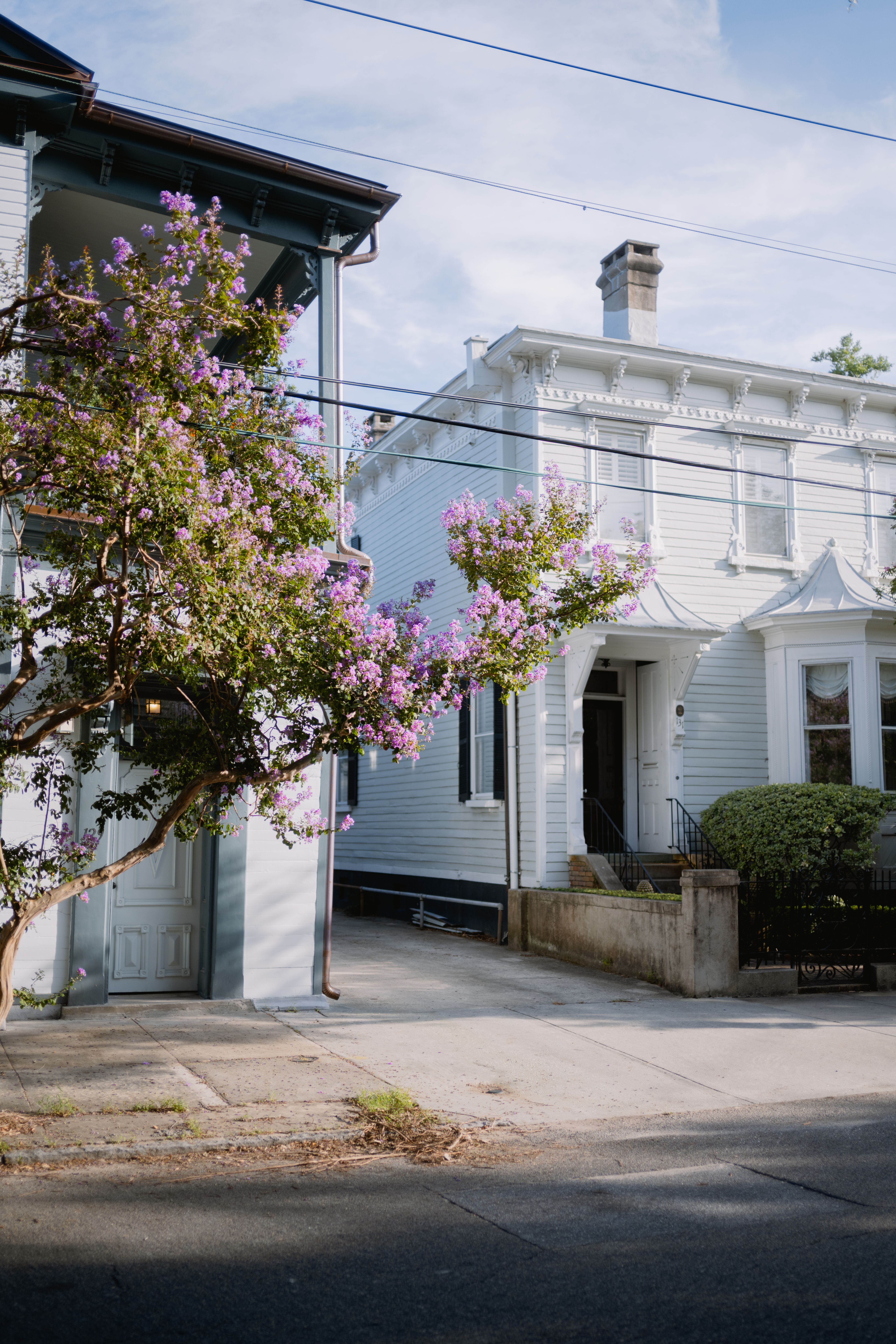
What It Is Like to Live in Charleston's Historic District
What It Is Like to Live in Charleston's Historic District
Downtown Charleston's historic district 29401/29403 is among the most coveted addresses on the East Coast. Tree-lined streets, centuries-old architecture, world-class restaurants, galleries, and a walkable neighborhood that feels genuinely connected — it's what draws people to Charleston in the first place. But living there full-time is a fundamentally different experience than visiting. Leah Beaulieu and BJ Rodgers with Coast2Coast Properties help downtown buyers understand what they're really signing up for: the magic of historic living, yes, but also the hidden frustrations that surprise first-time downtown residents.
The Short Answer
Downtown Charleston historic district living is exceptional if you deeply love walkability, restaurant culture, and the aesthetic of historic architecture. Expect to pay $1.2M to $3M+ for a home, navigate strict historic district design rules that control even paint colors, accept limited parking and impossible parking during peak season (April–May, October–November), prepare for regular street flooding during heavy rain and "sunny-day" tidal events, deal with humidity and heat that rival anywhere in the American South, and commit to ongoing maintenance of 150+ year-old homes. If you're comparing downtown to suburbs like Mount Pleasant 29464, know that convenience trades for character. Locals who thrive downtown prioritize walkability and ambiance over parking, yard space, and suburban ease. Visitors and part-time residents inevitably love downtown more than year-round residents do.
The Walkability Reality: The Battery and Broad Street
Downtown Charleston's walkability is genuine. The Battery (the waterfront promenade), Broad Street (the historic north-south spine), and the network of narrow side streets between them are genuinely walkable — a 20-minute walk covers most of historic downtown. Restaurants, galleries, shops, and parks are accessible without a car.
But "walkable" has limits in practice. The Battery and Broad Street corridor are the high-traffic, well-maintained center. Six blocks north or west of Broad Street, walkability drops off significantly. Neighborhoods like Ansonborough and the Avenues have some walkability but fewer destination restaurants and services. Beyond that, you need a car.
The romanticized downtown lifestyle — morning coffee on the Battery, evening strolls to dinner — is entirely achievable if you live within two blocks of Broad Street or The Battery. If you're three or four blocks away, the walk becomes more utilitarian. Five blocks away, walkability drops to suburban levels despite the historic address.
The Practical Point: Downtown walkability depends entirely on where you live within downtown. South of Broad and the Battery neighborhoods are genuinely walkable. Ansonborough, Harleston Village, and neighborhoods north of Queen Street are less so. Price reflects this: homes within the high-walkability core start at $1.5M and climb to $3M+. Homes in less walkable areas can be found in the $700K–$1.2M range.
Parking: The Daily Frustration Nobody Anticipates
Downtown Charleston has almost no private parking. Most historic homes don't have garages (they predate cars), and adding garage space in the historic district means navigating BAR approval, high construction costs ($40,000–$80,000 for a minimal garage addition), and still accepting that the garage is often smaller than suburban standards.
The Reality: Downtown residents either:
- Walk everywhere (works for 20–30% of residents who truly prioritize walkability)
- Use street parking, which is metered, expensive ($3–$5/hour), and impossible to find during peak tourist season (April–May, October–November)
- Pay for private lot parking ($150–$300/month)
- Own two vehicles and accept that one stays parked off-site or in a lot
During peak season, finding street parking after 6 PM downtown is not reliable. Peak season means you plan around it: buy groceries in off-hours, accept that visiting friends on weekdays is easier than weekends, and never assume you can park within two blocks of your dinner reservation.
Residents new to downtown consistently underestimate parking frustration. It's the #1 reason people relocate from downtown to suburbs within 3–5 years.
Historic District Rules: You Can't Paint Your Door Red Without Permission
Charleston created America's first local historic district in 1931 and established the Board of Architectural Review (BAR) to enforce design standards. BAR approval is required for nearly everything visible from the street: additions, new construction, roof repairs, paint colors, shutters, even landscape changes that affect the streetscape.
What You Can't Do Without BAR Approval:
- Paint exterior trim or doors in non-approved colors (yes, this includes your front door)
- Replace windows (even if original windows are rotted — BAR prefers you restore them)
- Add storm shutters or external features
- Install air conditioning units visible from the street
- Trim trees that affect the streetscape
- Install solar panels or other rooftop modifications
- Build additions or screened porches
- Repair or replace roofs (material and color must match historic precedent)
- Install exterior lighting
- Even landscaping decisions require scrutiny if visible from the public right-of-way
The Process: You submit a Certificate of Appropriateness (COA) application. BAR typically approves routine work within 4–6 weeks, but more complex projects can take months. Denials or revisions are common. Without approval, you risk stop-work orders, fines, and orders to undo work at your expense.
The Real Cost: A typical addition like a screened porch runs $25K–$35K for basic work and $50K–$60K for quality finishes. Flood-zone regulations often require pilings, adding $5K–$15K. Historic homes requiring restoration work cost 30–50% more than suburban equivalents due to matching materials, craftsmanship standards, and extended BAR review.
What This Means: You can't quickly modernize or renovate your way to 2026 living standards in a historic home. You're curating character, not chasing convenience. If you want granite counters, a chef's kitchen, and an open floor plan, don't buy a 200-year-old historic home.
The Flood Reality: Street Flooding and Hurricane Risk
Downtown Charleston sits in flood zone AE with base flood elevations (BFE) of 7–9 feet. But the real flood issue is more complex:
Sunny-Day Tidal Flooding: High tides (especially at full moon or new moon) cause standing water on Broad Street, Tradd Street, and lower-elevation streets even without rain. This happens 10–15 times per year during peak periods and has worsened with sea-level rise. Your car may be trapped. Your first-floor neighbor deals with water seeping into the basement.
Heavy Rain Flooding: The city's aging stormwater system can't handle heavy rainfall. Streets flood after 2–3 inches of rain in 1–2 hours. Drainage is poor; water lingers for hours.
Hurricane Risk: Downtown's waterfront location and older building stock make surge and wind damage disproportionately likely. Home insurance costs in downtown neighborhoods run 40–80% higher than Mount Pleasant due to flood and windstorm risk. Flood insurance is mandatory and expensive ($4,000–$10,000+/year even with elevation).
The Conversation Nobody Has: Buyers buy historic homes for the aesthetic and walkability and discover later that they're maintaining, insuring, and living with flood anxiety that suburban buyers don't experience. A $2M home downtown may cost $6,500/year in flood insurance. A $2M home in Mount Pleasant might cost $2,000/year.
The Heat and Humidity: Summer Is Brutal
Charleston summers (June–September) are genuinely hot and humid. Downtown, surrounded by brick, stone, and compact buildings with poor air circulation, is hotter than suburbs. Locals adapt through behavioral changes: air-conditioned lunch breaks, minimal outdoor activity 2–5 PM, evening social life rather than daytime plans, and full-time HVAC running 16+ hours daily during peak summer.
The Practical Reality: Air conditioning costs spike mid-June through September. Many historic homes have smaller HVAC systems sized for when the homes were built, not modern load. Upgrading to modern HVAC requires permits, phased approaches, and can cost $10K–$20K.
Summer downtown feels like a choice between hiding indoors in AC or venturing into genuine heat. Fall (October) and winter (December–February) are magical. Summer is endurance.
Restaurant Culture and Nightlife: The Honeymoon Never Ends (Mostly)
Downtown Charleston's restaurant and bar scene is the lifestyle anchor for most residents. Husk, FIG, Leon's Oyster Shop, The Ordinary, Poogan's Porch, and hundreds of other restaurants make dining out a way of life. Walking to dinner, exploring a new spot, bumping into friends at bars — this is genuinely the downtown experience.
The Reality: Year-round residents dine out less than they imagine. After 6–12 months, the restaurant rotation feels familiar. You have your favorite three places and avoid others. The novelty wears. Peak season (April–May, October–November) brings crowds, lines, and noise that make dining out less pleasant.
Noise from Restaurants and Bars: If you live near a popular restaurant, bar row, or nightlife concentration, noise is real. Bass from bars, closing-time crowds, delivery trucks — residential loft living downtown means accepting neighborhood noise that suburbs don't have.
Residents who thrive embrace the noise as ambient Charleston atmosphere. Those who regret downtown living often cite noise and crowds as the final straw.
The Biggest Mistake Downtown Buyers Make
Buyers romanticize the lifestyle and underestimate the logistics. Common regrets:
- Underestimating parking frustration: The #1 reason people leave
- Assuming walkability works for their actual lifestyle: They thought they'd walk to groceries; they don't and resent parking
- Forgetting about peak season: Relocation happens during quiet winter; peak season in April shocks them
- Not modeling flood insurance and maintenance costs: Total cost of ownership is 50–80% higher than comparable suburban homes
- Choosing based on a weekend visit or vacation stay: Tourism mode is not living mode
- Not accepting historic district restrictions: They buy planning to renovate; BAR says no
The buyers who stay downtown are fundamentally different from those who leave. They're prioritizing walkability, ambiance, and restaurant culture over convenience, parking, and space. It's a lifestyle choice more than a real estate choice.
A Realistic Example
Sarah moves to Charleston from Seattle, loves downtown culture, and buys a $1.5M home on a quiet street two blocks west of Broad. She imagines: morning walks to coffee, lunch-hour restaurant explorations, evening strolls to dinner, and a vibrant community.
After six months, the reality is different: Summer heat makes midday walks miserable. She rarely parks on her street; street parking runs $3–$5/hour. She's discovered her favorite restaurants and stopped exploring. Peak season (April–October in Charleston, not Seattle's summer) brings tourists and noise. A maintenance issue on the 1880s home requires $8,000 in restoration-grade repairs. Flood insurance runs $7,200 annually.
She's fine financially and genuinely enjoys downtown. But it's not the romantic daily walkability she imagined — it's a trade-off between character, walkability, and convenience.
By year three, if she were still working downtown, she'd probably stay. Working remotely, she relocates to Mount Pleasant for space, parking, and a less intense pace.
So What About Living in Charleston's Historic District?
Downtown Charleston historic district living is exceptional for the right residents — those who prioritize walkability, restaurant culture, and historic character over parking, yard space, and modern convenience. The lifestyle is real: you can walk to restaurants, galleries, and friends' homes. The sense of place is genuine. The community and ambiance are unmatched.
But it's not for everyone. The trade-offs are significant:
- Cost: $1.2M–$3M+ for a home, plus $4K–$10K/year in flood insurance
- Restrictions: BAR approval for major decisions; limited renovation flexibility
- Parking: Metered street parking, expensive lots, or paying for off-site solutions
- Maintenance: Older homes require consistent investment and restoration-grade repairs
- Crowds: Peak season means tourists, noise, and congestion
- Humidity and heat: Summer is brutal; many relocate seasonally or endure
Leah Beaulieu and BJ Rodgers help downtown buyers honestly assess whether the lifestyle aligns with their actual daily needs. Historic district living is romantic — until it's not. The decision is deeply personal and lifestyle-driven, not real-estate-driven.
FAQ
Is downtown Charleston more walkable than Mount Pleasant 29464?
Yes, dramatically. Within the Battery-Broad Street corridor, downtown is entirely walkable. Beyond that zone, walkability drops. Mount Pleasant has virtually no walkability — you need a car for everything. If walkability is your priority, downtown is the only viable option in the Charleston area.
What's the worst time to live downtown?
Peak season (April–May and October–November) brings crowds, higher prices, limited parking, and noise. Winter (December–February) is ideal: mild weather, quiet streets, and the town feels like it belongs to residents again. Summer is brutally hot and humid. Late winter/early spring (February–March) is beautiful but approaching peak season.
Can I get a driveway or garage in historic downtown?
Yes, but with caveats. Many historic homes lack garages. Adding one requires: (1) BAR approval, (2) $40K–$80K+ construction cost, (3) accepting that the garage is often smaller and more expensive to build than suburban garages. Most residents choose parking lot payments or street parking instead.
What's the typical annual flood insurance cost for a downtown historic home?
$4,000–$10,000+ annually depending on elevation, base flood elevation (BFE), and property value. Some homes with lower BFE or poor elevation cert run $12,000+. This shocks many buyers who didn't factor it into total cost of ownership.
Do I need to renovate a historic home, or can I leave it as-is?
You can leave it as-is, but historic homes require ongoing maintenance (masonry, roofing, systems). Renovation requires BAR approval. Most owners do modest, approved repairs rather than major renovations. If you want to modernize significantly, historic homes are frustrating.
Is noise from restaurants and bars a real issue downtown?
Yes, if you live near nightlife concentrations (King Street area, Broad Street corridor). Quieter residential streets (like those west of Broad or in Harleston Village) have less bar noise but may be further from restaurants. Noise is location-dependent within downtown.
Would I regret buying downtown if I work remotely?
Many remote workers eventually relocate to suburbs for more space and parking. Working downtown made the lifestyle manageable; working remotely removes the daily utility. If you'll work remotely, consider whether the premium on downtown living justifies the restrictions and costs.
Is downtown Charleston a good investment, or just a lifestyle purchase?
Historically, downtown homes appreciate like other Charleston homes but not faster. The premium you pay for historic address, walkability, and character doesn't necessarily yield outsized returns. Buy for lifestyle, not investment. If it doesn't work as a lifestyle, resale becomes difficult because the buyer pool is narrow.
Final Answer
Living in Charleston's historic district is an authentic lifestyle choice with genuine rewards and significant trade-offs. The walkability, restaurant culture, and sense of place are unmatched in the Charleston area. The restrictions, parking challenges, flood risk, and maintenance costs are equally real. Buyers thrive downtown when they're prioritizing ambiance and walkability over convenience and space. Those who regret the choice typically chose based on a romantic visit rather than honest daily-life assessment.
Leah Beaulieu and BJ Rodgers help historic district buyers understand what they're committing to — not just a home, but a specific lifestyle with clear limitations and corresponding rewards. The decision belongs to you, but clarity about the trade-offs makes all the difference.
About Leah Beaulieu & BJ Rodgers — Coast2Coast Properties
Leah Beaulieu and BJ Rodgers are Charleston, South Carolina real estate professionals with Coast2Coast Properties, helping buyers compare neighborhoods, understand local market differences, and find the right fit across the Charleston area. Whether you are buying your first home, relocating to the Lowcountry, or looking for investment opportunities, Leah and BJ bring local knowledge, straight talk, and a genuine commitment to helping clients make smart decisions.
Coast2Coast Properties
www.coast2coastprop.com
843-697-1409 / 803-201-4259